This is a solid bit of insight into why everyone ought to take part in at least one of the STARTedUP sessions this year…everyone! I mean in the entire world! Think of the great good that could come of this. Shooting big, for sure. But getting there one step at a time.
Last night, I attended STARTedUP’s first national meeting. Our guest speaker was Ian Adair, a TEDx speaker, and has successfully started up three nonprofit organizations. He is currently the CEO of the non-profit Gracepoint Foundation which focuses on mental health awareness and providing support to those who struggle with mental illness. We started the night with a really good conversation about the importance of mental health discussion. In this time of social distancing, we have all lost the aspect of face-to-face interaction in our lives, and let’s be real, zoom just isn’t the same thing. I know personally, I found comfort in my school communities particularly my after-school activities, and now that they are all canceled and it’s been really difficult. One thing that Ian said that resonated with me what that while not everyone has a mental illness, everyone has mental health. I find that this is the case…
October 13th, Natalie Nixon came to speak for my Innovation class. As a global speaker and author of many books, including The Creative Leap: Unleashing Curiosity, as well as a successful consultant based around applying creativity and foresight; this was an amazing opportunity. The conversation we had a class was amazing, and I think it helped the class put into light why what we have been doing so far this year will be influential for the remainder of the year as we move into more self led projects.
What is creativity?
As Natalie stated, creativity is the engine for innovation. Now, we must examine this carefully because this could lead us into a dangerous trap. The first thing we have to recognize is what creativity is. It is something that lies inside of you, that you have to work towards, it is not something that naturally flows towards perfection…
The 20/21 school will year will be my second year in Nova Lab. Now when I emailed my counselor two weeks after the deadline to submit my course recommendations, I was asking myself why I was taking the same course again? What about this class drew me in so tight I cant seem to let it go?
Walking in with fresh eyes, I thought I would feel sure and confident, my experience from last year guiding my path to new successes. But once more, I am thrown into the clutter of Nova Lab. I am completely lost; the syllabus we had last year (which was a mind map to begin with) has been thrown out the window and community building over zoom can be a bit confusing. But I also realize that this is exactly what I signed up for. I signed up for a class full of innovation and…
God! Don Wettrick nails another tip for how to be more effective with minimal time expenditure. This idea for the 3-2-1 video takes into account goal setting and self reflections. Looking forward, Reflecting back, in order to BE in the now. Brilliant!
(An open letter to the students in my inaugural “inNOVAtion Lab” classes, 2019–2020. Great thanks to Christian Talbot of http://www.basecampschool.com for his inspiration.)
Dear NOVA Lab Pioneers:
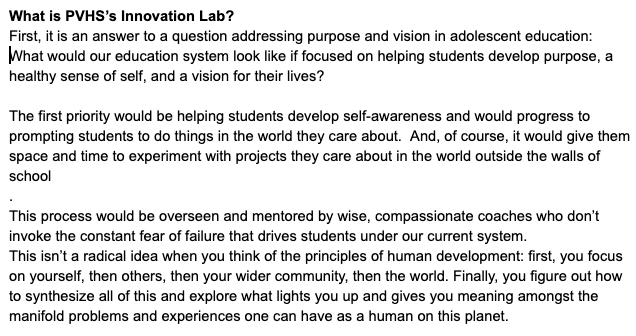
When I first introduced this class to your counselors, I provided them with a “one pager,” a document that sought (in two pages) to offer an overview of why this class was something every student ought to take at least once in their high school career. (Here are the first few paragraphs of that letter.”)
What strikes me now, and the reason I write with such a cryptic title, is that our current situation, this enforced break to flatten the curve of the Corona Virus pandemic, offers us a unique opportunity to assess our place in this class and how to take this time to find opportunities to help in whatever way we can.
NOVA Lab and the VUCA World
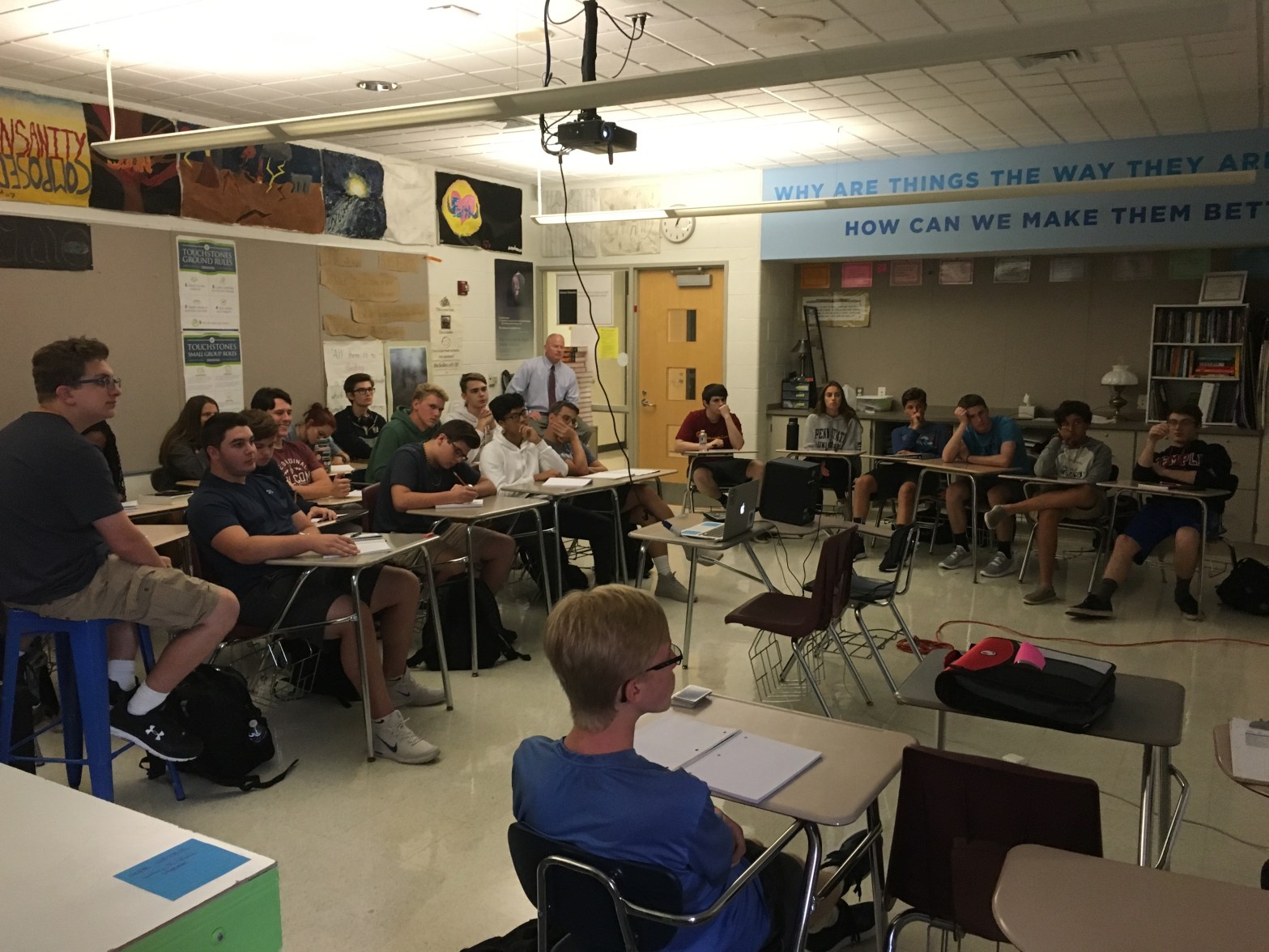
One of the first lessons I taught in September of 2019 was about an acronym adopted from strategic leadership scholarship that was then taken up by the US Army War College. That acronym, VUCA, described the world facing us post-Cold War, a world full of “Volatility, Uncertainty, Complexity, and Ambiguity.” Given the description of our class in the one-pager, and given the work we’ve done to understand “Why are things the way they are?” and “How can we make them better?”, it’s now eminently clear that a mindset born through the spirit of Social Entrepreneurship and driven by design thinking’s comfort with ambiguity is exactly the kind of mindset that we need in a time like this. And that mindset isn’t nurtured in one college major or one “pathway” of study. Instead, it will take a “Range” mindset–as in the book I keep talking about.
A great example here is my friend Tim Klein who works for Wayfinder:
“Like a stereotypical millennial, I don’t have one job, I have three: I work at Project Wayfinder, teach at Boston College and am a writer*. No specific major in college or program could have adequately prepared me for each and everything I do. So how do we support the next generation of people like me? How do we prepare young people for an uncertain future?
Leadership, creative problem-solving and communication are the skills that employers value most. Linkedin just released its latest workplace learning report that surveyed over 6,000 professionals about the future of work. Overwhelmingly, business leaders valued “soft skills” in potential employees over hard-skills. In fact, engineering and coding skills were rated “least important” for recruiters.
The most successful business people in the world agree on the importance of these skills. For their new book Innovation Capital, Jeff Dyer, Nathan Furr and Ralph Hamers interviewed many of the top 25 leaders in business, including Jeff Bezos, Elon Musk and Marc Benioff, to understand the skills that make them so successful. Their research found common traits among these leaders; they were all creative problem-solvers, persuasive communicators, and powerful relationship builders.
The takeaway: focus on transferable skills as opposed to domain-specific ones. The beauty of these 21st century “soft skills” is that they are not education-specific; we can develop them playing video games, participating on a club soccer team or by editing an Instagram post. Ask of yourself (or a young person), where are you most creative? Where are you solving a lot of problems? Where do you feel most successful? What are you doing that’s driving this success? The answers’ to these questions provide valuable opportunities to build the skills to thrive in the future world of work.
I hope you recognize that what I wrote and invisioned in the original “one pager” for NOVA Lab and what Tim and the articles he cites claim are the most important skills of the future are exactly the kind of skills and talents we will need to succeed in this VUCA world.
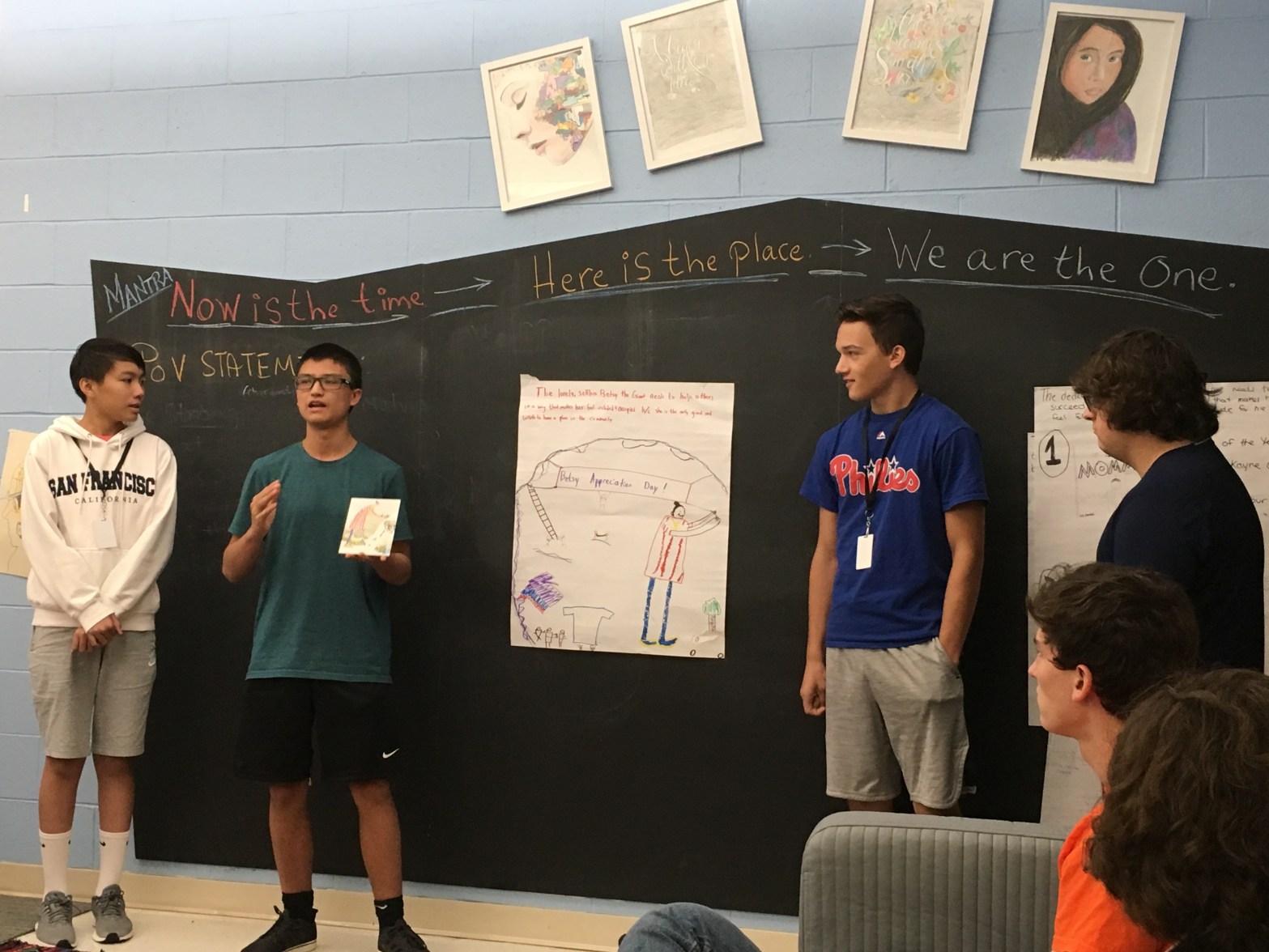
As a NOVA Lab pioneer (and I’ve tossed around terms for that: NOVAneer, NOVAte, NOVAtor, NOVA-tiate…none of the work) you are perfectly positioned to embody the mantra I have allowed to stay on our blackboard: Now is the time, Here is the place, We are the one.
So I’m writing this to introduce a task that you might find utterly interesting though utterly optional. I found it through Christian Talbot, the young man (younger than me) who organized the Social Entrepreneurship “Junto” at Penn that I attended a few Wednesdays ago. You’ll find the Assignment on this Google Doc.
But another opportunity you should access might be even more important, because it will help you build a stronger, more resilient and agile Entrepreneurial Mindset. And that is the two week free course and LinkedIn group (you’ll need to sign up for a LinkedIn acct.) presented and set up by Don Wettrick and his STARTedUP Foundation. For FREE, you’ll not find a better opportunity available to you. Plus you’ll be able to connect with mentors and other like-minded students from around the country.
In a time when social distancing could lead us to more loneliness and unhappiness, this opportunity will help you reconnect with a sense of purpose, take control of things when they seem out of control, and find more meaning in your work and life.
In 1995, the prolific warbler Neil Young (and members of Pearl Jam) released Mirror Ball. The album featured one of Young’s iconic cries of independence, “I’m the Ocean.” With a chorus declaring the title’s metaphysical conceit and lyrics probing smaller, stranger metaphysical comparisons (eg. “I’m an accident/I was driving way too fast), Young contrasts being a trivial, single thing (“I’m an aeorstar/I’m a Cutlass Supreme”) with being something as expansive, deep and meaning-full as the ocean itself.
Young’s song is, perhaps, a meditation on the 90s as the decade where meaning and attention began to seriously fracture. But more so, it is an exercise defining the utter necessity of always writing our selves into the present in ways that both extend our individuality and acknowledge the reality that we are part of something much larger.
This recognition, that we are all part of an ocean of humanity and that we all have a tidal power to extend ourselves out and back again, this is one of the great mysteries of existence: That our individual self floats and drifts and surges amidst all other selves in the world. We are solitary as well as a part of the main. It makes us humble but also allows us to know the great power each of us has to change the world–that a slight change in our own direction has implications for all the selves in our immediate sphere and, therefore, beyond.
However, as Young’s lyrics reveal, developing a sense of ourself in this way is not an easy task. Such wisdom is hard-won, the process of struggle, of loss as well as success, and of many, many hours spent reflecting, talking to/with ourself…a silent, internal sounding of our own depths.
And for as important as such knowledge is to our own mental health and sense of well-being, there is little in most students’ school careers that helps them meet the self by itself and the self within our larger communities.
For most of my career as a teacher, be it in middle or high school, I’d always known that students hungered to better understand themselves. After all, what else is education for if not to better understand the self? For years I addressed this through stories, through philosophy, and through metacognitive exercises, and while all those had some meaningful effect, they never felt focused or cohesive.
And then, two years ago, I wandered into Project Wayfinder. The focus of this unique curriculum on understanding the self at the individual and community level has been instrumental in helping me to provide deeper meaning to the purpose projects that drive the way we learn in NOVA Lab. But more important, it has provided key experiences to recognize the critical role of community in our classroom. When students are provided with an open and understanding environment in which the entire community is driving towards a common but unique goal (to better know ourselves), they learn how to develop empathy and communication flourishes.
Oh, I realize I am only seven lessons into this unique curriculum, but I know enough to know when the tenor of a classroom changes. And even if some of the lessons in the year-long curriculum don’t work for all students, their belief in the importance of the overall goal of the project is, I think, strong enough to keep them focused on the need for others in the community to engage more deeply.
I’ve asked students to write blog posts reflecting on their work with Project Wayfinder so far. Below I’ve culled a number of quotations from their writing so that their own words might speak to the power of the project itself.
“WayFinder has proved to be more beneficial than simply planning out my career path. I have learned more about my personality and strengths, and thus more about myself. By obtaining this knowledge, I believe it will help me in my future career and relationships. —Emma C.
“[Wayfinder] Mondays are one of the best parts of our inNOVAtion Lab class, as they give me a time that I would not have otherwise had to think about my own desires and goals in life. Especially as I’m now applying to college, recognizing my own strengths and goals in life gives me such a good foundation upon which to base my essays and interviews.” –Andrew D
“The idea of living beyond the simplicity of school work and the all-too-familiar monotony of the workweek has been planted in our minds. The only way to really have direction in one’s life is to define what makes us tick–our purpose(s) and how we want to leave our mark. Wayfinder has done this for me.” –Ethan F.
“Project Wayfinder has slowly shifted my attention to parts of myself that before I wouldn’t share with people I didn’t know very well or even people I am very close with. It’s reinvigorated my passion in things that had been overtaken by other aspects of my life and brought them to the surface as bold as ever.” —Jane H.
“Project Wayfinder been a unique experience unrivaled by any other in my high school career. In school, we’re always working for a grade, molding ourselves to the machine in order to get to college and beyond. [In Wayfinder], we’ve had the ability to not only shape our minds and opinions but adapt our personalities and go on a path of self-discovery. Most teenagers don’t even consider who they want to be as a character in their story, but Wayfinder asks us to stare our future in the face and affords us the time to mold ourselves to our own personal goals. It’s been really inspiring to not only go through these activities but see how others have been impacted and adapted from the knowledge they gained during Wayfinder activities.” –Glen R.
“Project Wayfinder offers us learning not covered in any other aspect of the school system. At times this can be challenging but overall it is a very beneficial process. This allows me to take time and reflect on what I have done, what I want to do, and why these things matter to me. I personally do not do these things on a frequent basis, but this course brings a healthy cleanse of my pent up mental strain. Focusing on my goals and feelings is a foreign concept to me but has proven important. The course could not have come at a better time due to how now is the time where so many, literally, life-changing events are coming up. Whether this be college or academic prospects. –Ethan S.
“Project Wayfinder is less about the specific answers it provides than the process. Instead of blindly doing things because I’ve always done them that way, I now regularly consider what brings me joy, what kind of person I am, and more. The power of Wayfinder, at least the early portion of the curriculum, is not to define one’s lifelong purpose, but to encourage the careful consideration that will one day result in one.” –Matt T.
“Students everywhere will tell you that the idea of curriculum is killing any sense of purpose they have, and Wayfinder knows this. So instead of trying to give you a book as a surefire method to find your purpose, they use the best tool available to anyone, other people. All the book does is give them better questions to ask. For example, instead of asking you for a definite answer to what you’d like to do, another person is prompted to ask you to tell a story about a time you’ve enjoyed doing something. Humans aren’t meant to spit out correct answers and know ourselves perfectly, we find ourselves through the stories we tell and the people we tell them to.” –Miles C.
“While Project Wayfinder is still a young product, I thoroughly enjoy it and think that it should be applied wherever it can. Not just innovation classes – other classes, other schools, workspaces; there is never a wrong time or place to find your North Star.” Valencia C.
“Project Wayfinder helps us succeed in the world rather than merely in the classroom. It shows us that no matter how different we are and how separated we are that we have a purpose and that our purpose is consequential to the world.” –Nicholette D.
“Project Wayfinder is a way to ask questions to yourself and find out who you are. Completing the exercises with integrity and wholeheartedness is vital to really discovering oneself and peeling back the layers to become more open and vulnerable. I thoroughly enjoy Project Wayfinder every week and figuring out more about who I am, little nuances about my personality, and how I can find my purpose.”–Aleesha P.
“Being only seventeen years old, most of my life has been dominated by my time in school. Because of this, when I think of my identity, I think “student,” but Wayfinder purposely tries to leave school out of the activities. I’m interested to see what the next lessons will bring, and how I will think of my identity outside of being a student.” –Brandon S.
For the past few days, ever since inNOVAtion Lab’s phenomenal trip to Corbett Inc.’s Fluxspace, I’ve been trying to figure out what has been happening in class. The trip to Flux was a highlight of a very young year, and it comes on the heels of another highlight, our trip to the B.Phl Innovation Festival (see here, and here,and here), which followed a few other key moments–our google Hangout session with Designer Phil Holcombe and a Zoom chat with serial entrepreneur Jeremy Miller.
In each of these instances, but especially in our trips to Philadelphia and Norristown, there has been a perceptible feeling that something unique is happening. We’re all learning, but I’m not teaching…at least not in the sense that I’m delivering information they must know for a future performance (test, quiz, whatever) as evidence of attaining knowledge.
And yet evidence exists. Both trips yielded deeply emotional responses from many of the students. At B.Phl’s Innovation festival, students explored sessions geared for adults working in the business or social sector and came away with an understanding of just how important creativity and innovation is to all sectors of the workforce. As well, as they were put into spaces with adults attending the festival, they were exposed to just how difficult it can be to get adults who have been in the workforce for a long time to understand, accept, and adjust to change. For many, it was unlike any field trip ever.
Our trip to Corbett’s Fluxspace revealed an even deeper response. Between the presentation from Independence Blue Cross’s Michelle Histand on Design Thinking, owner Bill Corbett’s inspirational life story and the time he gladly spent talking to students (you have to watch this video!), and the project presentations students did for panels of adults who volunteered their time, the experience opened doors to new opportunities for their projects, validating the type of learning we are doing in NOVA Lab. (Read this post by “Living Now.”)
With Director of Innovation Ryne Anthony (@MrRyneAnthony) I organized time, planned action, provided opportunities, but teaching? Not much.
So what is happening?
In my car this morning, I was replaying the words of Bill Corbett in his presentation to the students. He noted that while Corbett, Inc. does sell furniture; and while, yes, they design office, school, and other institutional spaces, those aspects of their work are parts of the larger enterprise of experience design–The intentional orchestration of time and space to create moments that are memorable, meaningful, and transcendent. Corbett, Inc is about experience design.
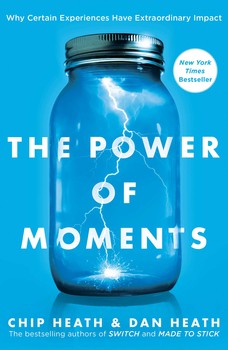
In their book, The Power of MomentsChip and Dan Heath make the case that moments that are well designed are more likely than not “peak experiences.” That is they “boost sensory appeal…raise the stakes…and break the script*” (see * below). Looking back at our field trips to Flux and the B.Phl Innovation festival, it is clear that these peak experiences were, in the Heath’s terms, “Defining Moments…a short experience that is memorable and meaningful.” (Take a look at the website “Visual Synopsis” for a great sketchnote of the book)
As it has for so many of my most impactful learnings as a teacher, design offers a resolution to my teaching/learning conundrum: All good experience design is human-centred and focused on changing us in the same way education changes us.
This is the kind of learning experience I’ve sought to design for my whole life. This is the center of gravity at the core of all the work we do at Form and Faculty where I am the Director of Learning. And this is, so far as I can tell, the driving force behind the ongoing creation and expansion of opportunity at Corbett, Inc. and Flux.
As we move through the rest of this year, we have even more defining moments ahead of us. In January students and I will host a conversation at Philadelphia’s “Educon 2020.” (Come see us and talk with us about: In the Brilliant Light of Authentic Ideas: Students as Innovators ). Later in the year we’ll be hosting a TEDx event at which students will be presenting their projects to the community. And, yes, we’ll be returning to Flux…many times.
So what are the students and I learning? Driven by purpose to question, connect, empathize, experiment, and, yes, “fail,” we’re learning to embody the values that drive the work of inNOVAtion Lab network: Honesty, Teamwork, Communication, Feedback, and Creation.
I’ll take that learning any day.
Our first value…”Honesty.”
*Breaking the script is one way design peak experiences, but there’s so much else. I thank Corbett, Inc.; Fluxspace Director of Innovation Ryne Anthony for providing the vision and space that is Flux; the administrators in my district for believing in my vision; Art Dept. Chair Tom Komp for his help, his graphic design students, his witness and counsel; and the students and parents of NOVA lab for taking the risk to experience this class.
At the beginning of the year, I discovered that a local design firm in my neighborhood was opening an incubator/maker/presentation/learning space in a turn of the 20th-century woollen mill.
Dubbed Flux, the space was exactly what I have been trying to create in my own school, only about 7 times bigger! So I had to check it out.
That’s where I met Ryne Anthony, their Director of Innovation. A whirlwind of ideas and effort, Ryne and the company‘s owner, Bill Corbett, are making connections and making things happen at Flux that have the potential to open new avenues of education for countless students in the districts in and around Montgomery County, Pennsylvania.
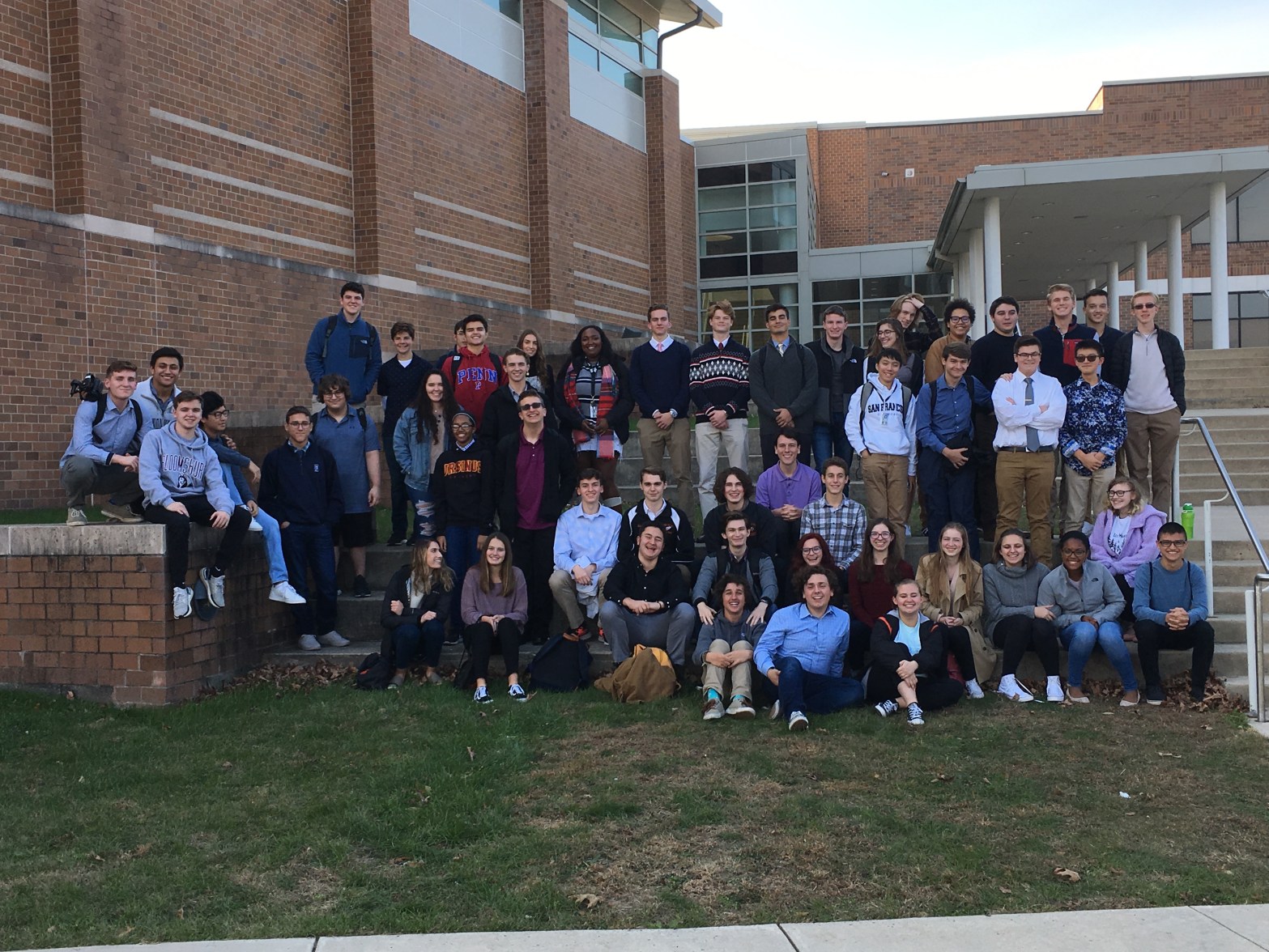
Today, with 50 NOVA Lab students and 4 Graphic Design students, art department chair Tom K. and I made a pilgrimage to Flux. To say that the vast majority of the students came back converted is not hyperbole nor mere appropriation of religious symbolism. The students were changed.
From the start, during a design thinking workshop led by Michelle Histand of Independence Blue Cross’s Innovation Center (with huge thanks to Patrick Dudley, IBX’s Director of Innovation) the students were engaged and focused. Most all of them had no idea that they’d been working for 90 minutes by the time it was over. And while all of them had had a working familiarity with design thinking via NOVA Lab, as one student remarked, “Even though I’ve heard those terms and seen the process a number of times, it really helped to see it again.”
After lunch, the students were treated to an inspirational speech by company owner, Bill Corbett. His insights into design, innovation, work, and the necessities of building meaningful experiences moved all the students and energized them for the afternoon.
And it was during the afternoon sessions, where most all the students presented the projects they were working on, that they discovered the value of putting their ideas out into the world in real (not merely virtual) ways. The panel of adults every team presented to provided valuable insight and constructive criticism to help move projects forward. In some cases, the feedback lit even bigger fires in students, in others, it illuminated their progress, and in still others, it helped them discover new ways through problems.
This slideshow requires JavaScript.
In the end, our time at Flux went so fast that the students couldn’t believe that we’d been there for almost 5 hours. What’s more, they left with a feeling, not just an academic notion, but a deep feeling that something about the learning they just engaged in was different. Maybe it felt more real, more validating, more genuine. Or maybe it was the recognition that when you’ve invested deeply in work that moves you, and you share it with others and ask for their help, well…you might experience, for the first time in a long time, the utter joy associated with learning.
Here’s a website that chronicles the best design competitions for high school students of the past year. I know you have your projects at present, but many of you could do more or will be ending your projects soon. Get on these!
When I was barely in 9th grade, I first encountered the music of Talking Heads. It was the summer of 1983, and Speaking in Toungeswas on heavy rotation on my Sony Walkman as I sat on a rusting, red Wheel Horse tractor cutting acres of grass for my house and my neighbor’s.
Hours of idle passes over a baseball-sized swath of backyard were filled with sounds I’d never heard. Drums from foreign lands, rhythms that challenged the common tempos of rock music, and a heavy funk that would lead me straight into Parliament and the mysteries of that genre’s dank goodness.
But more than anything, that summer began my life-long love of Talking Heads and their enigmatic frontman, David Byrne. It wasn’t long before the brilliance of Stop Making Sense assailed the ears and eyes, and I was convinced that if I never saw this band live I would die.
College brought deeper dives into the entire discography. From their early work in the mid-’70s, to a pilgrimage to CBGB’s, from Byrne’s solo work with the dancer Twyla Tharp to the seminal samplings of My Life in the Bush of Ghosts...if it was related to the Heads, I was in on it.
Several years later, after the band broke up, I followed David’s work as he explored more deeply the rhythms of Latin America. Rei Momo‘s cadences still fill my house. And even the dark atmospheres of Byrne’s The Forest lurk in the recesses of my playlists.
This is not a paean to the band or to Bryne, who continues to make music and inspire younger bands. Rather, this is a peek into why, when we think about INNOVATION we must look to artists. Admittedly, there is no genius in that insight. And yet, in the rush of businesses to innovate, they often look solely to the gurus, the keynote speakers, the entrepreneurs with the swagger.
But artists had it figured out long ago. They have tapped the wellsprings of creativity for self-expression, and, like those waters, are infinitely adept at reinventing themselves and extending their art beyond the limitations of genres. And while the business world has certainly attempted to appropriate even those most sacred of human waters, the real reason to look at the lives of people like David Byrne is that they never stop inventing and innovating (see image to left or this great interview on CBS Sunday Morning). We seek out people who bring the fresh, the vibrant, the new to whatever space–education, corporate America, or our own homes. But we ought not seek them in a frantic chase of some elusive “it”–the next big video game, the next great sneaker. Rather, we should do so to make visible the mindsets and actions that help us experience our lives in new ways, and those are most prominent in our artists. (This is, obviously, not a new idea.)
Others have written better and with more academic acumen about David Byrne’s aesthetic. Even I, years ago, wrote a senior thesis for a film class at Temple University on the topic. Seek those out if you desire a more academic view…some sense of the gestalt that is David Bryne. Here, I simply recognize that Byrne is still pushing boundaries (Playing the Building), still crossing genres (How Music Works), still making us all think more about how innovating even within the fields to which we have devoted our lives, to which our own muses call us, is “never for money, always for love” (to quote Byrne’s own lyrics on “This Must Be the Place”). Don’t believe me? Look at this innovative riff by some NYC public school students. Or this choir in Detroit, Michigan. Oh, sure, in the economic ring of corporate America, innovation is about the profit margin. But personally, socially…? Innovation is about the joy of living well and in a way that spreads joy and well-being to others, in a way that recognizes, as one of my 7th-grade students once commented, that “Joy is like all WOW inside!”
It is impossible for me to watch David Byrne today and not think of the work we’re doing in our inNOVAtion Lab. For most of my students, the engagement level is rising. What’s more, I can hear in their interactions the kind of prosperous, collaborative discussion that only grows out of meaningful, purposeful, creative work. These are the kinds of discussions the students engaged in during our trip to the B.Phl Innovation Festival. They are the discussions born of curious humans pursuing their interests.
What I love about David Byrne is how he never stops working. As well, unlike many artists who try to capitalize on what is popular, changing their shape and color like so many flavors of pop-tarts, Byrne is working out of a consistent weltanschauung, iterating and innovating out of a deep intelligence about music itself, and doing so with a professionalism and reverence for the creative process that is matched by very few performers today.
What I love about inNOVAtion Lab as a class is similar. There is a growing respect for the rituals of the space and the time we have together, and for the understanding that we “make it up as we go along.” (I can quote Talking Heads all day.) This respect is reflected in the professionalism I sense building in these students and the belief that they have the ability to act upon their creative agency to make the world a better place. In that, perhaps, they’ve come to respect themselves as artists, for there is an art to learning this way.
Few classes have felt so right to me in 27 years of teaching, and I seem to know that inNOVAtion Lab will be a home for my mind and countless others for years to come.











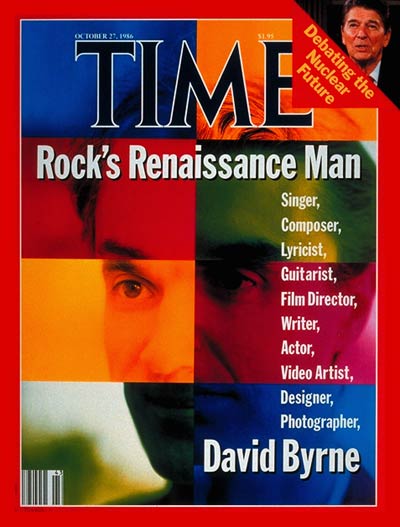 self-expression, and, like those waters, are infinitely adept at reinventing themselves and extending their art beyond the limitations of genres. And while the business world has certainly attempted to appropriate even those most sacred of human waters, the real reason to look at the lives of people like David Byrne is that they never stop inventing and innovating (see image to left or
  What I love about David Byrne is how he never stops working. As well, unlike many artists who try to capitalize on what is popular, changing their shape and color like so many flavors of pop-tarts, Byrne is working out of a consistent weltanschauung, iterating and innovating out of a deep intelligence about music itself, and doing so with a professionalism and reverence for the creative process that is matched by very few performers today.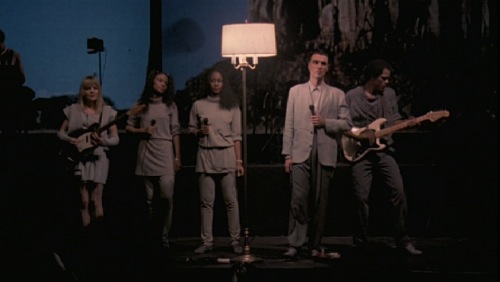
 Innovation Lab