Fluxspace 2.0: The Return

by Charlotte Bentley

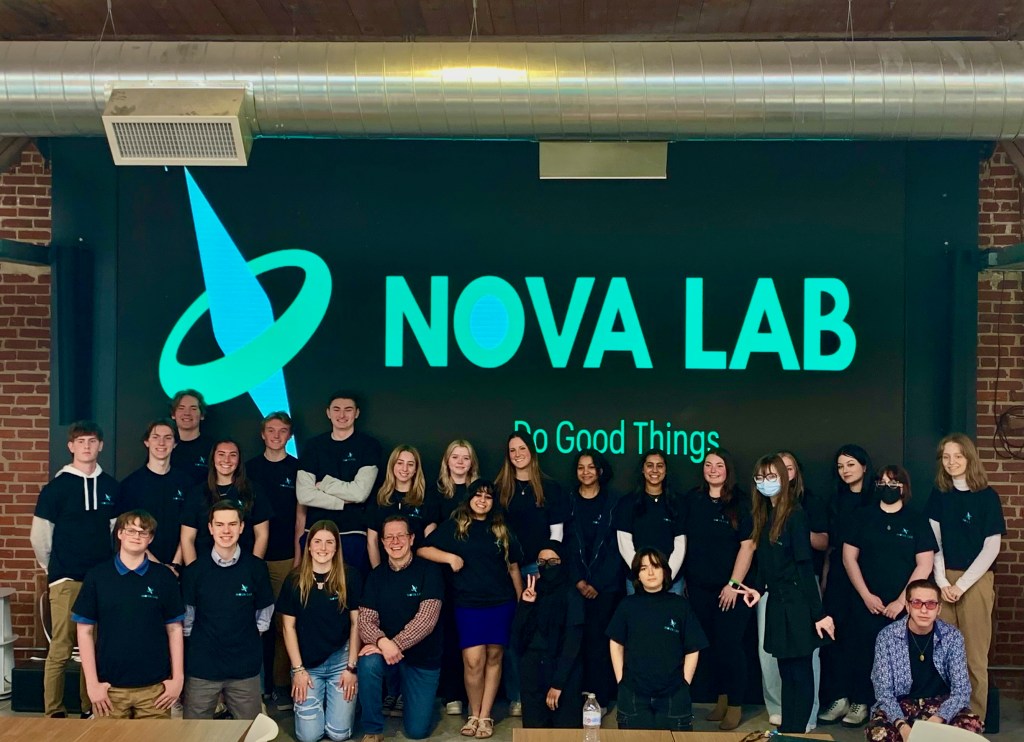
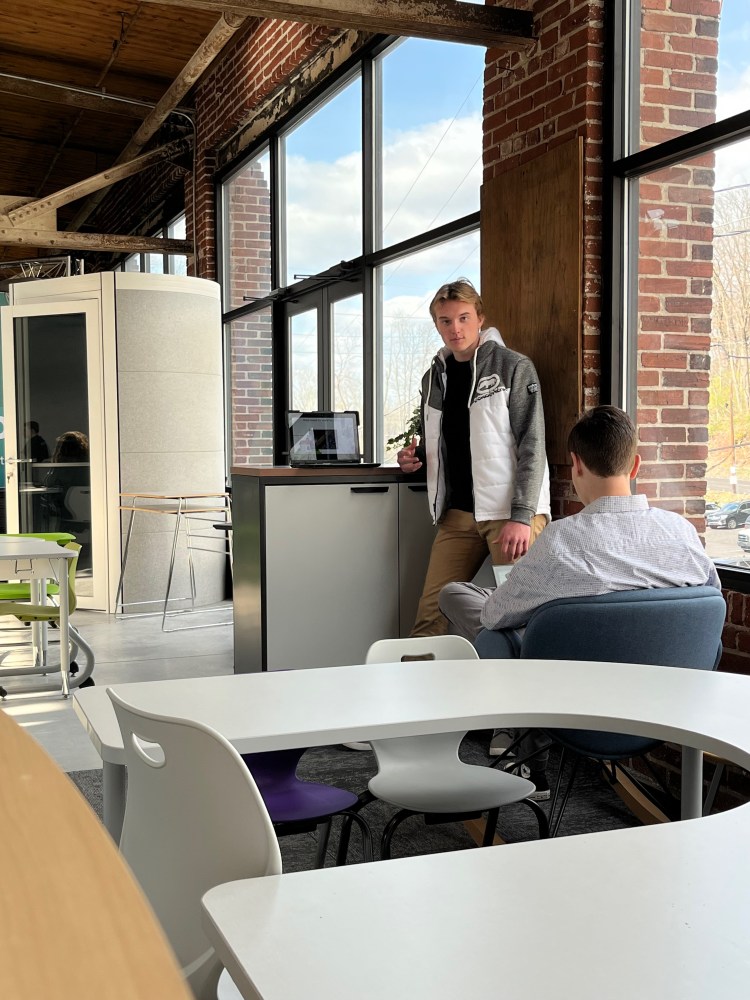
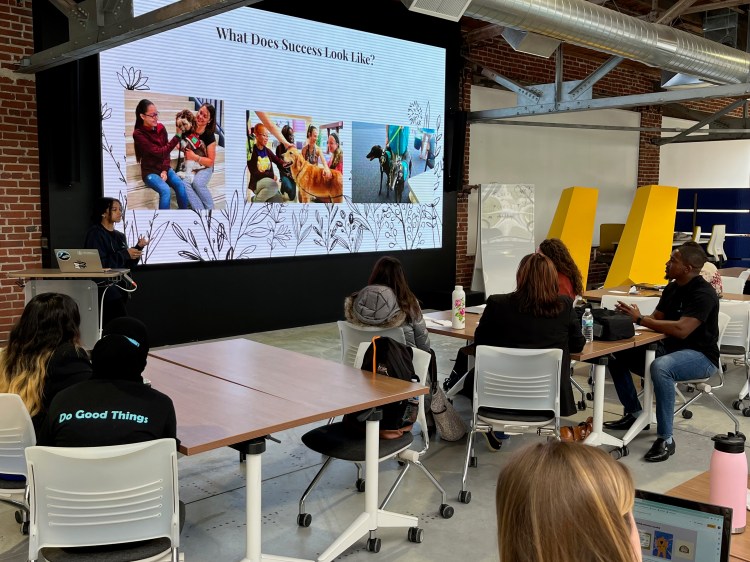
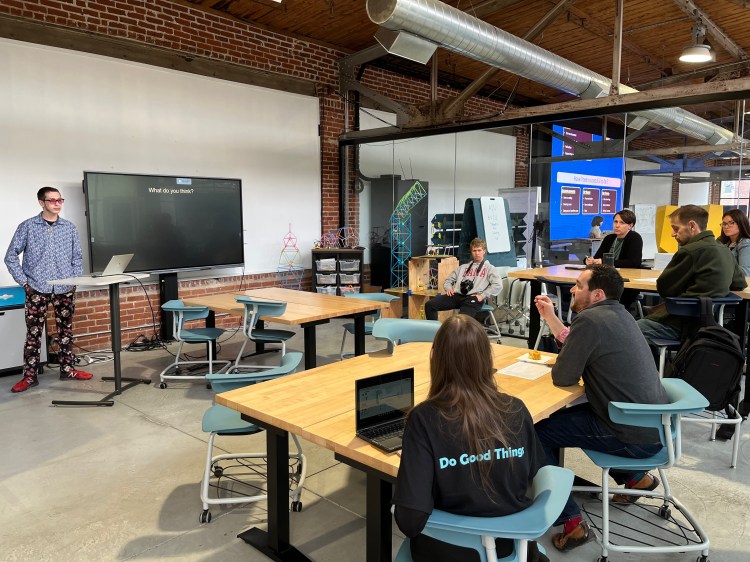
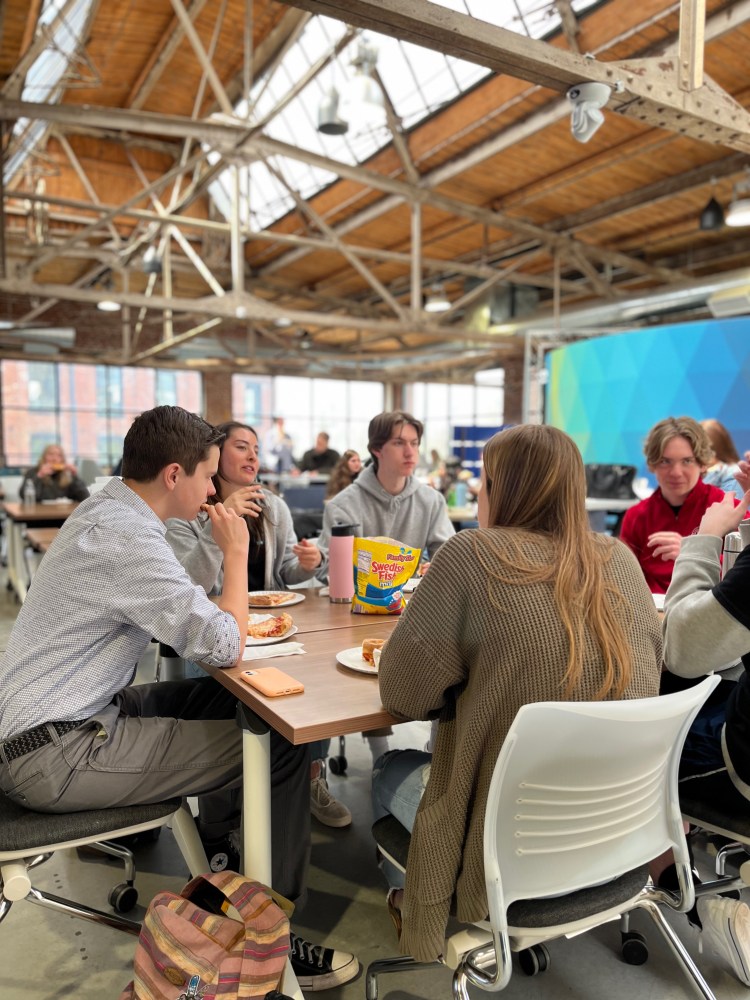
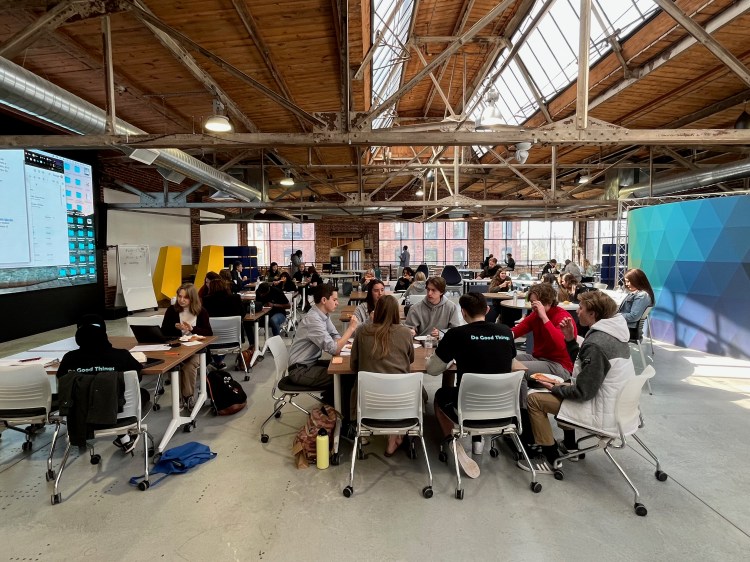
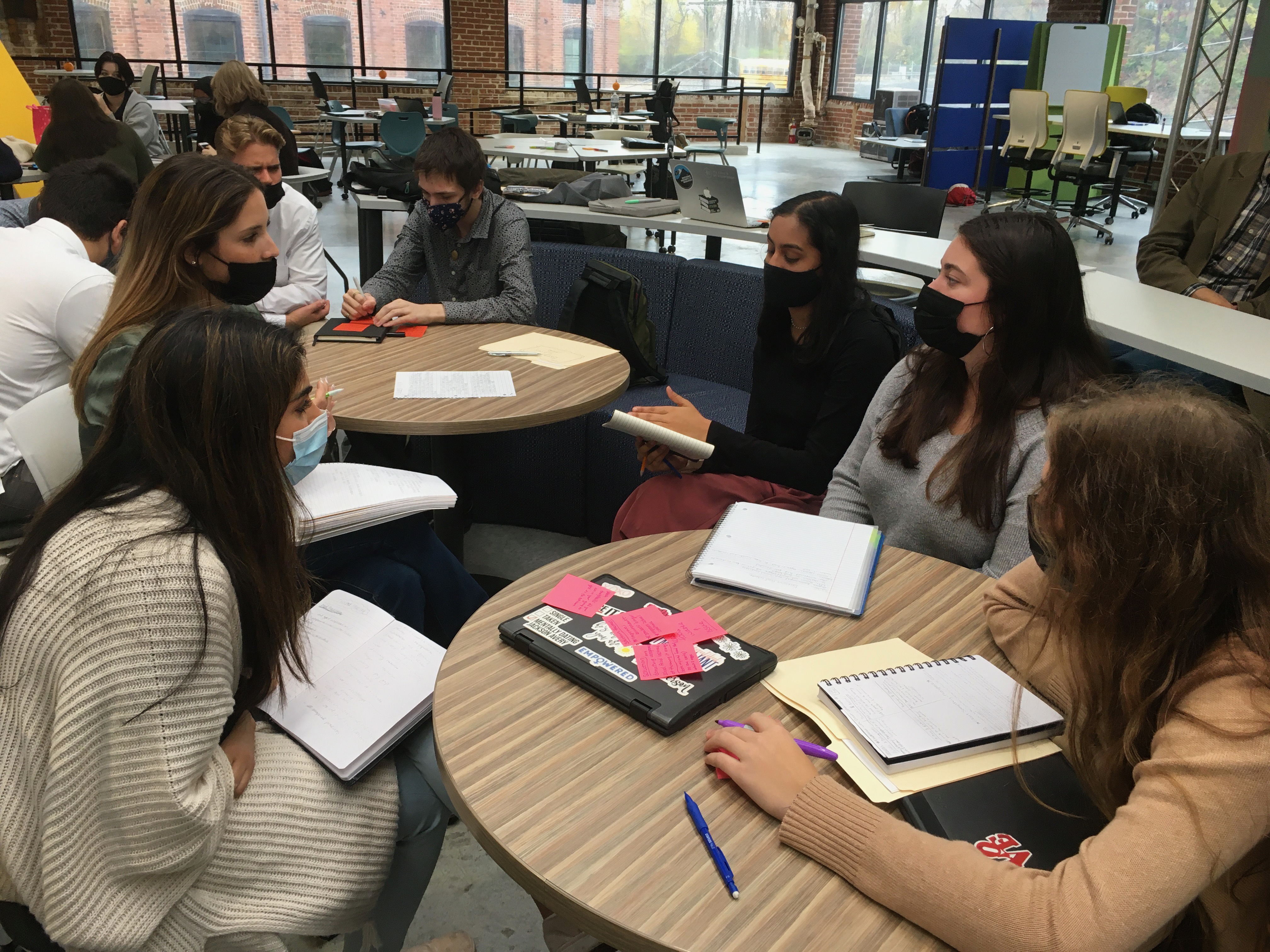
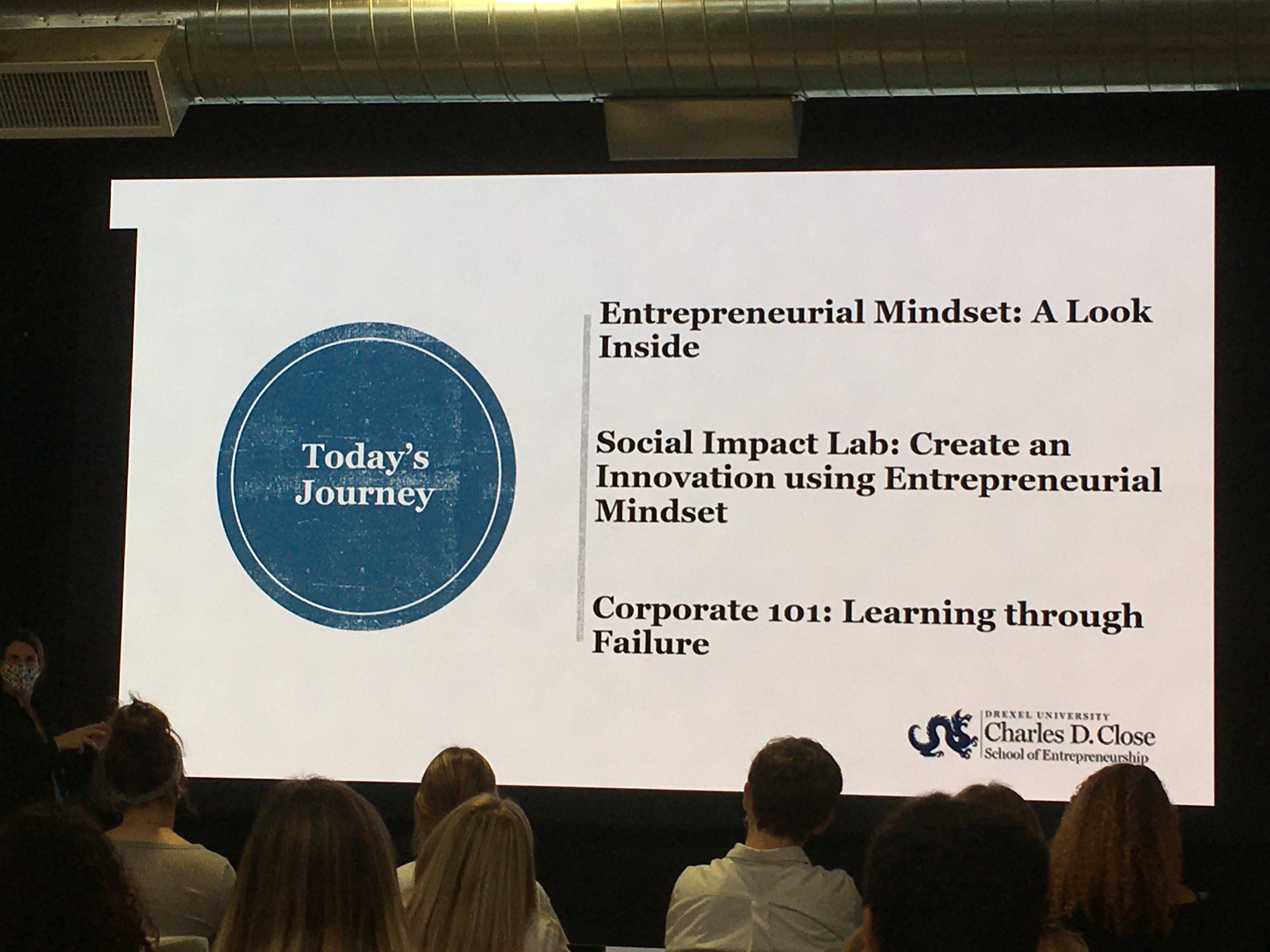
Last Monday, April 4th, the NOVA Lab classes ventured beyond the walls of room 121 to visit Fluxspace, a collaborative learning space located in Norristown. For most of the group, it was our second time at Fluxspace, as we had gone back in November of 2021; during that trip, we gave presentations on design sprints we had completed in a matter of weeks. This time, the students were tasked with presenting the projects that we have been working on for months. Writing in a blog post following the field trip, Ava Bellino described how this visit was “more real” because the presentation “mattered so much more this time around.” 

Other students wrote how the wonder of being in Fluxspace, designed for innovation and creation, had worn off since the first trip. However, for most this was not a concern: the space was familiar and comfortable now, especially with such a daunting task approaching. 

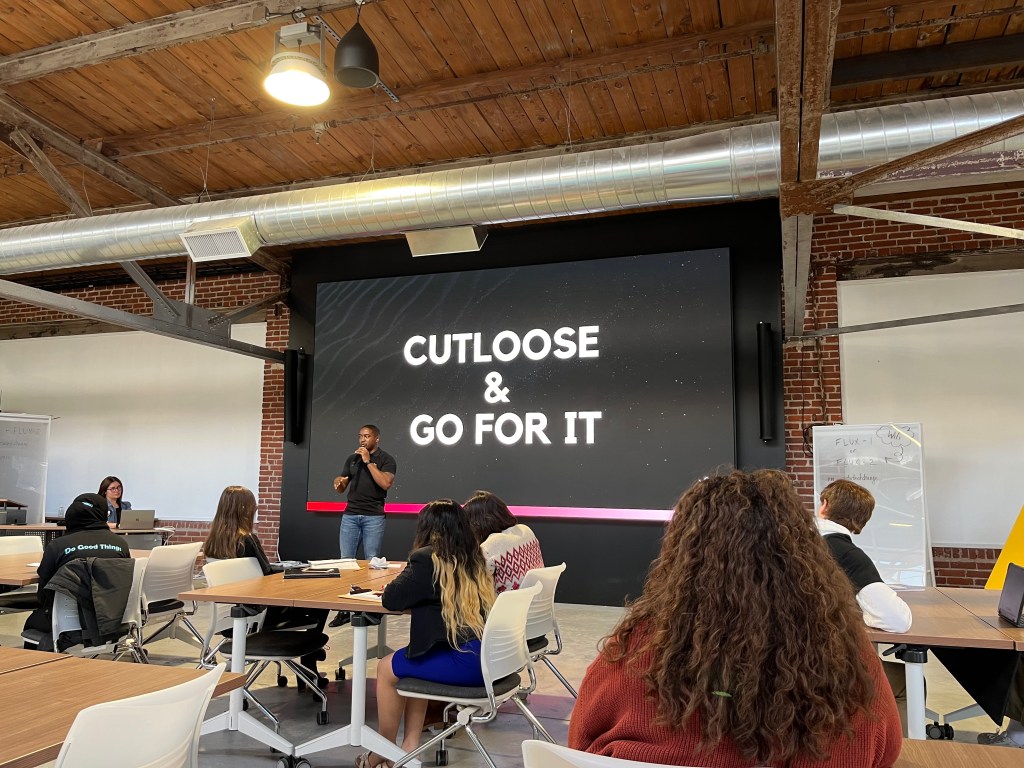
Jordan Dean of CutLoose Studio and Wellness Inspiring our HS Innovators and Entrepreneurs

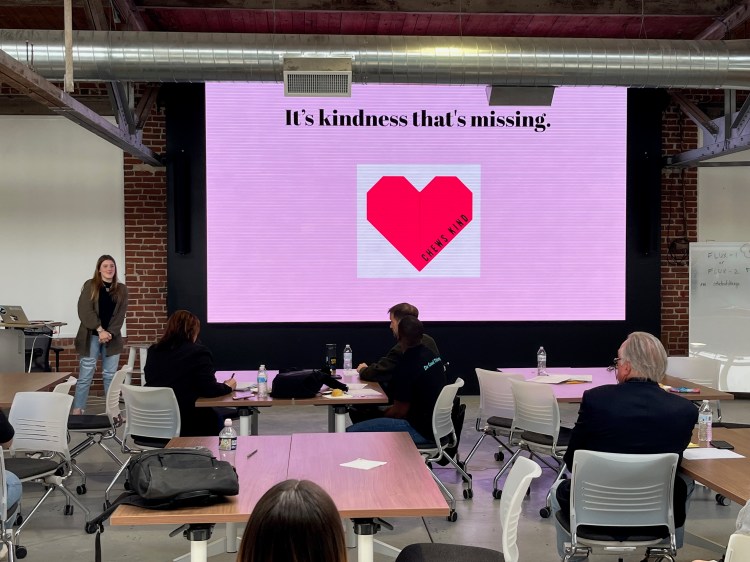
Charging the room with the innovative spirit was guest speaker Jordan Deane, a graduate of Perkiomen Valley who started his own business, a fitness studio called Cut Loose, with his fiancee, Emily. Charismatic and honest, Jordan quickly earned the admiration of his audience of NOVA Lab students. Following his presentation, the couple offered personal advice to help students build up their own brands and advertise on social media. Later, both Jordan and Emily would serve as panelists during presentations, providing feedback that student Casey Sitron described as “invigorating.”

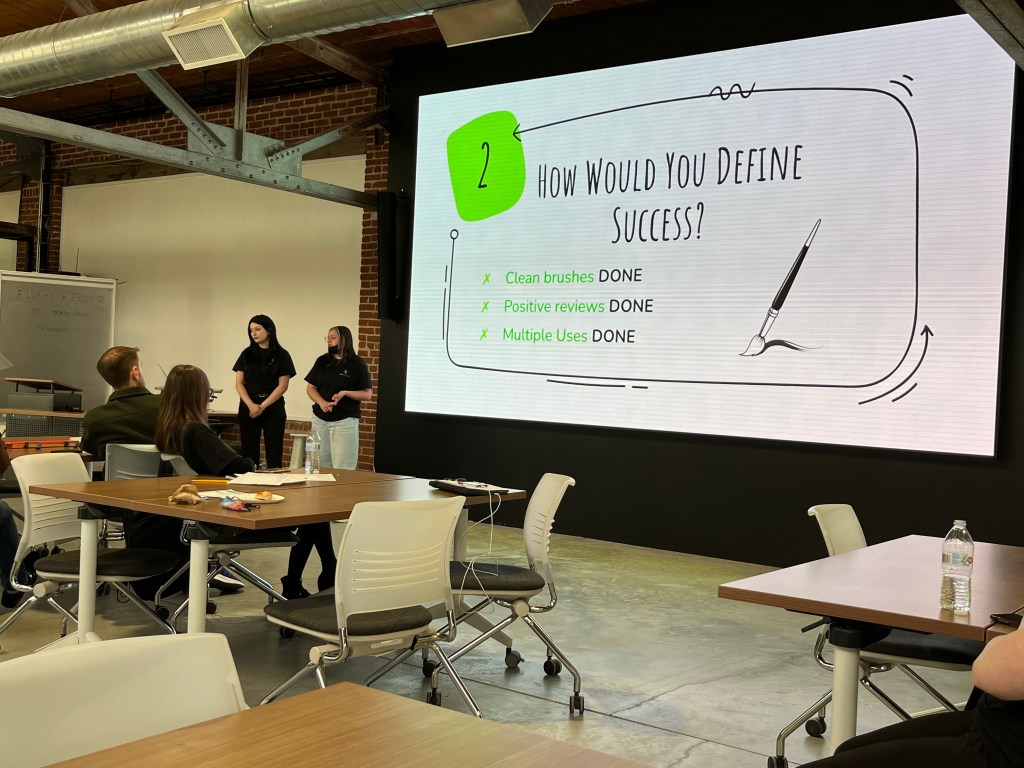
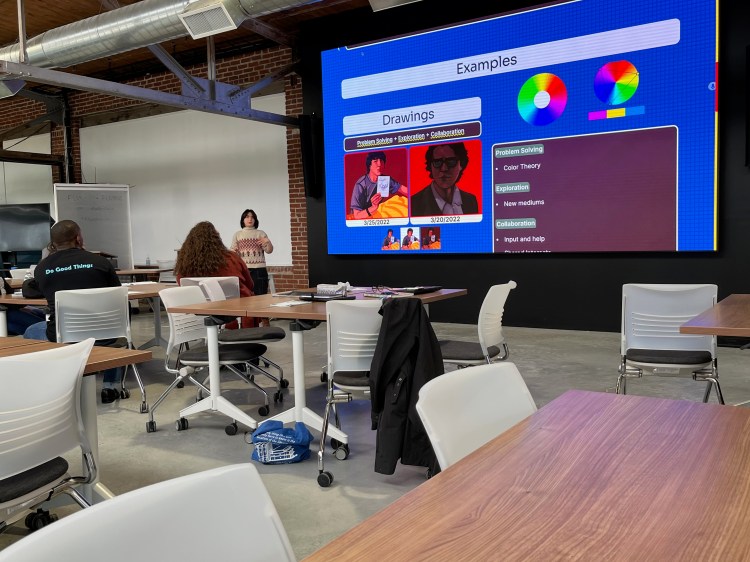
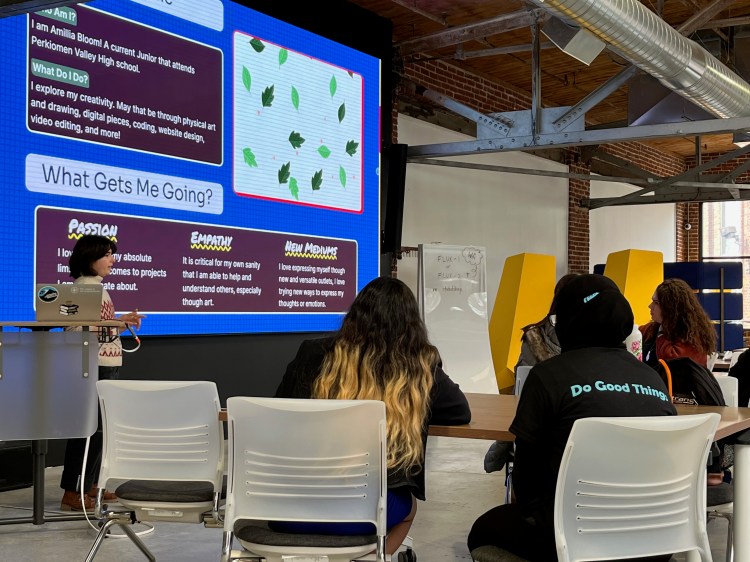
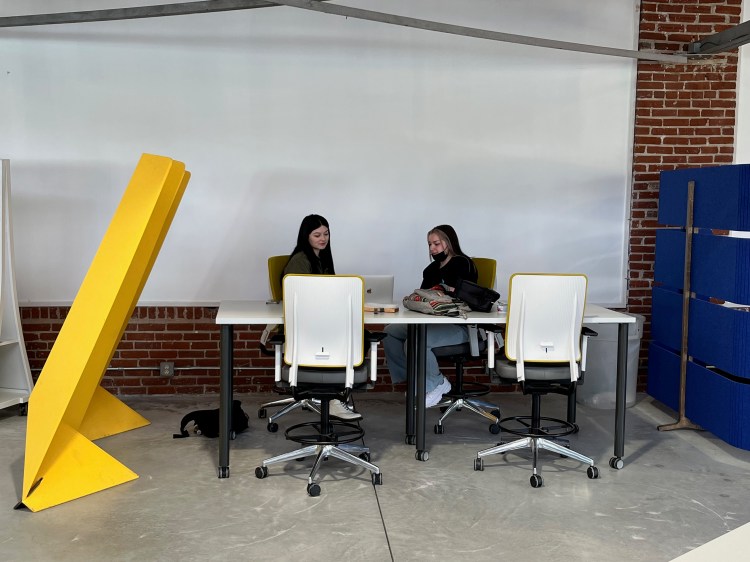
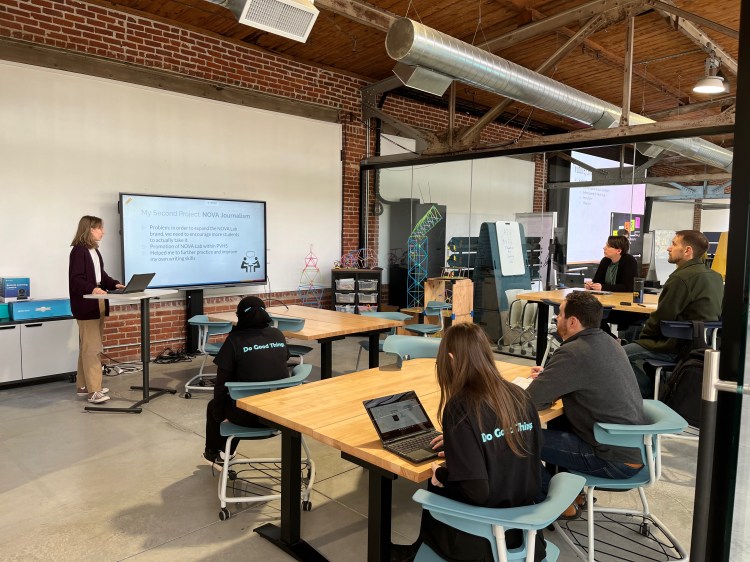
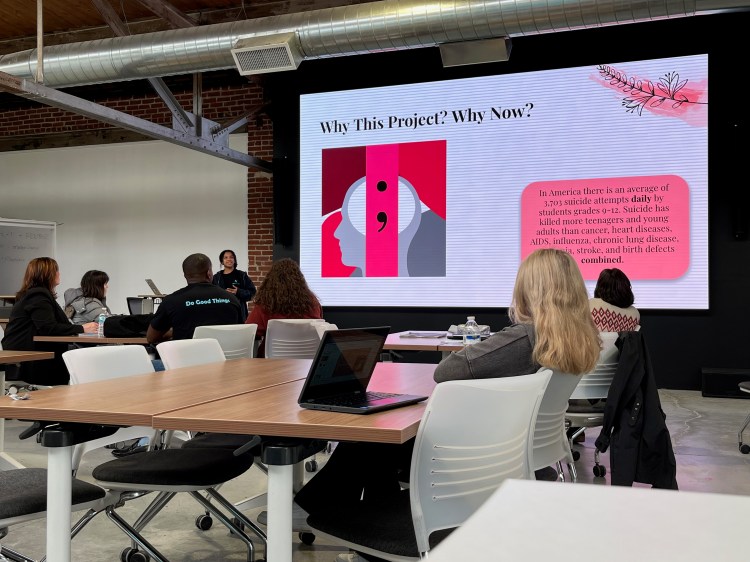
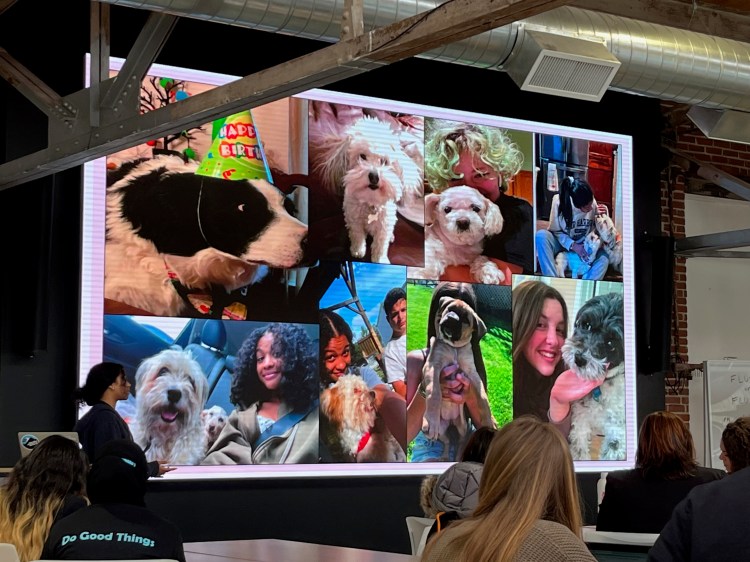
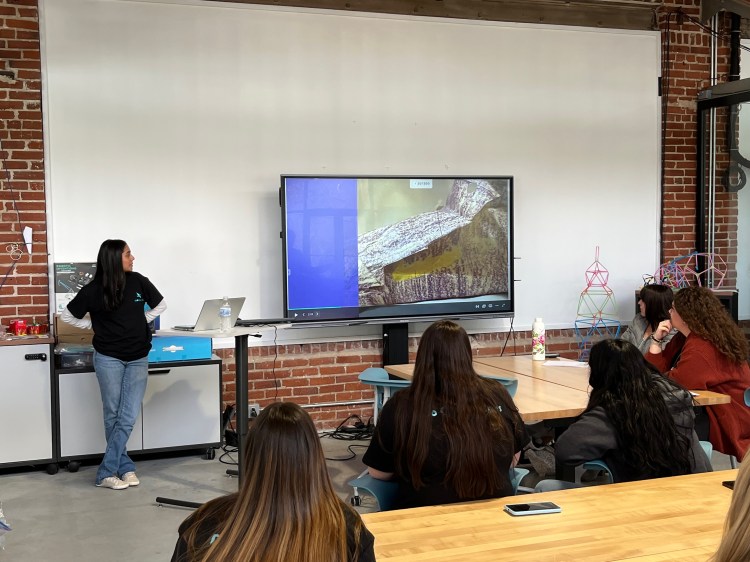
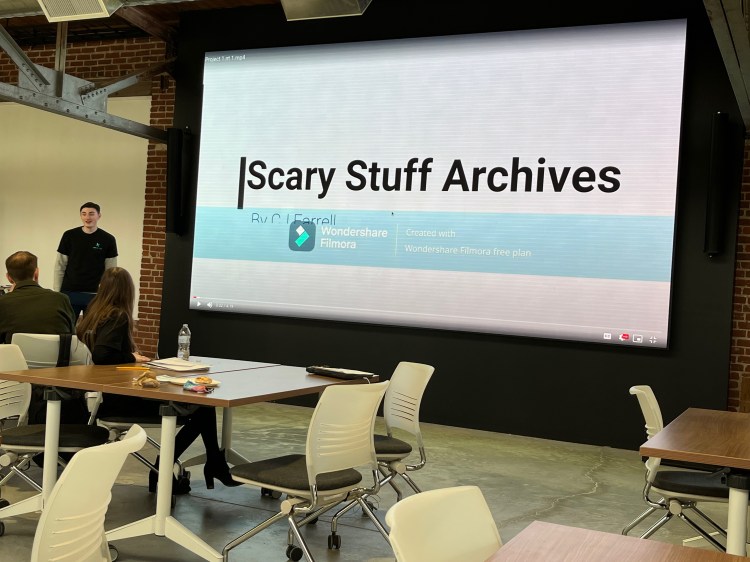
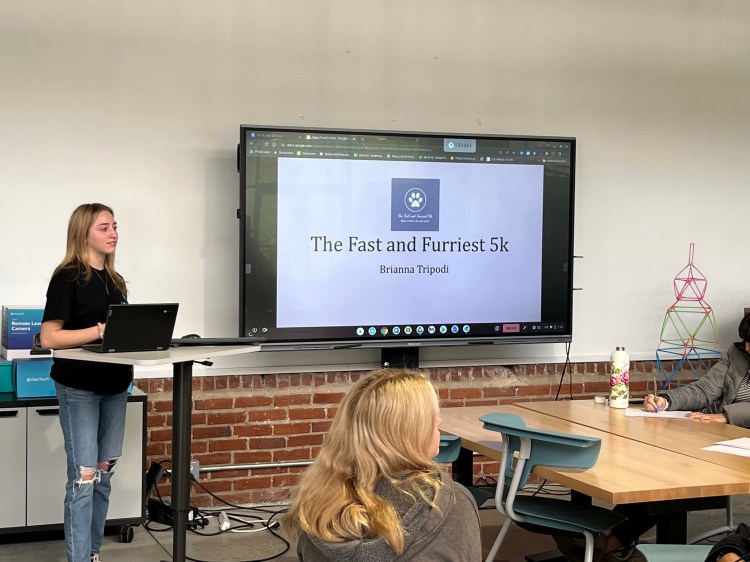
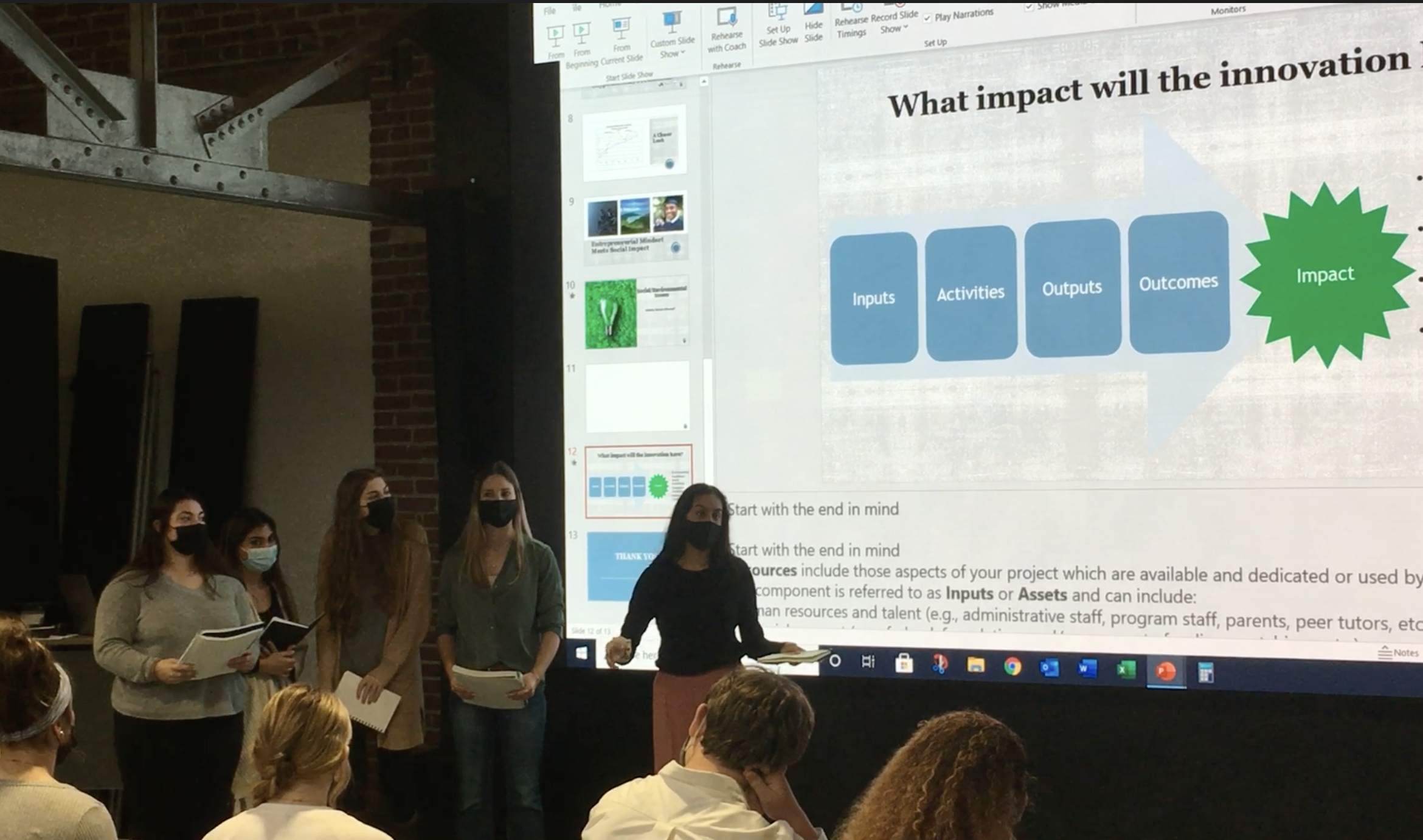
Then came the presentations. Split between the central screen and a smaller one in the Makerspace, students took the plunge to illustrate to the panelists the months worth of work that had gone into their projects. Anxiety was high, but many were comforted by the sense that their presentation skills had improved since their first visit. The passion in every presenter’s voice was clear, as was the pride in Mr. Heidt’s face as he observed quietly and took copious amounts of pictures.

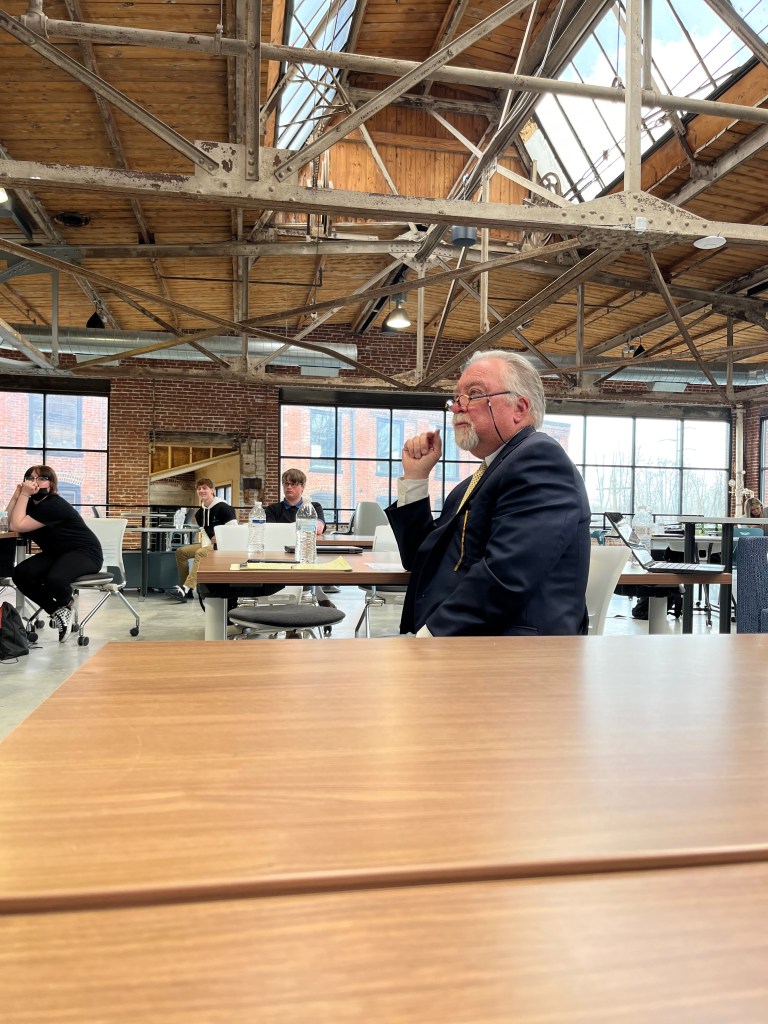
St. Joseph’s University Prof. James Partner providing feedback on student presentation

Perhaps the single most valuable moment from the entire trip came not during the presentations, but after. The panelists offered feedback to each presenter, in the form of questions and advice regarding the project. Across nearly every blog post written by a NOVA Lab student following the field trip, feedback was mentioned as one of the greatest benefits of visiting Fluxspace. Suggesting improvements and providing validation and new ideas, the panelists gave students a fresh perspective and ways to move forward heading into the spring. 

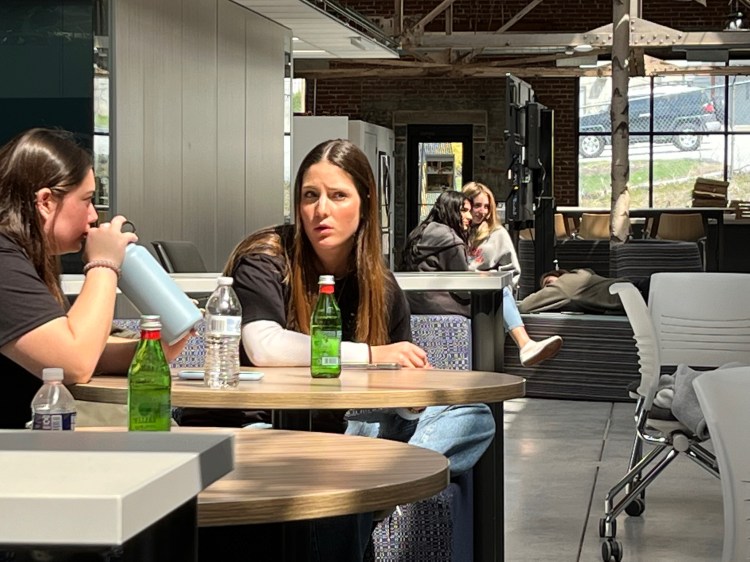
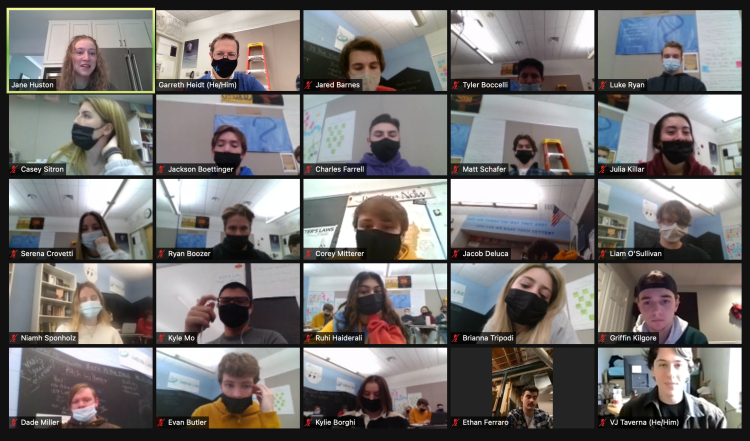
Matt Schafer commented on the constructive nature of the feedback he received, describing how while his presentation went well, “what was greater was the connections that we made.” Indeed, as presentations finished and students gathered in front of the central screen, we were able to watch the final speakers together. After only hearing and catching glimpses of our classmates’ projects, watching them all unfold in a space as special as Fluxspace was inspiring
Our day spent at Fluxspace was a grounding, yet refreshing experience for the two classes. After months of working on our deeply personal pursuits, being able to finally share them refocused us on the message behind not only our own projects, but Mr. Heidt’s NOVA Lab as a whole: that we all have the potential to do good things

Do Good Things Spotlight: Project Zero — From Garbage to Good Things

In the few years I’ve been co-creating, growing, and evolving NOVA lab, I’ve had at least 65 different projects. And while the process of creation in this class is more important than the actual project outcomes themselves, it’s not correct to say that projects don’t really matter in the end. They do. No student would take the class if they didn’t feel they could make a dent, a ding, a difference in the world, as daunting as that may be.

But each year, through perseverance, vision, and a good deal of luck, at least three teams strike gold and create projects that take off beyond expectations and, almost from the get go, “do good things” in the world.

In 2020, our first year, the audacity and scope of the projects (see * below) astounded me enough to move us to speak at Educon, the nationally known education convention hosted by the students (and staff) of Philadelphia’s Science Leadership Academy

And this past Thursday evening, March 28, 2022, my astonishment in this year’s projects continued as I had the opportunity to watch the Project Zero team of four high school seniors present their pitch to our school district’s Safety and Operations committee.

Project Zero is dedicated to bringing composting of biodegradable waste to our HS. The project was born out of a design sprint offered by a team of Drexel University professors at our first trip to the Fluxspace Innovation Accelerator. A team of seniors, two from each section of this year’s NOVA Lab classes, brainstormed a project to help reduce greenhouse gasses and climate change by promoting composting through the separation of biodegradable waste from refuse bound for landfills.

Through months of research, phone calls, meetings with the administration and the Back to Earth Composting Crew, setbacks, and presentations, this team has, from the sound of the responses at Thursday’s meeting, convinced the district to pilot biodegradable waste composting at our high school.

And while the team would certainly concur that the path to this level of success was more tedious and “meeting filled” than they ever could have imagined, they’ve also learned important lessons about civic responsibility, bureaucracies, and time management.

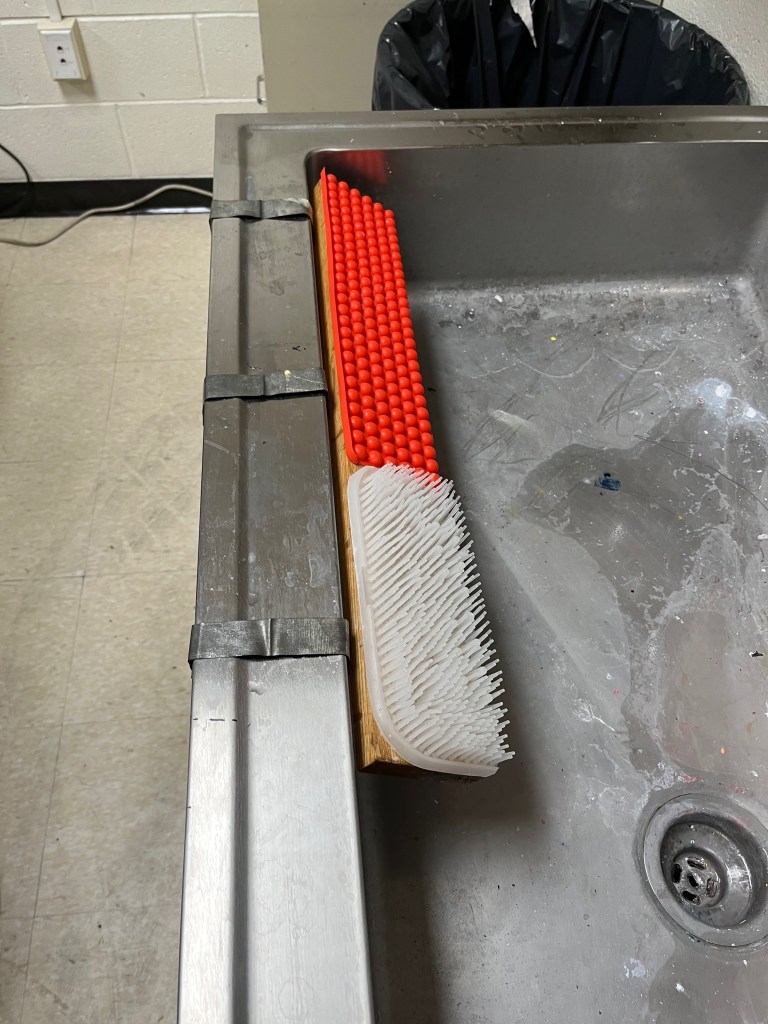
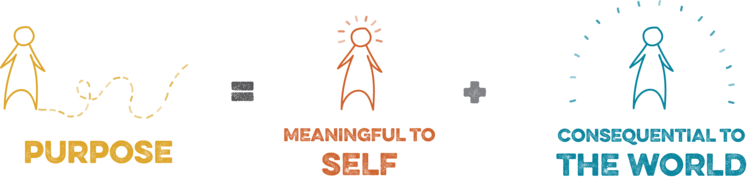
There are many other good things taking place in NOVA Lab this year. From Support Dogs to prototypes of brush washing stations for our art department, the variety and depth of the projects is exhilarating. But what is common to all these projects is also uncommon to the work students do in most every other class, for this work is purpose-driven; it is, in the words of Professor Bill Damon, “meaningful for the self and consequential for the world beyond the self.”

And that…? That is a Good Thing for now, and a Good Thing for our future.


*Year One Projects:

Make it 100, a drive to get 100% of eligible seniors registered to vote by April 20

Living Now, a lifestyle brand that sought to bring the joy of the outdoors to teens trapped behind screens, and deliver $1000 to the Appalachian Trails Fund.

Observo, a quest to build and prototype a cheap, homemade Dobsonian Reflector telescope.

Backyard Beans: “A Small, Good Thing”


The last newsletter introduced us to the good that comes from planning (and growing) towns and cities at a human scale. Towns thus planned allowed neighborhood businesses to flourish. Barber shops, mercantiles, restaurants, bars, doctors…all these small businesses, vital to the health and well-being of citizens were also vital to the life of the town itself. That last point bears repeating: Towns have a life. People and their flow into, within, and out of local businesses and institutions are the lifeblood of towns.

While the rise of a culture centered on the automobile and the movement of businesses to shopping centers and malls largely sucked the life blood out of American mainstreets in post-WWII America, the attempts to revitalize the sense of community and reclaim the self-sufficiency of of those towns has existed for almost as long.

One business well suited to brewing the kind of interactions which bring life to towns are local coffee shops. Along with micro-breweries, local coffee shops are as much gathering spaces as they are purveyors of gastronomic wares. In the parlance of urban/town planning, such business provide “Third Spaces.” Neither home nor work, they are vitally interstitial, providing areas for respite, sustenance, and social interaction–key characteristics for thriving communities.

When a town has one or more of these businesses operating at a profit, the buzz of life they raise for the community is, simply put, “A Good Thing.” In my own town of Lansdale, Pennsylvania, our homegrown coffee shop “Backyard Beans” is a great example.

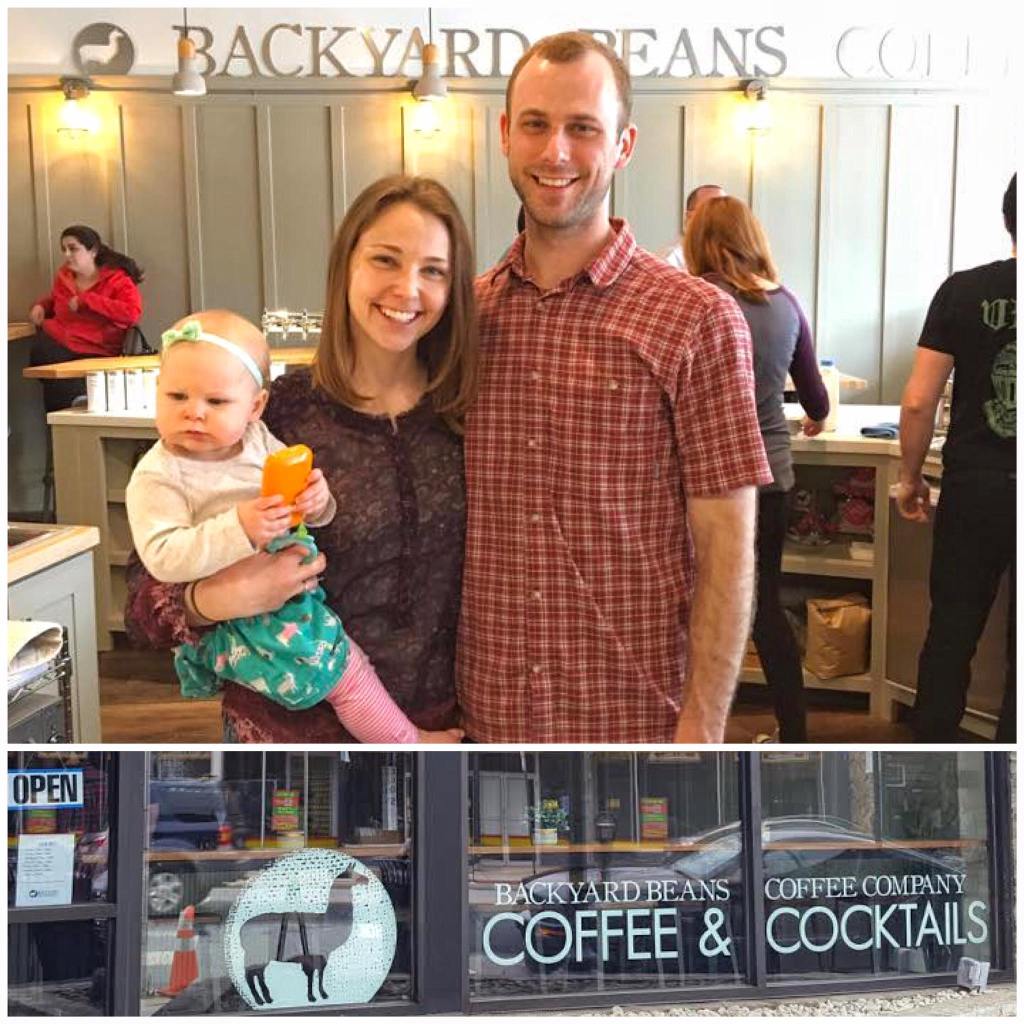
Founded by Matt and Laura Adams in the backyard of their Lansdale twin, Backyard Beans has helped revitalize the mainstreet of Lansdale as well as that of Ambler, a sister town a few miles to the east. Backyard Beans’ original configuration included a small cafe in the front and a roastery in the back room, visible through large glass windows behind the counter. But the quality of their product and their commitment to the community and their role in its revitalization quickly forced them to expand the shop.

The Roastery is now offsite, a few miles away, but still in Lansdale. More seating and work spaces fill the old roastery room. They also added a kitchen that makes breakfast and lunch sandwiches from scratch, and just this year, they have started a bakery onsite producing sourdough based pastries as well as other baked goods.

Owners Matt and Laura Adams understand that there is far more to running a business in a town like Lansdale than making a profit. Their commitment to the community resides in their name–“Backyard Beans” being a reference to the place (their backyard in Lansdale) where they first started roasting their own beans.

But their commitment is found in more than their nomenclature. They are committed to playing a large role in revitalizing Lansdale’s mainstreet. And so, not only do they make good coffee and serve good food, they are doing good things, too. From “Make a difference Mondays, to creating work for local residents, to online fundraisers and goods donations, Backyard Beans has devoted itself to doing good in the community.

Of course, they are not alone in this philanthropy. Most all small businesses in small-town America recognize the debt they owe their locales. But Backyard Beans’ fits that “third space” niche I write about above that makes the town alive. Many in Lansdale and beyond have made Backyard Beans a home-away-from-home. Businesspeople can find space and time to work, college students have ample area to study in groups, and neighbors and families visit regularly to spend time catching up with each other.

I know that Backyard Beans is not unusual in the role they play. All towns that are undergoing revitalization have created the economic opportunities for businesses like Backyard Beans to flourish. What is unusual is the dedication and focus Matt and Laura Adams have to the quality of their product. In 2018 they were named one of the two best coffee shops in Pennsylvania by Food and Wine magazine, and their coffees are served in restaurants across the region.

With such a dedication to quality in the food they make and the coffee they roast, and a focus on building stronger communities, Backyard Beans is the definition of a small (but growing), good thing.

Back to the Future: Human Centered (Re)Design for the Future of Towns & Cities

In the late 1990s, I took a class at Temple University in “American Material Culture.”  Taught by the venerable Prof. Alan Davis, the class was probably the spark that ignited my interest in Design as a field of study.  We read books that examined Coney Island, Sears Catalogs, American homes, and World Fairs as artifacts of intention.  That is, we studied the built environment as conglomeration of texts which, because they had been designed, allowed us to read and infer intention out of them.

At the time, I had grown an interest in Historical Preservation.  Somehow, as a young 20 year old, I’d started getting Preservation Magazine, the publication of The National Trust for Historic Preservation.  That magazine, Prof. Davis’s reading list, and my thesis paper focused on a movement in architectural design and preservation termed “The New Urbanism” led me to develop a sense for city and urban planning that still influences the way I look at small towns and large cities and how we move through those spaces.

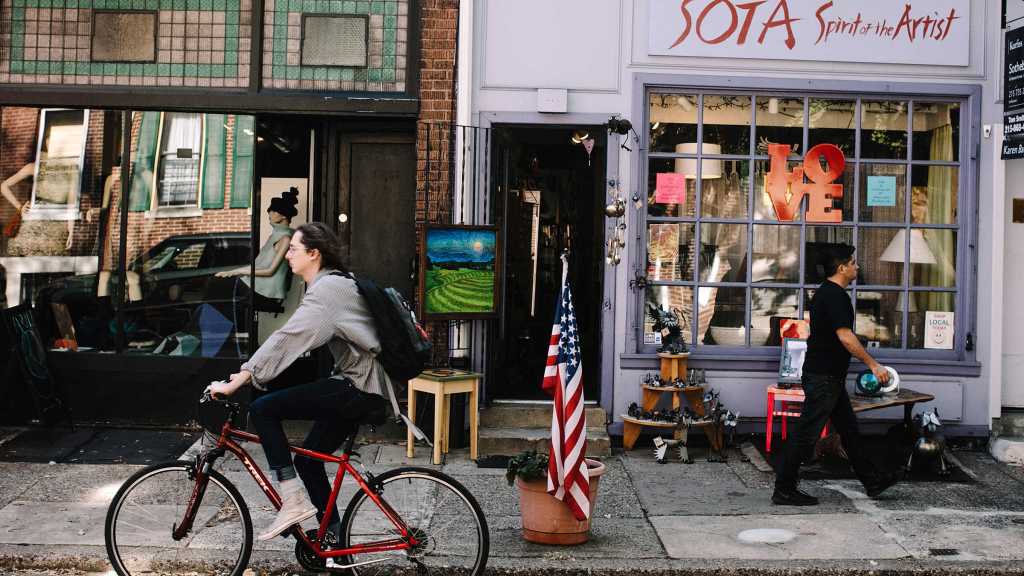
Pine Street, Philadelphia, PA: From the National Trust for Historic Preservation

One aspect of my studies that remains with me is the manner in which the automobile changed the shape of American towns and cities.  (And yes, I know I risk simplifying things here…such is the nature of my current medium. If you want more, read my thesis paper.) Small-town America on the East coast and other towns in the nation that grew up around railroads are far different from those towns (see Levittown, for instance) that developed after the advent of mass production of automobiles.  The former displays a strong town center, generally organized around a rail station.  Most all destinations within those towns are within a 1 or 2 mile radius–about the distance a healthy human being can walk in 15 minutes or so.  But towns organized around the automobile generally display little of the coherence and emergent organization of their rail-oriented counterparts.  

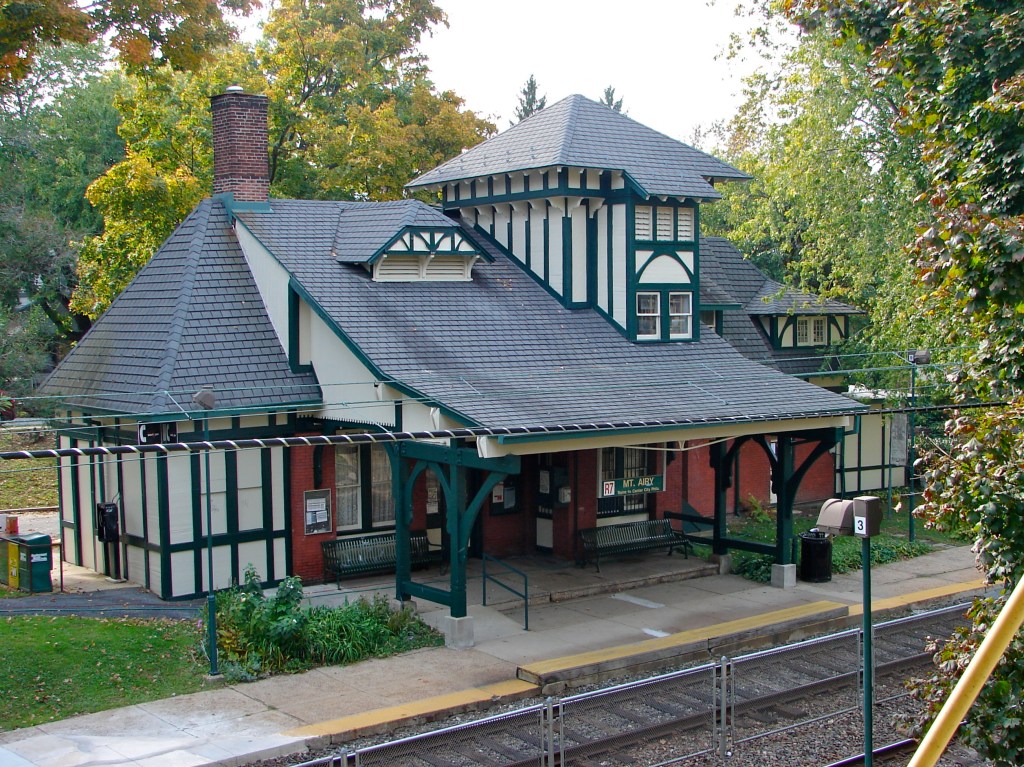
Mt. Airy Station, SEPTA Regional Rail Station, Philadelphia PA: From the National Trust for Historic Preservation

Those first towns, often called “first-ring suburbs,” were designed with their denizens at the center.  Whether that design was purposeful or, as I mentioned above, “emergent,” is up for debate.  Regardless, it’s clear that what mattered most was that the scale of the town had to fit the humans who created, lived in, and developed it.  The loss of such a human-centered approach to town planning in the early to mid-20th Century was one of the great failings of the modernists, the automobile moguls, and the planners they influenced.  

Thus, when I find articles describing attempts to (re)create the human scale of American towns, I jump upon them. While I admit that a privileged nostalgia urges my leap, I am aware that modern planners are far more cognizant of the ways in which town planning must provide equitable access to housing, shopping, public transportation, etc. (We can’t all live in the prefabbed, postmodern histories of towns like Disney’s “Celebration, FL.”)

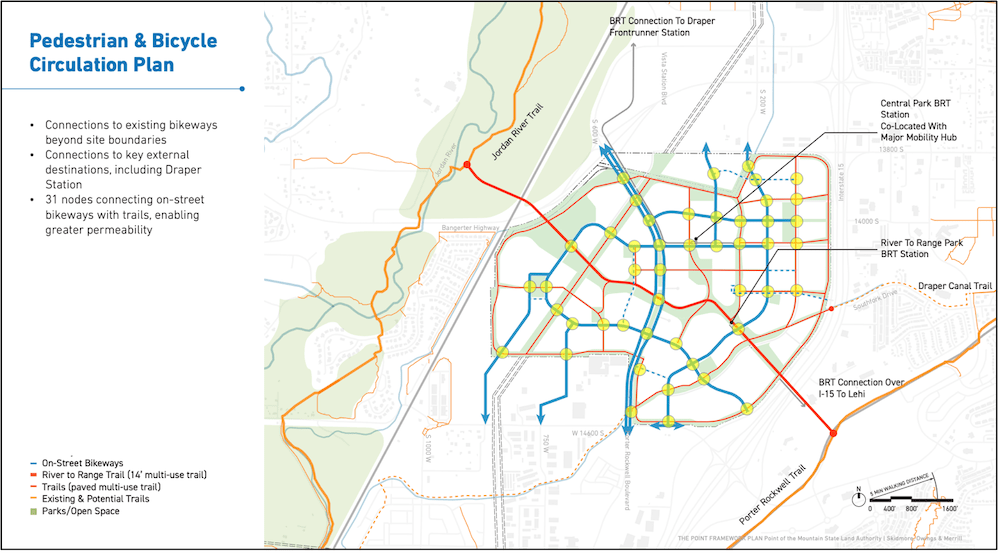
Two articles recently crossed my newsfeed that rekindled my interests in town/urban planning and drove me back to that thesis paper and the work of the New Urbanists. Both articles come from an online newsletter, Alchemist City, in itself a “good thing” that focuses on providing news about urban design reforms around the world. (Click here to join their newsletter.). The first article is about “The Point,” a proposed town in Utah that seeks to be “America’s first 15-minute city” and to drastically cut reliance on automobiles. Here’s a map of the proposed town, built around access to public transportation and numerous bicycle and walking pathways.

From the Alchemist City Newsletter, 1/21/22

The second article, again, also from Alchemist City, is about the plan in Milan, Italy (Italy’s most populous city) to create up to 466 new miles of protected bike lanes. Approved by the Metropolitan City of Milan to the tune of $285 million, the plan places Milan ahead of the much larger city of Paris and it’s 422 miles of proposed bike lanes. (David Byrne is, I’m sure, elated.)

Both of these initiatives are good things. Yes, we can argue that these are special cases, that one is foreign and based within cities that were already “pre-automobile” and “continental” in their design, and that the other is created upon a “clean-slate.” However, they are initiatives that seek to reduce human impact on the environment and to do so in ways that are good for people and business. It’s just that those businesses aren’t your huge multinational automobile conglomerates that seek to drive us into oblivion, whether it be in a gas-guzzler or “clean” electric vehicle.

From the Alchemist City Newsletter, 1/21/22

Finally, and here’s a hint about the next “Do Good Things” newsletter’s topic, both of these initiatives clearly are paying attention to the impact they have beyond the local. That is, these initiatives consider their impact on a much larger geography (the world) and a much larger time frame (designing for the future). Such forward thinking is indicative of people who are concerned about the great good, who understand the necessity for all people to act within the framework of the United Nations Sustainable Development Goals, and who are interested in making the world a better place.

And that’s a good thing.

More Research:
Fast.com article on 15-minute cities
15-minute Cities website:  Apparently, they have an entire website and movement.

The Thrill of Victory, and the Agony of Defeat: Cassidy Lichtman’s “P/ATH” and Sport as a Good Thing

I had the fortune to grow up in the 1970s. (To be more truthful, “fortune” is an empty term. Most all of us idolize our childhoods and hold them as a marker for how others should grow up.) And on Saturdays, on ABC, around 3PM in the afternoon, I was able to tune into ABC’s Wide World of Sports and capture a bit of “the thrill of victory and the agony of defeat” from different sports around the world.

What drew me to this show every Saturday afternoon was the constant “variety of sports” it showcased and the drama of human athletic performance. While I was only ever a soccer player from 5 years old, I enjoyed the competition inherent in all athletics and often dreamt myself a Major League Pitcher, a brick wall of a hockey goaltender, or a wickedly fast table-tennis player.

But I also came for the camaraderie of team sports, for the sportsmanship, for the way competition built character, persistence, and, I suppose, just good human beings. While it was not always this way–arrogance was often on display and poor sportsmanship was clear in numerous occasions–I knew enough to criticize the bad sports and amplify the good sports.

While ABC’s Wide World of Sports closed its doors in 1998 and bowed to the accession of cable news programs, It lived on through its iconic opening and the unforgettable phrasings and delivery of McKay’s “Thrill of Victory and the Agony of Defeat.”

But sports didn’t die with ABC WWS. As a the second edition of this Do Good Things Newsletter clearly points out, the character-building qualities of amateur and professional sports are in tact, though, at least at the professional level, they are seemingly a rarer occurrence.

Which brings me to today’s “Good Thing”: P/ATH–Progress through Athletics. A small organization with deep roots and connections in the world of professional and amateur sports, P/ATH’s sees itself this way:

“Our potential lives in both the athlete and the person.

We are a home for the athletes and coaches who want to train both. 

Who want to become better teammates, better leaders and better humans.”

P/ATH was founded by Cassidy Lichtman, a former member of the USA Volleyball Women’s National Team. She was a two-time All-American and an Academic All-American at Stanford before joining Team USA and playing professionally around the world.

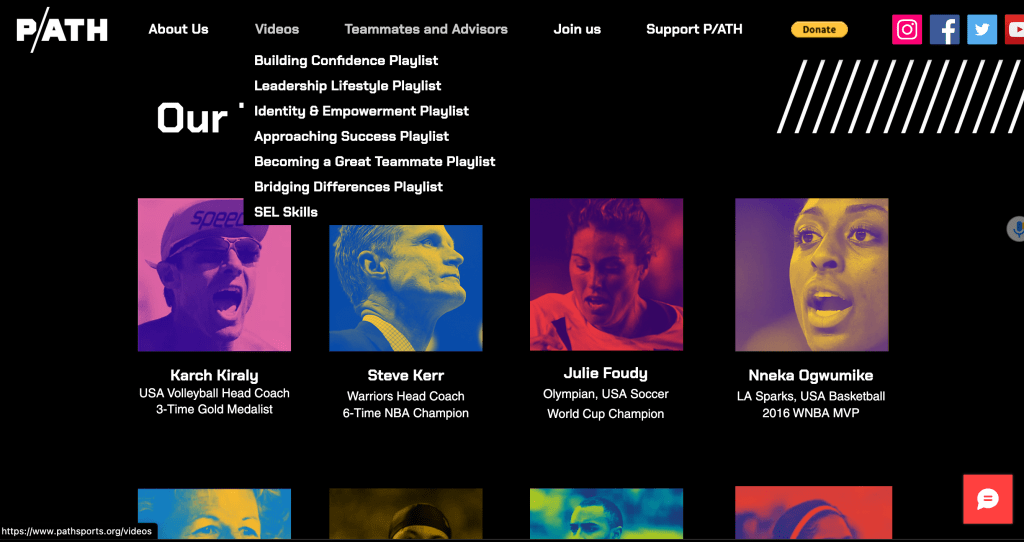
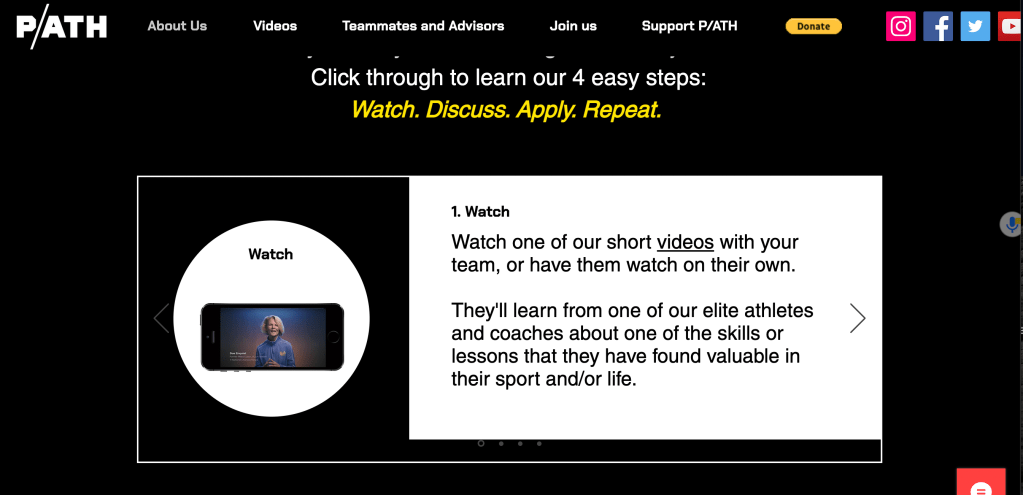
Their method is simple, use the draw and experience of professional athletes from around the world to teach lessons about sportsmanship, service, teamwork, etc.

Videos on these aspects of participation in sports are the cornerstone for the teaching. (see image above.). In just over 10 minutes a week, coaches of school and local league teams can expose their players to such topics as “how to build mindset skills, what goes into great team cultures, how to break out of the boxes we get put in and how the most valuable life lessons  we learn in sports can transfer off the field.”

What P/ATH does so well is recognize the humanizing forces of participation in sports and build, out of that immediate draw, a platform for using sport to grow human character in something more than a haphazard way.

If you are a coach or know a coach, I urge you to send them to P/ATH’s website and check out just how easy it can be to build team culture and communication through a patterned, high-quality library of videos.

Sport is an inherently good thing. Of this I have no doubt. But with P/ATH, sport becomes a much more powerful vehicle for purpose-driven learning and doing good things in the world.

As a startup run largely out of her own pocket, P/ATH is reliant on the good will and good nature of those who believe in its mission. If you do, please consider donating to the good work of P/ATH by clicking here: https://www.pathsports.org/support.

NOVA Lab in the News

A few years ago I took a summer class in Project Based Learning at a local educational clearinghouse. The woman who was running it was a vibrant, talkative, brash character from Missouri. Among the many pithy statements she brought to the class from”The Show Me State” was this one: “Teachers are dying of humble.”

Which is to say, “We don’t talk enough about the great things we’re doing because apparently we need to appear as selfless, bottomless givers who sacrifice and live for the students. Don’t get me wrong, I believe that everything I do is done to try to make my class more learner centered. And it’s hard. But that endeavor? If I don’t talk about it, if I don’t “brag” about it, who will know? So this “public servant humility,” this “dying of humnble…?” Yeah, I don’t play that game.

So if you can stomach me for 50 minutes or so, and you’re interested in the genesis and evolution of a class like NOVA lab, well…here’ you go.

This interview was hosted by Hazel Mason of the Modern Learners and their Change School initiative. Hazel does a great job of drawing out some of the really salient and critical outcomes of the class.

If you’re interested in starting a class like this, I’m more than willing, as you’ll see and hear in this video, to talk about it.


Project Wayfinder: A Good Thing

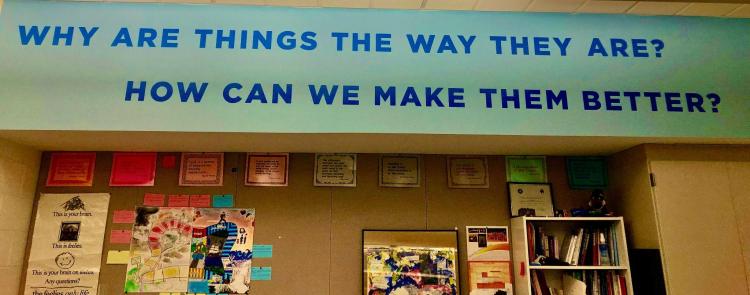
If there is one tune we play more often than all the others in NOVA Lab, it begins with the two questions that drive everything we do both in and out of the classroom. (See image at right.)

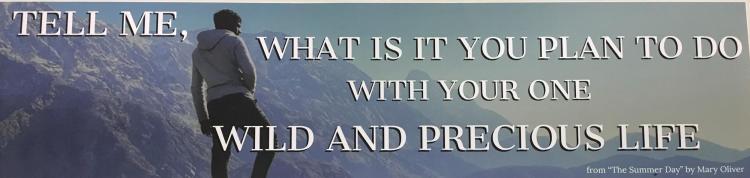
This song’s refrain is composed of the final two lines of Mary Oliver’s poem, “The Summer Day.” I am, after all, co-creator of “a space for inspiration, aspiration, respiration, and creation.

Aside from all being questions, these phrasings have one other thing in common. They all are existential in nature. They ask us to consider things beyond our own immediate desires…to reach beyond mere material satisfactions and search for meaning and purpose. Make no mistake, I believe education is a public good and it needs to help students focus on such questions in deeper and more sustained ways if we are to even consider reaching the 22nd century.

Which is why when I first read about Purpose-Based Learning in the fall of 2017, and, in particular, the work of Patrick Cook-Deegan and his team at Project Wayfinder, I knew I had to bring it into our classroom. What the Wayfinder team has developed is one of the most inherently “good” curricula I have seen in 28 years in the classroom.

Wayfinder’s High School curriculum is a series of lessons that probe four key aspects of learners’ socio-emotional growth–”My Self,” “My Community,” “My Concerns,” and “My Actions.” In essence, to borrow from the work of Christian Talbot and Annie Maekela, Wayfinder engages students in the pursuit of answers to four eternal questions: “Who am I?, Who are we? What matters to me? What am I going to do about it?”

But it is not this focus on existential question that makes Wayfinder such a good learning experience. It is the fact that they are founded upon helping students develop purposeful work. In doing so, Wayfinder teaches students to design their lives with purpose and with the realization that there is more to education–and life–than achieving the highest GPA and attending the “best” college.

And while I have written about this before, Wayfinder recognizes an inherent truth about education best stated by Prof. William Cronon in his essay, “Only Connect: The Goals of a Liberal Education”:

“In the act of making us free, it [a liberal education] also binds us to the communities that gave us our freedom in the first place; it makes us responsible to those communities in ways that limit our freedom. In the end, it turns out that liberty is not about thinking or saying or doing whatever we want. It is about exercising our freedom in such a way as to make a difference in the world and make a difference for more than just ourselves…Liberal education nurtures human freedom in the service of human community.”

I have shaped my life as a teacher around Prof. Cronon’s words. Nothing I’ve read before or since better encapsulates the potential “goodness” of public education’s mission. Few curricula I’ve encountered in my 28 years of teaching come close to embodying Cronon’s belief. Project Wayfinder is one of the few that does.

(For more about Project Wayfinder, read my series of posts from 2018 Here , Here, Here… and Here)

How We Build a Brand for Good

It’s hard to believe, but NOVA Lab is now in its fourth iteration.  We started the class in 2016-17with a semester-long prototype called “Design Lab.”  In 2019–2020 we had our first full (though COVID shortened) year and tremendous, serendipitous success.  (Though to be truthful, we did plan for some of that serendipity.)  From Make it 100 to Living Now to The Student Section Podcast, students were able to persevere through a tremendously difficult shift to online emergency learning in March of 2020 and still produce some amazing results.  

In 2020–2021–a year broken by interruptions and the need to navigate through all the weirdness that was “schooling” during a pandemic–we still managed to develop some interesting projects.  Litter Ridder and their app, “Scrap Snatcher,” VR Science Classrooms, Online Chess Tournaments, and Design Thinking classes for Middle School students all happened last year.

I bring these up as a preview to one of the greatest joys of doing good things:  Seeing how the learning and the good things associated with it is multiplied beyond the classroom.

NOVAssociates and NOVAlumni

Last week, eight former NOVA Lab students (“NOVAlumni”) returned to class (in person and on Zoom) to give current “NOVAssociates” some insight into the way they ran their projects, the successes and failures they encountered, and the unique learning that has endured through the years for them.   To a one, the students remarked that the work they did in NOVA Lab has been a huge factor in the direction and trajectory of their lives.  

What’s more, they noted a primary reason they decided to spend two hours of their day on a Zoom call or stepping outside of their scheduled classes to speak to this year’s NOVAssociates was because they recognized the huge sense of gratitude they had for the class they helped to create, and they wanted to make sure that the new students had a chance to succeed more quickly and with a more focused technique than they were able to pull off.

Two years ago guest speakers Phil Holcombe (principal designer at Form & Faculty, Head of Design at Project Wayfinder, and Member of the NOVA Lab Board of Advisors) taught us “your brand is the story people tell about your business when you are not present.”  What last week’s presentation taught us is that the NOVA Lab brand is alive and growing.   We have no doubt that many of our current NOVAssociates will see these NOVAlumni as role models.  And they will return,to bring the same insights and arguments about the class to future students.  

Play Ball!

Last week I published the second edition of the “Do Good Things” Newsletter/blog post. In it, I spoke about the great good work of “Coach Ballgame,” James Lowe. Today, I have the pleasure of releasing the first episode (it’s rough…but beautiful) of our “Doing Good Things” podcast featuring Coach Ballgame.

If you have a cup of coffee, some time, and the desire to be moved by someone who is doing beautiful work in the world, then please take a listen/watch to our first episode.

‘Atta Boy!

Issue #2 of the Do Good Things Newsletter has us looking across the continent for a person, a company, or a corporation doing good things. In our first issue we looked at one of the world’s most successful companies, Lego, and how they are leveraging the power of their brand to bring play and creativity to children in need.

This week we’re looking to California and the great good works being done by a young man with a love for what was once, “America’s Pastime”–Baseball.  Now, I never played organized ball, but I still have my old glove, and I played years and years of catch, pickup games, and I practiced pitching almost every night in the summer.  I loved the game. ‘Loved the smell of leather and oil, my mouth full of gum, the thrill of tracking a deep flyball, and the satisfying smack of the ball in the glove’s pocket.

While my own children never took to the game, I’ve spent many nights (re)watching The Sandlot.

So a few months ago, when I stumbled on the YouTube channel of James Lowe (A.K.A. “Coach Ballgame”), I was teleported back to my youth.  If I had known there was a Coach Ballgame out there in my neck of the woods, I probably would have spent my years playing baseball as well as soccer.  

What James does so well, is bring the joie de vivre of the game to kids who otherwise might not get to play organized ball.  His mission is to “restore an ardor for America’s pastime.” But it’s so much more than that. He is teaching sportsmanship, character, and bringing such a joy for the game to young children that it’s utterly infectious.  

It is rare to find people who have so connected their passion with a purpose that they live their lives “in the element,” but when you see it, it is unmistakable. They are numinous.  Their every move is fluid. Their words evoke life itself.  

James Lowe, “Coach Ballgame,” is such a person.  I swear to you, you cannot help but smile when you watch him coaching baseball.

On Wednesday, December 8, Coach Ballgame will spend the early morning hours of his California day bringing his story to the students of NOVA Lab.  

As we venture forth in this marking period on our own purposeful projects, projects driven by passion that serve the needs of a community larger than ourselves, we will always be looking for role models. I am grateful to be able to bring the Good Work of Coach Ballgame to NOVA Lab.


Social Media Information for Coach Ballgame:

Website: www.coachballgame.com
Instagram: https://www.instagram.com/coachballgame/
Facebook: https://www.facebook.com/coachballgame/
YouTube: https://www.youtube.com/c/coachballgame/featured
Tik Tok: https://www.tiktok.com/@coachballgame?source=h5_m
Twitter: https://twitter.com/coachballgame
PodBean Podcats: https://coachballgame.podbean.com/