This video is all you need to know…
The Only Constant is Change: Fluxspace Again

In November of 2019, in the first full year of our class, Innovation Lab, we discovered a local interior design firm, Corbett Inc., had converted an old wool mill on the Schuykill River in Norristown, PA into an innovation-and-technology-in-education hub. We jumped on the chance to visit as their mission was aligned with our own.
In a little over a month, our students developed self-determined learning projects, completed background research, and practiced project pitches. Having little idea of what we were getting into other than that we were presenting in a public space to local business people, the students dove into the opportunity and came out with what many of them realized was the best field trip they had ever taken.
Over the intervening six years (with a year off for COVID in 2020), we have visited Fluxspace twice a year to present projects, receive feedback, and be the audience for numerous entrepreneurs and innovators in the Philadelphia area and beyond.
Throughout it all, Fluxspace has grown, its interior changing to adapt to new technologies, new layouts and new ideas. And throughout all that change, one thing has been constant, their steadfast focus on their mission and vision:

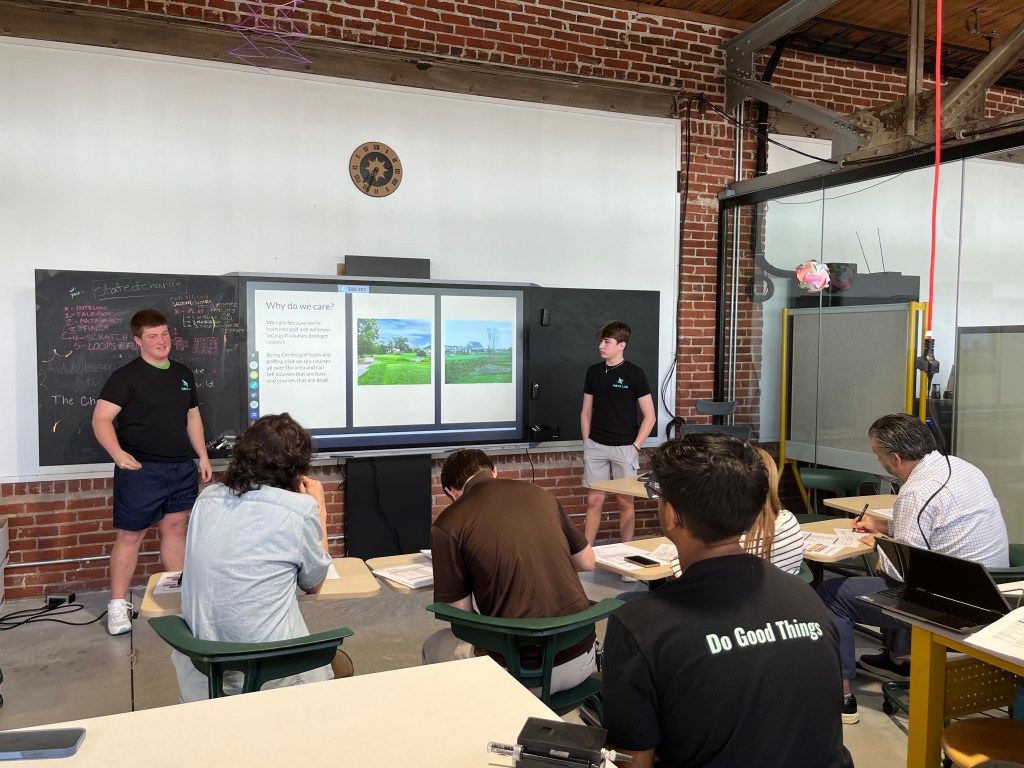
So when we again showed up at Fluxspace this past Friday, December 19, 2025, I knew things would be different. Our class size was 3/4 of our normal 40 students, we had a 2 hour delay for wind and power outages, and I’d lost a couple of the former students and local business people who were going to be providing feedback and critique to the students on their projects.

But I also knew somethings would be the same: The space would be ready for us, our guest speaker, Max Mirho, would be one of the most informative speakers on Creative Marketing we’ve ever had, and Fluxspace director of Innovation, Ryne Anthony, would be a tremendous host. All these things were true, but what was most impressive was the way the nine students stepped up to fill the space and take charge of their time. Equally important was the way our NOVA Lab alum, home for the holidays, were able to offer such important and insightful feedback to the current students.
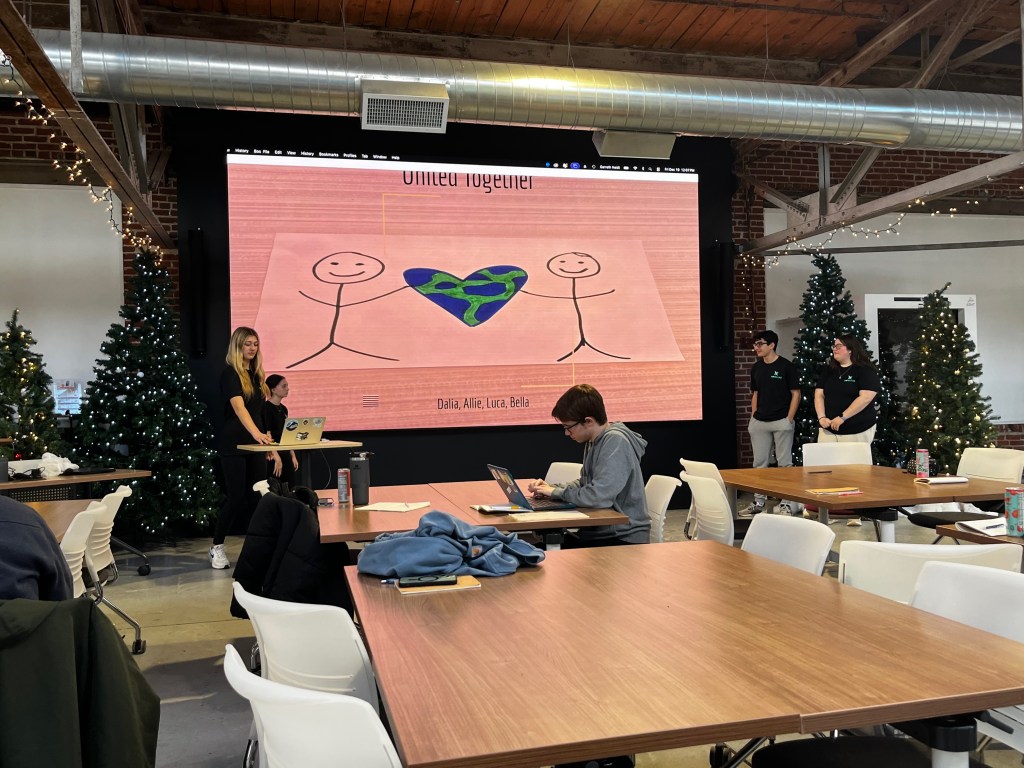
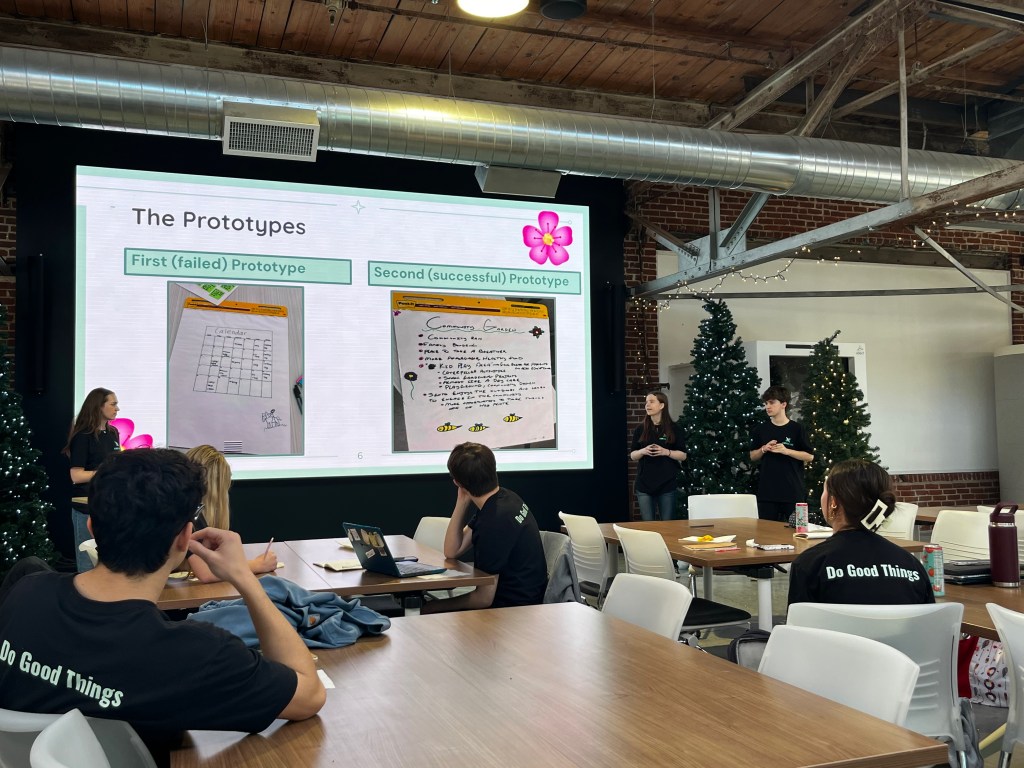
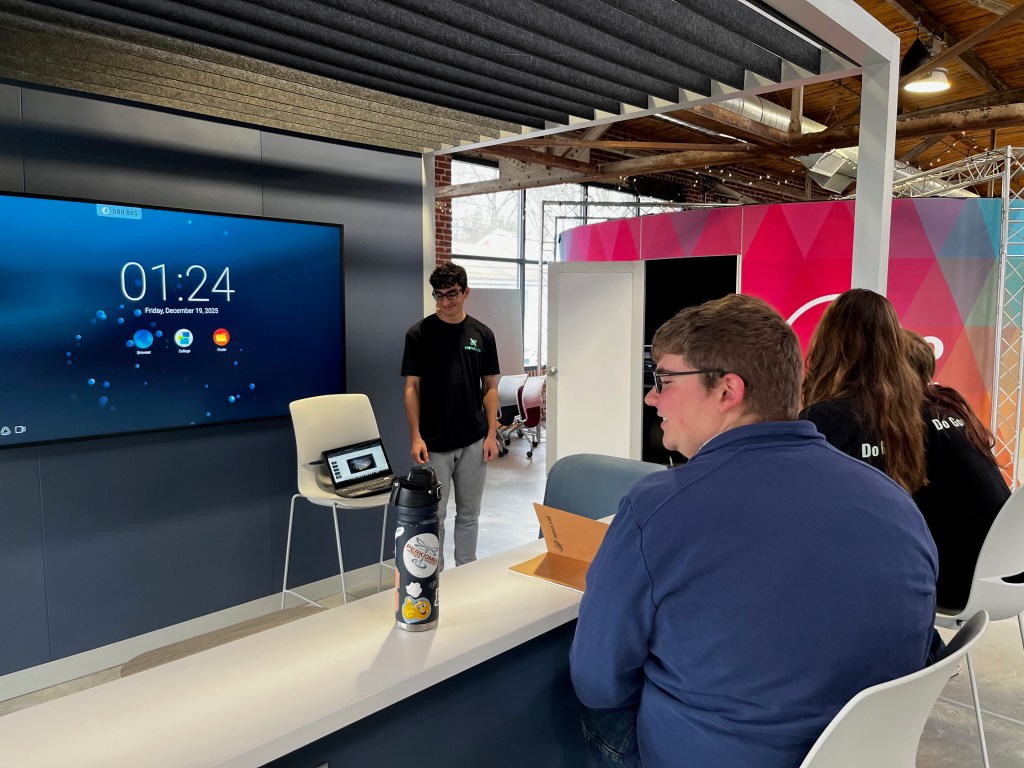
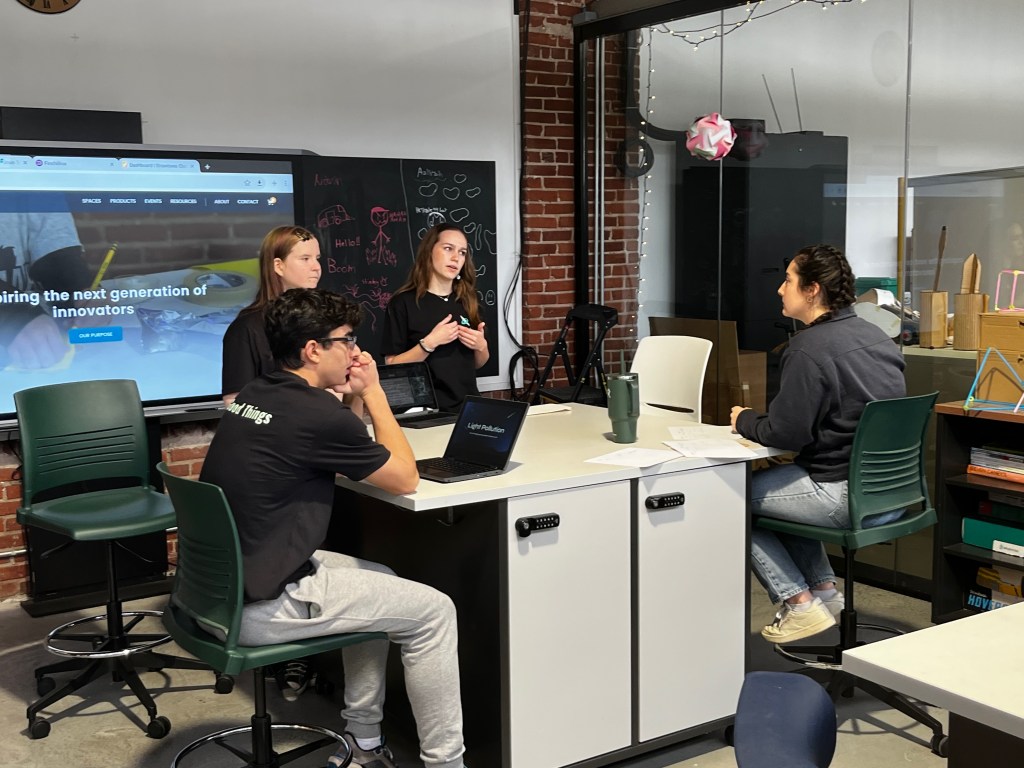
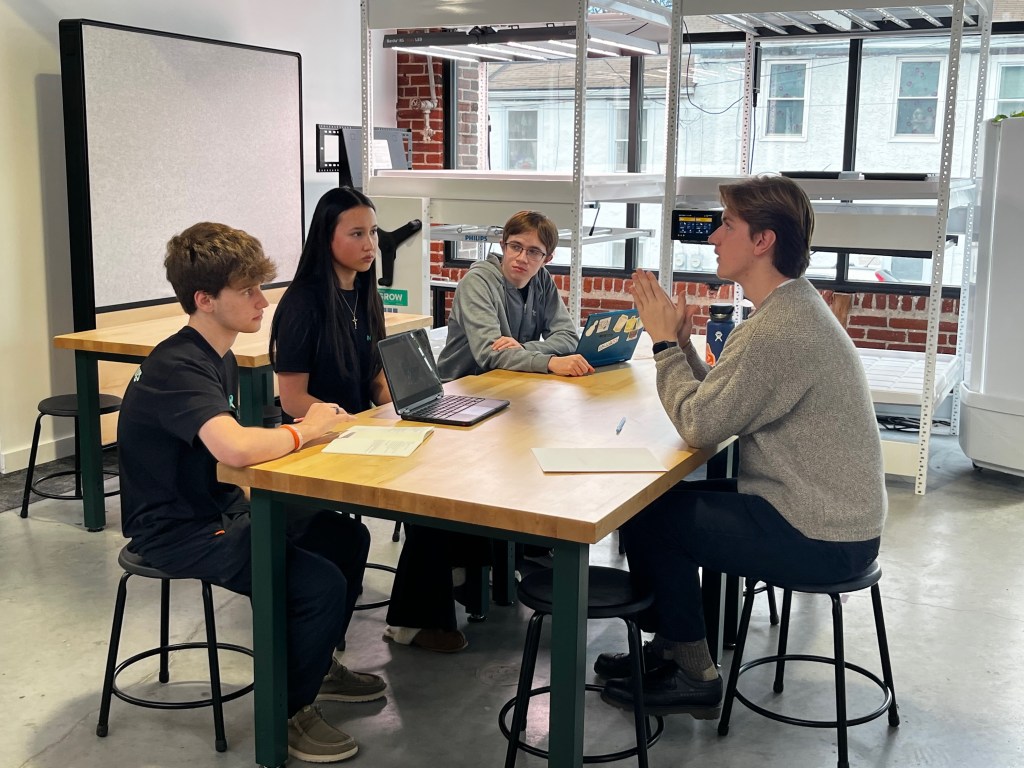


While our time at Fluxspace was shortened by two hours due to power outages and downed trees, and while we never had the chance to hear from our former student, Julia Killar, about her innovative work using storytelling with mothers in the African nation of Sierra Leone, the focus of the day was placed solidly where the students wanted it to be–on themselves, their work, and the potential of their projects to do good things.
What in education could be better than students who want to talk about their work, who want the hard feedback, and who want to do good in the world?

Of Great Things and Sacred Spaces–A Summer 2025 NOVA Lab Update
While NOVA Lab’s existence spans a mere five years, the number of projects we have had with lasting impact is sizable. Even during our first year, interrupted as it was by a global pandemic, students completed projects ranging from a spray paint art installation for the class itself, to voter registration drives for high-school seniors to raising over $1000 for the Appalachian trail fund through the creation of a life style brand–“Living Now.”

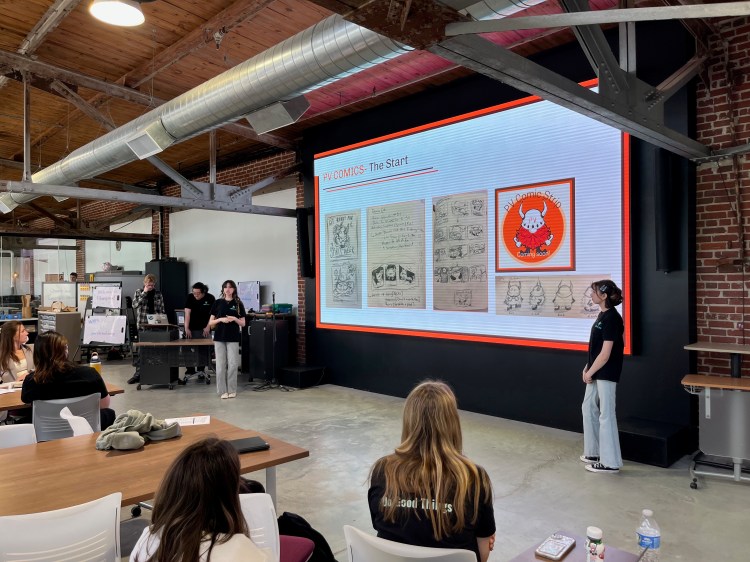
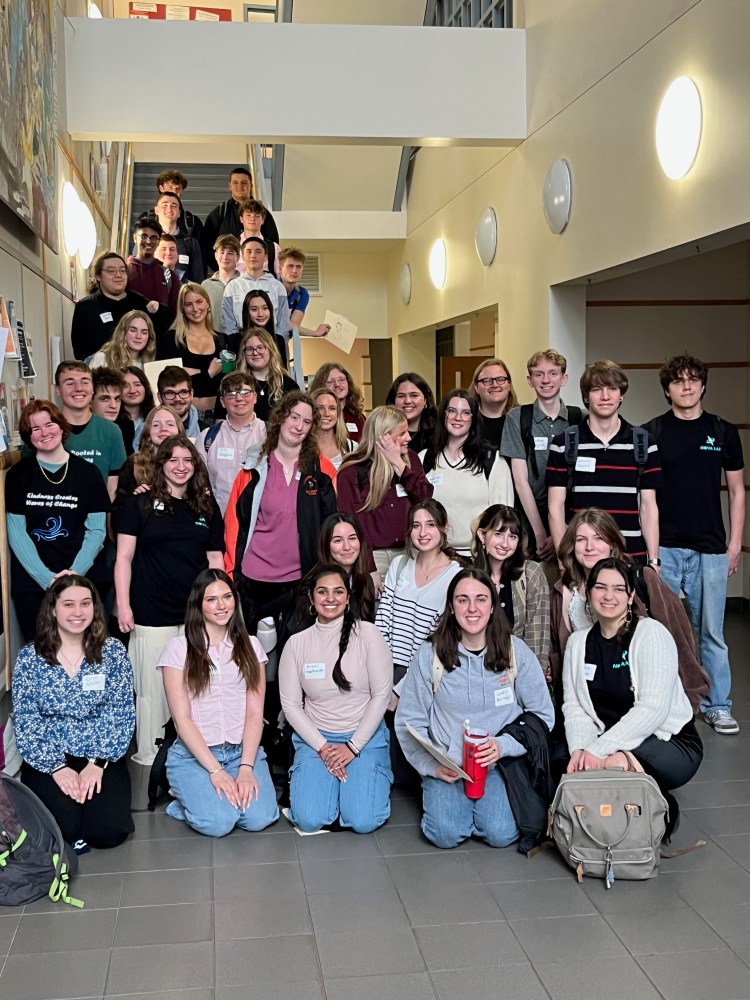


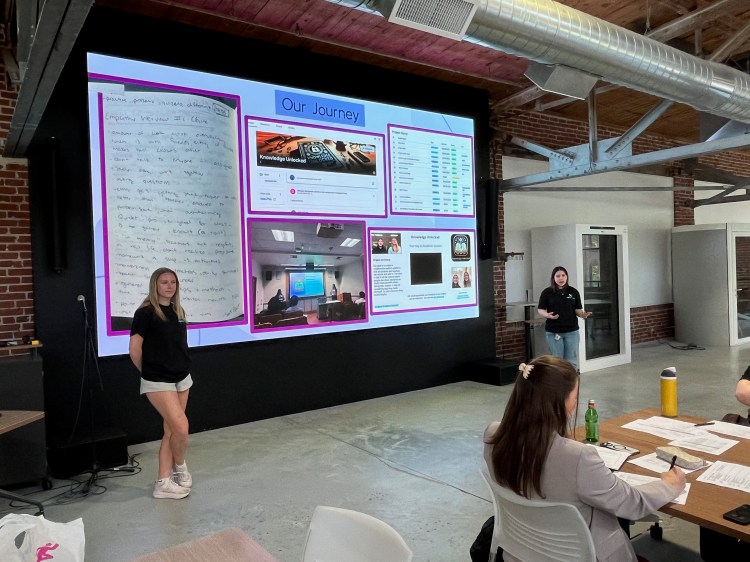

In the years since, projects to impact both the school (therapy dogs, remodeling the counseling center, creating a “zen den” for de-stressing and downtime) and the community at large (Spike Valley tournament, Dog adoption drives, low-cost crafting events) have helped spread the word about the benefits of doing “good things.”
This year, one project has had an community-wide impact beyond my expectations. “Jo and Zo Trail Signage, led by seniors Zoey Ganter and J.P. Zangara, has created a lasting and educational impact on the Perkiomen Trail between Collegeville and Schwenksville. For years to come, their informational signs about local flora and fauna and native inhabitants will stand as evidence that, given time and guidance, students are capable of achieving more than merely good grades.
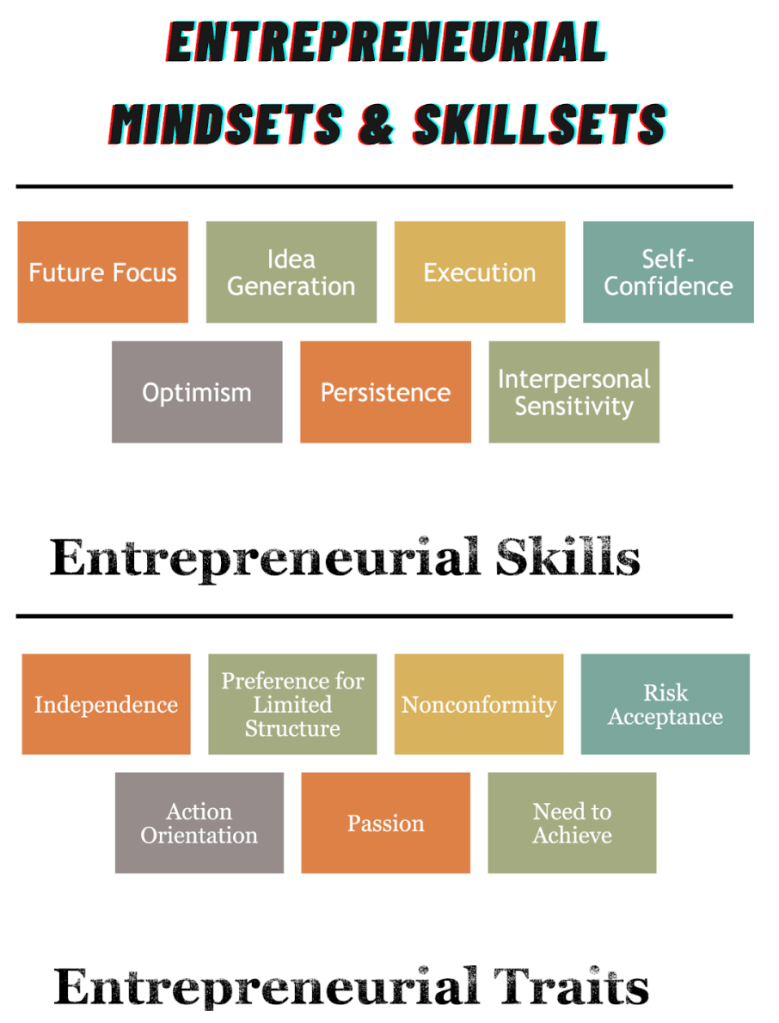
One of the basic tenets of NOVA Lab, beyond the sloganeering of “do good things” is that entrepreneurial mindsets, when put to use for social good, can bring amazing benefits for citizenry. In the world of education, we refer to this as “Purpose Driven Learning.” Prof. William Damon of Stanford University notes that this work is defined by it being “personally meaningful for the student and consequential for a larger community.” JP and Zoe’s project is a perfect example of the power of purpose driven learning. For the better part of 5 months of work, JP and Zoey tracked down sign makers, connected with local governmental officials (thanks to Joe Seltzer!), partnered with fellow students to learn Adobe Illustrator, and sought out funding from former NOVA Lab students and partners to pay for the signs. (Great thanks to Ms. Erica Quigley and also to former NOVA Lab pioneer M.T. for agreeing to fund the signage and to the county for digging the post holes and erecting the signs)
In the end, as you’ll see from these photos, Zoey and JP have made a lasting impact and done a good thing. (This trail sign is located at the Perkiomen Trail Head. Others are located at the Rahns Trailhead, Skippack Trailhead, Central Perkiomen Park, and the Schwenksville Trailhead)


NOVA Lab & Education Beyond the Classroom
Quaker scholar and educator Parker Palmer has written that “when individual selves in a classroom become unified—not homogenized—around a shared experience of awe, exploration, and reverence” it becomes easy to “envision curriculum as something greater than both the student and teacher, and therefore worthy of a kind of relationship characterized by reverence, awe, and mysticism.” Palmer calls this a “great thing” and “invites educators to ask, what is this ‘great thing'” we as a class are moving towards? The answer is not found in textbooks or tests or, even between the walls of a classroom. This great thing is found when the choices of what to study are influenced by “transcendence (moreness) rather than curricular goals and achievements, which are largely individual and transactional.
Taking Palmer to heart, breaking the walls of the classroom, and doing work that is purposeful, meaningful, and beneficial for a larger community…I believe this is how we want our children to experience education. It is, as Palmer notes, how we move our classrooms from staid, concrete boxes to transcendent, “sacred spaces,” places where “curriculum is no longer static knowledge to be mastered…but a doorway to newness,” and renewal.
JP and Zoey are two of hundreds of students who have stepped into the NOVA Lab, discovered the power of purpose-driven learning, and helped move the classroom from a place of transaction to one of transcendence. And that, is a very good thing.

(quotations from Parker Palmer found in “The Classroom as Sacred Space” by Dr. Paul Michalec)
NOVA Lab: A Class in Flux

Since 2019, our social entrepreneurship class, NOVA Lab, has been visiting and presenting our projects at the education innovation space known as Fluxspace in Norristown PA. An arm of the Corbett, Inc interior design business, Fluxspace is something I like to call a decentralized, autonomous, community-based, educational space. But whatever you call it, Fluxspace has become a mecca for teachers and districts from surrounding counties. Here, schools can hold retreats, teachers can take PD classes or bring classes to engage in design-based activities in STEM and other fields.
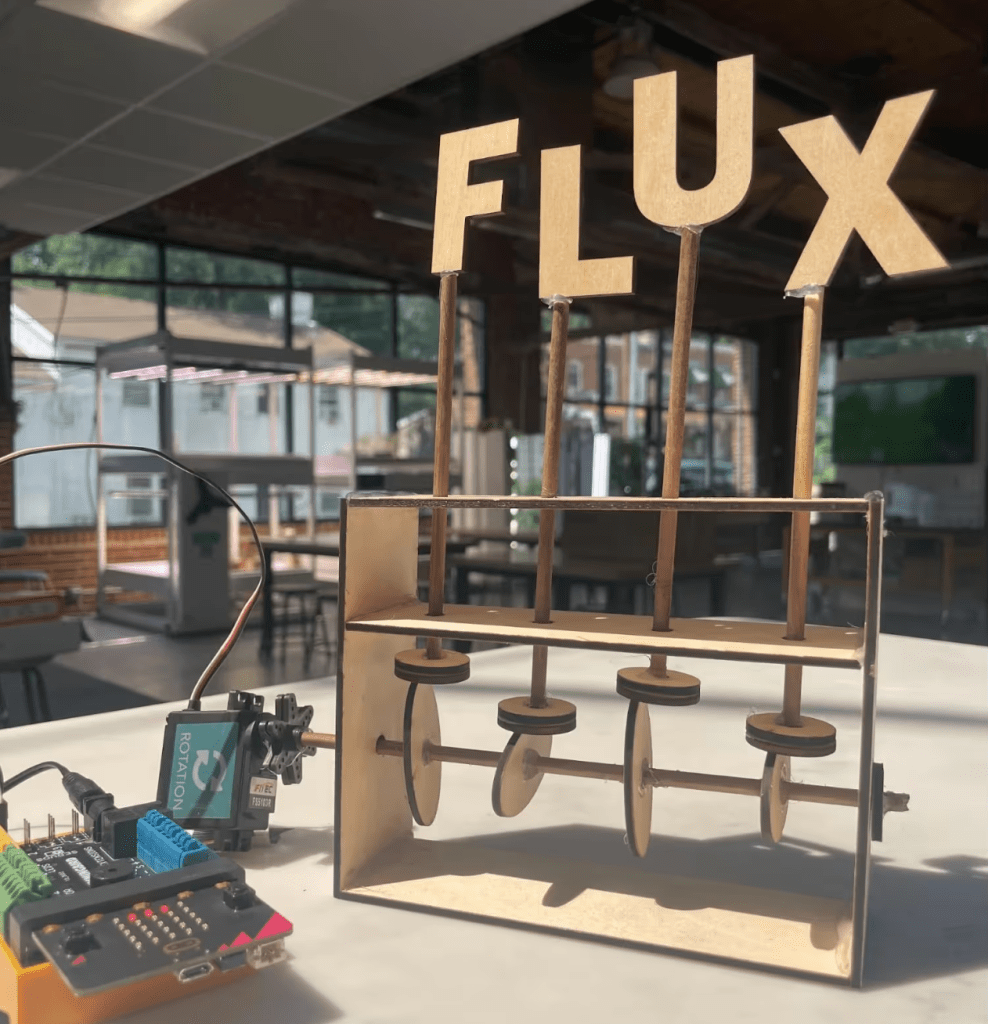
The versatility of the space is intentional, embodied in its design and called out in its name. And then there’s the history of the space–a turn of the 20th century wool mill that supplied fabric for soldiers’ uniforms in World War I.
From history, to pedagogy, to cutting edge educational technology and design, Fluxspace represents a triumph of urban revitalization and repurposing.
For NOVA Lab students, Fluxspace is like our second home. We attend twice a year, listening to entrepreneurs tell their stories, and our peers present their ideas to a much larger public than simply a classroom.
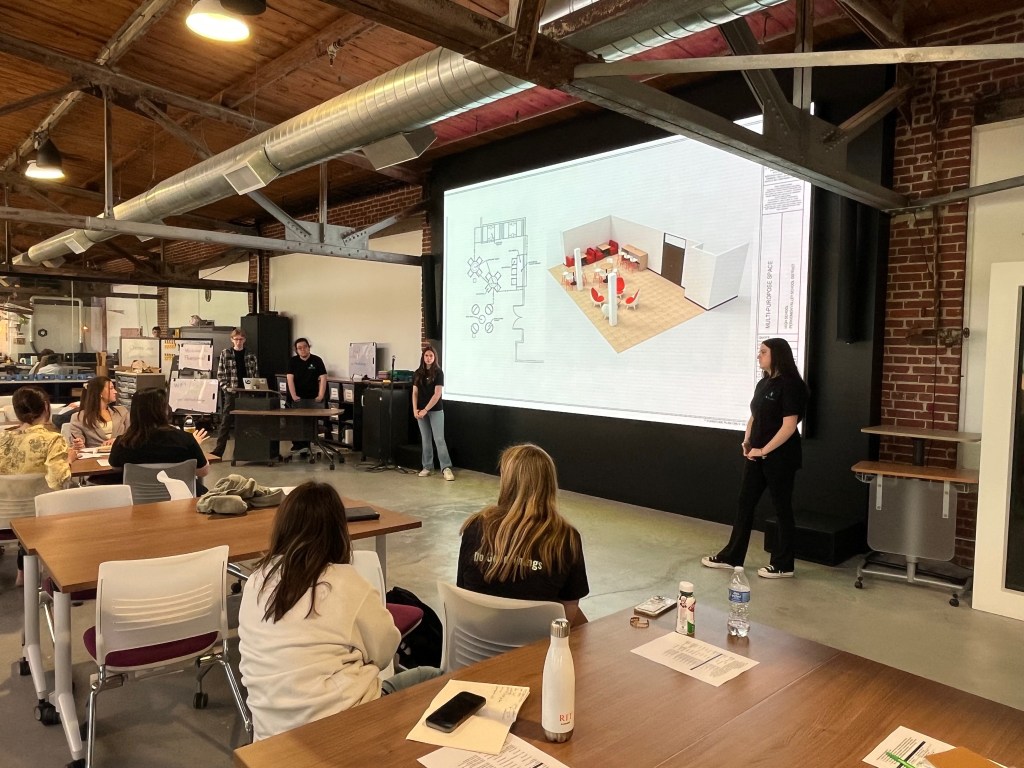


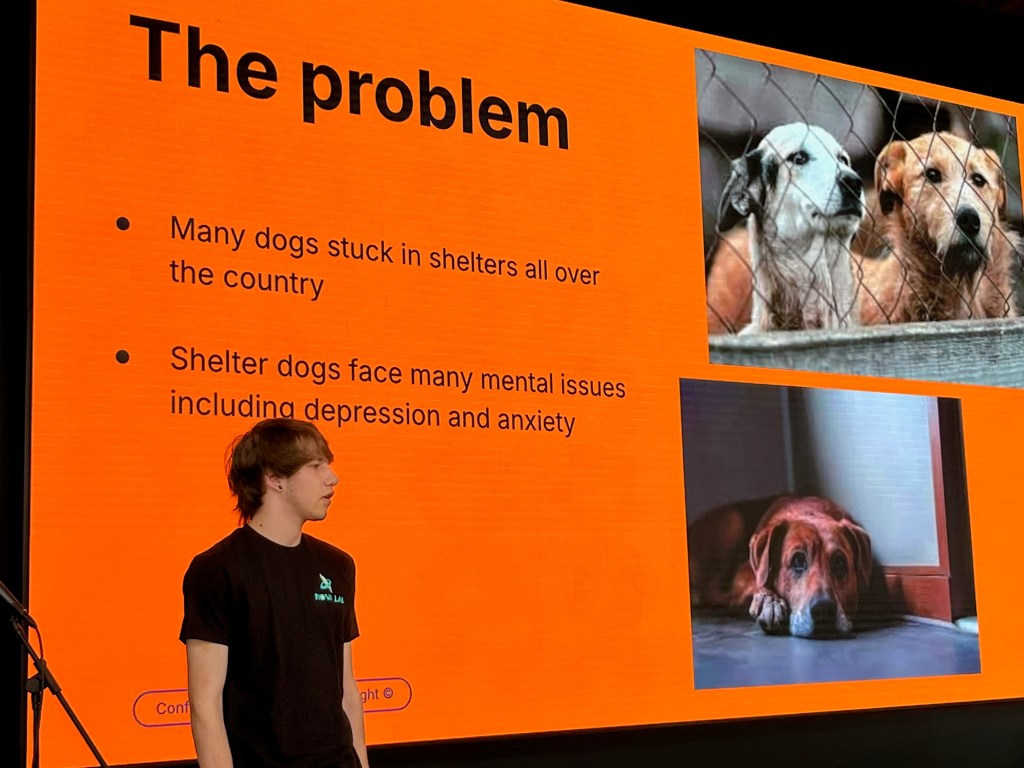
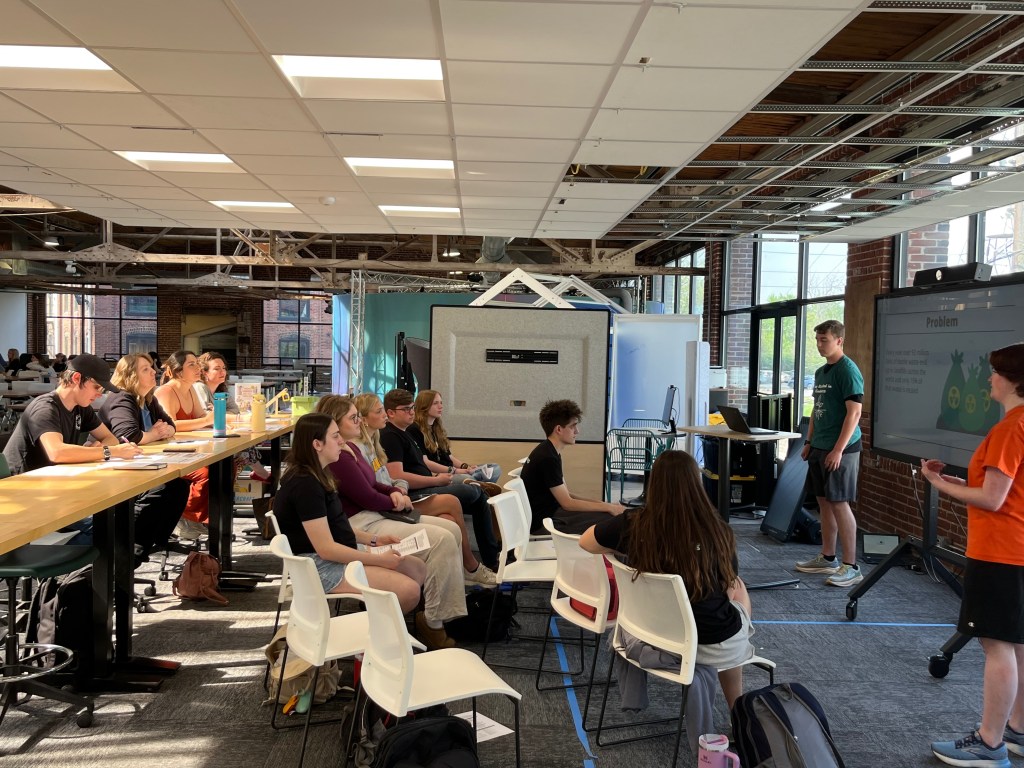
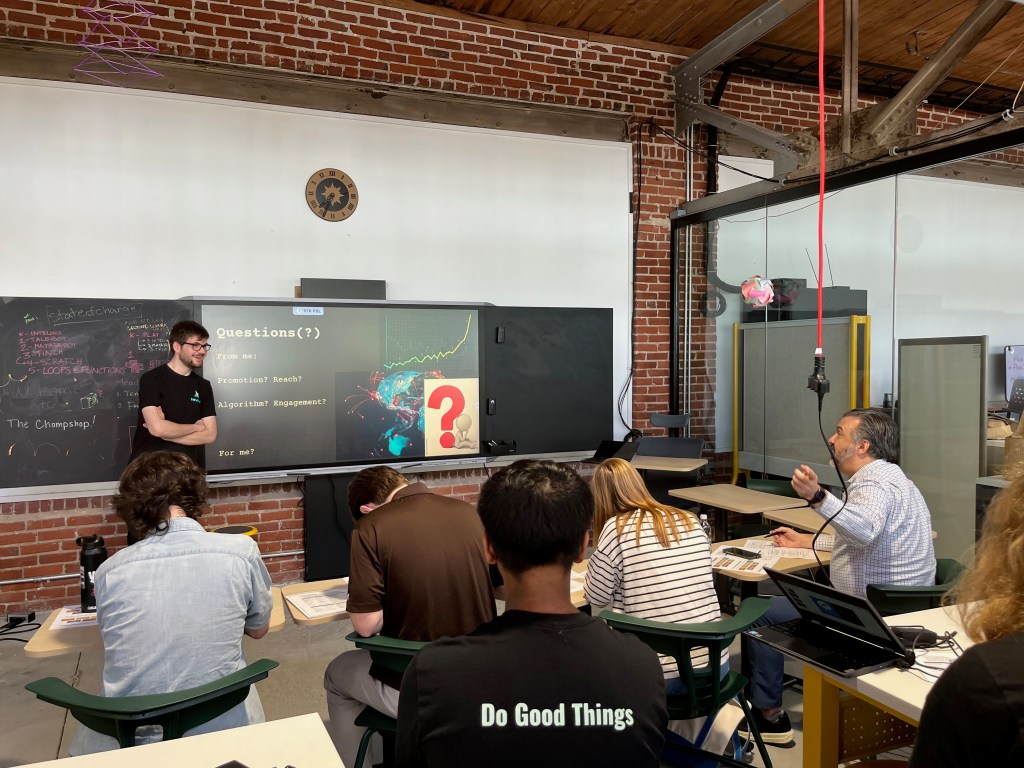
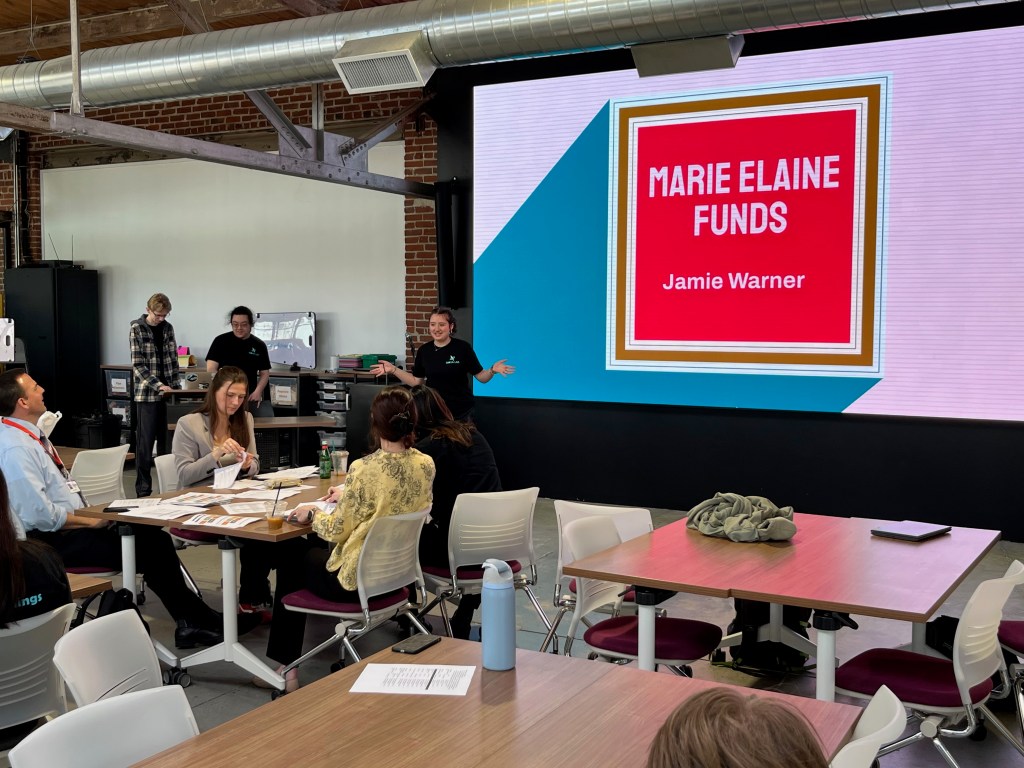
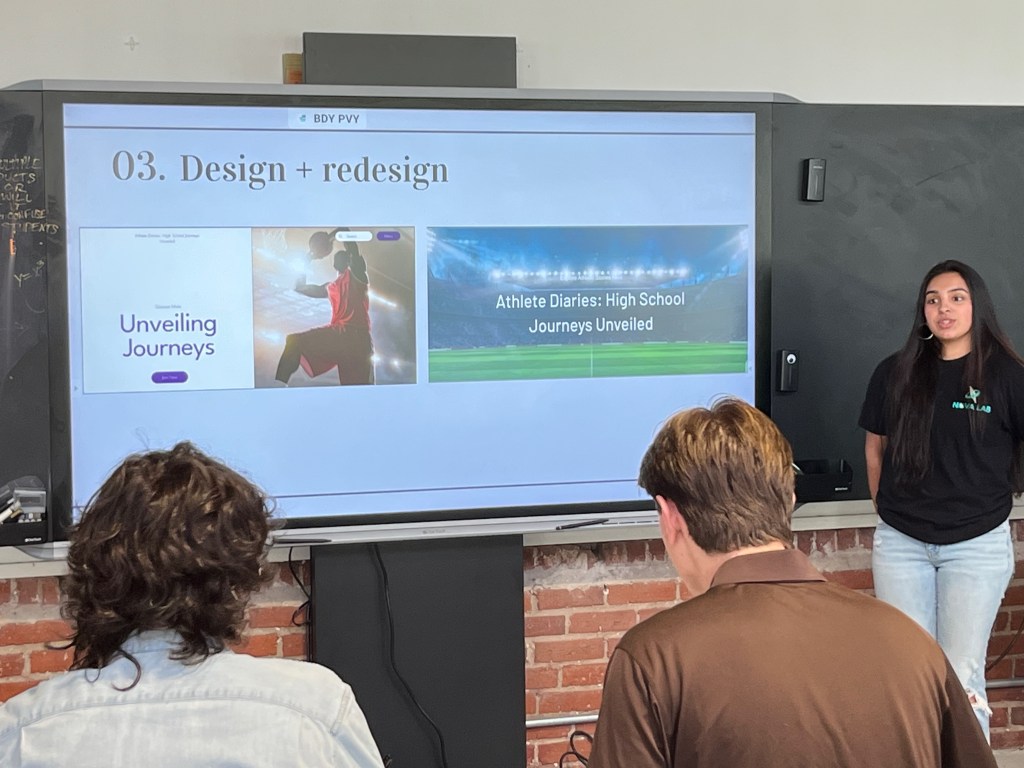
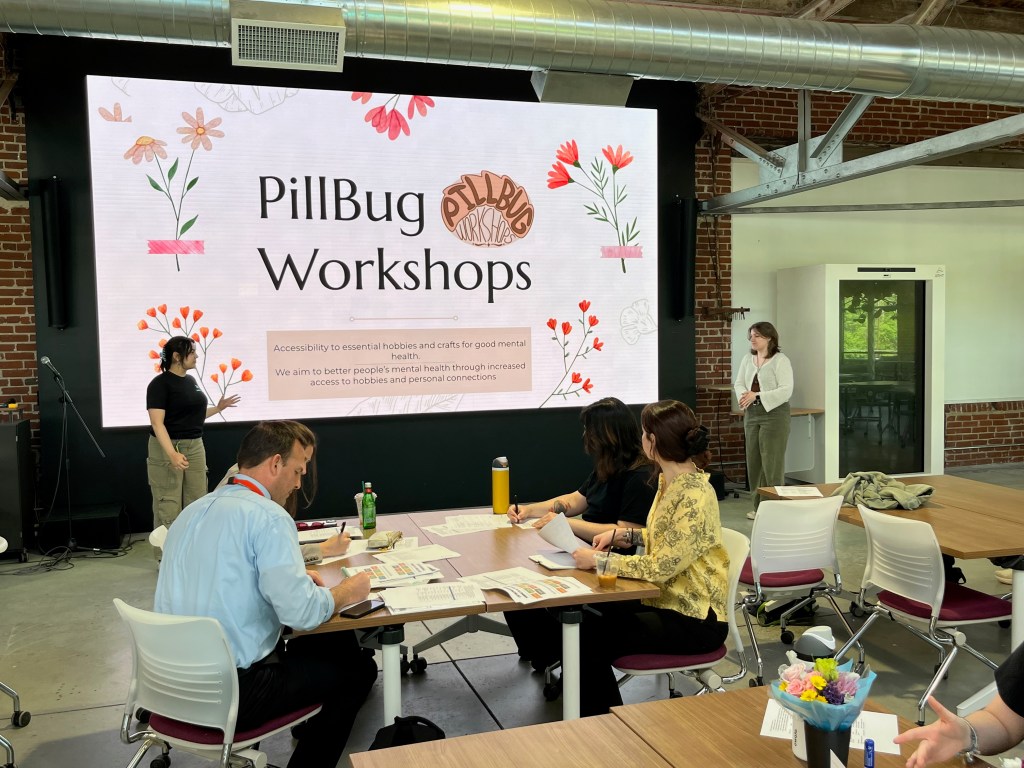

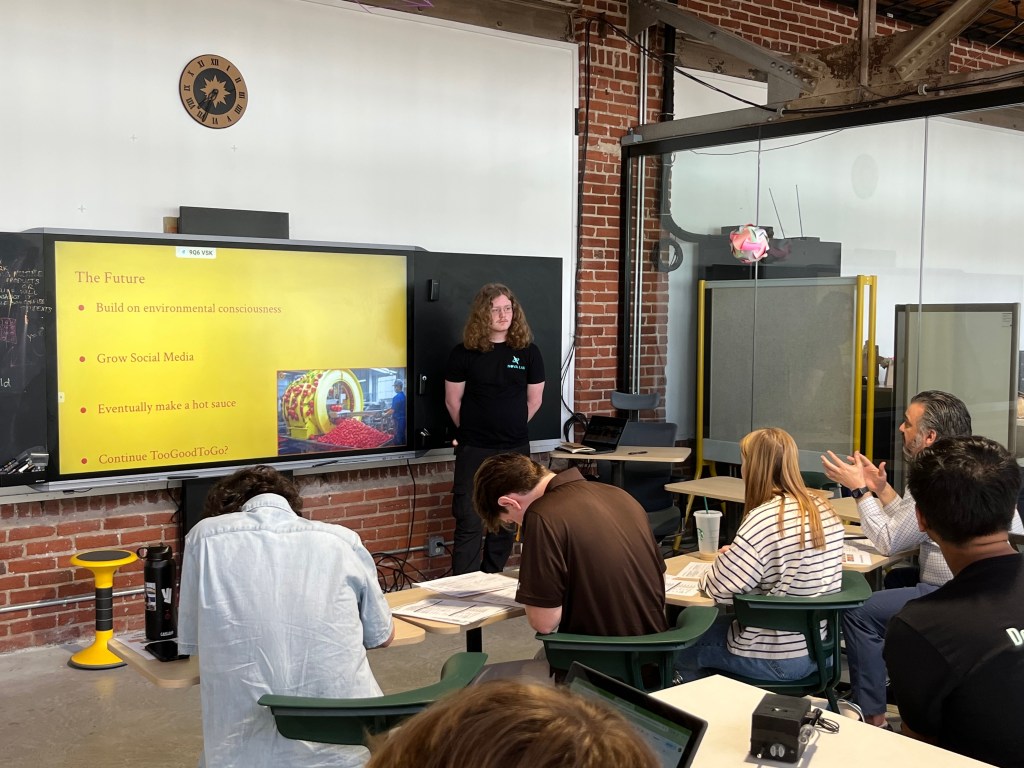
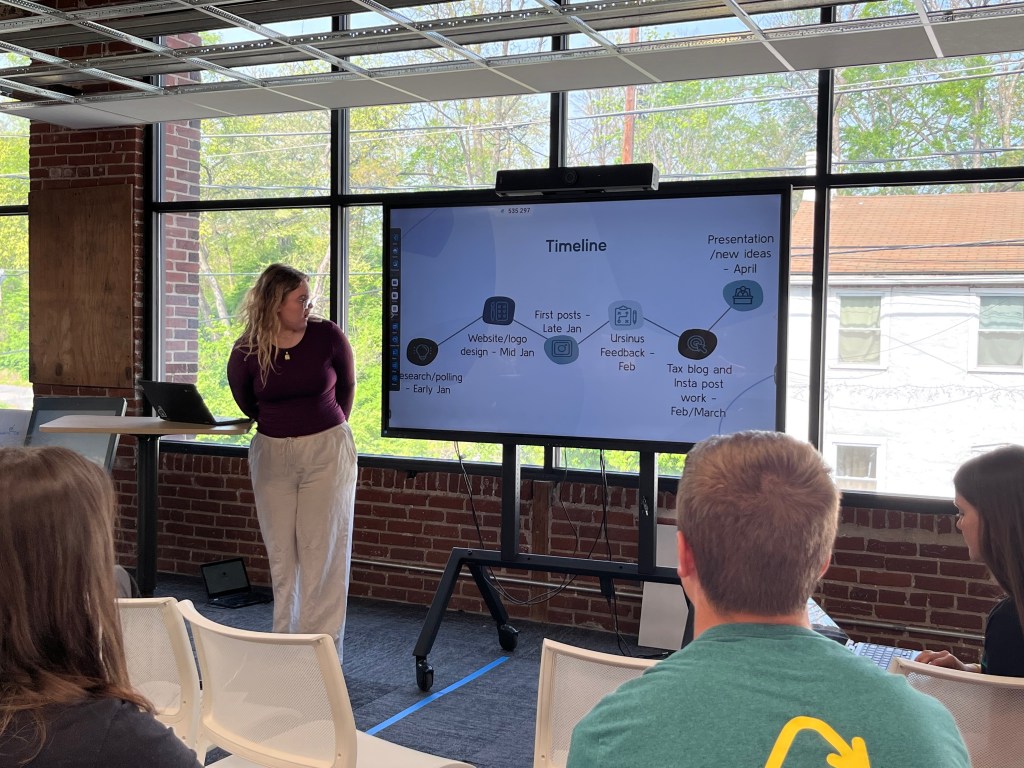


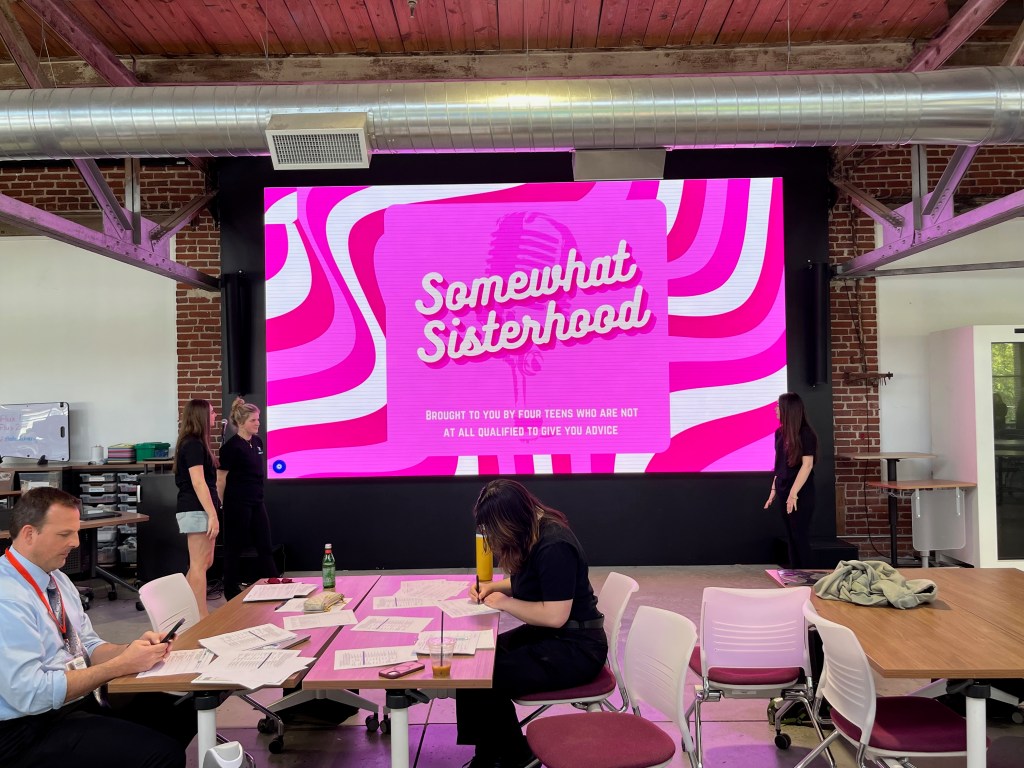


To me, Fluxspace represents an opportunity to step back, and let others (the adults and former students on the critique panels) teach and learn with students. As the class is largely driven by two question (see image below), this opportunity to reassess and evolve the course is a values based decision. That is, if we are a class that focuses on innovation and entrepreneurial mindsets, then we have to embody the same.

Which is why our latest trip to Fluxspace on April 24, 2025, was such an important event. Students had been working on projects since Mid-January, and while this is the fifth iteration of the class, I still get nervous on these days. Not because I fear the students aren’t prepared for the presentations. I was a speech and debate coach for 25 years. I know they are prepared in that way. No…what drove my anxiety this time is the nagging feeling that I’ve led the students into a rut/pit of sorts. That the projects have become secondary to a process, and that that process has interfered with both the breadth of projects and their progress overall. None of which was my original intention.
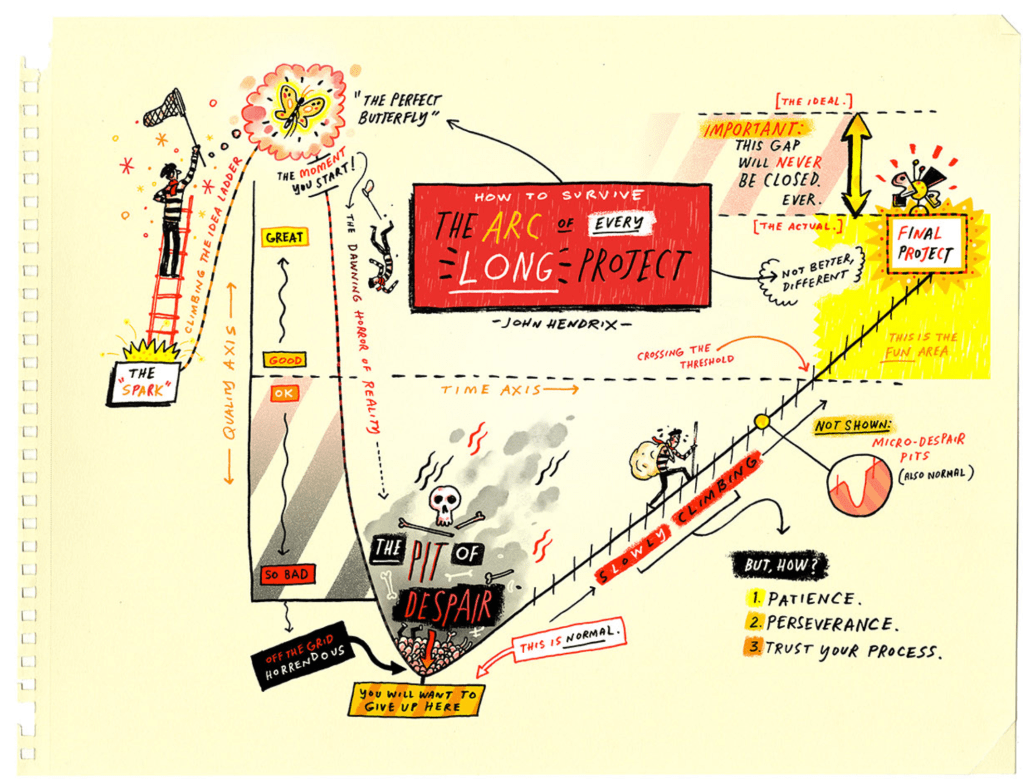
Original Intention of NOVA Lab
NOVA Lab began in 2016 as a semester-long prototype called “Design Lab.” My goal was to teach design-thinking as a mindset for approaching the world and, through empathy and human-centered processes, to make the world a better place. In that semester, we accomplished a huge amount. We studied classroom design and developed models for redesigning the classroom based on our research and empathy interviews. We helped develop ideas for the redesign of our Middle-School’s library. And students engaged in their own projects, from a Winter Arts Festival, to electrically warmed gloves for running in the winter, to a libretto for a musical on the life of Leonardo da Vinci.
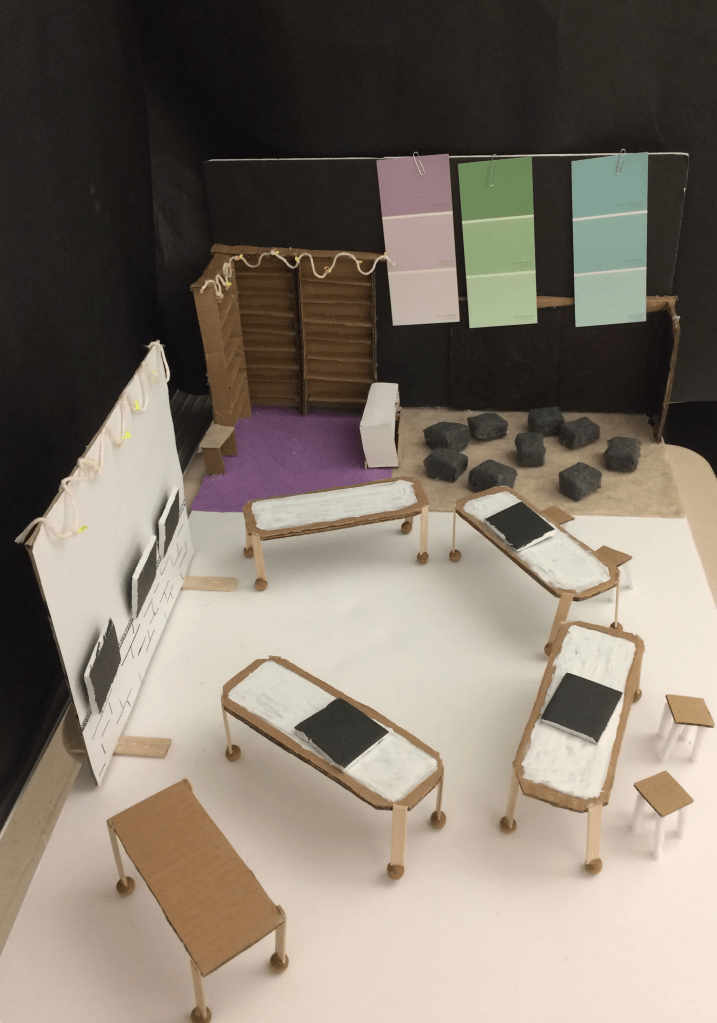
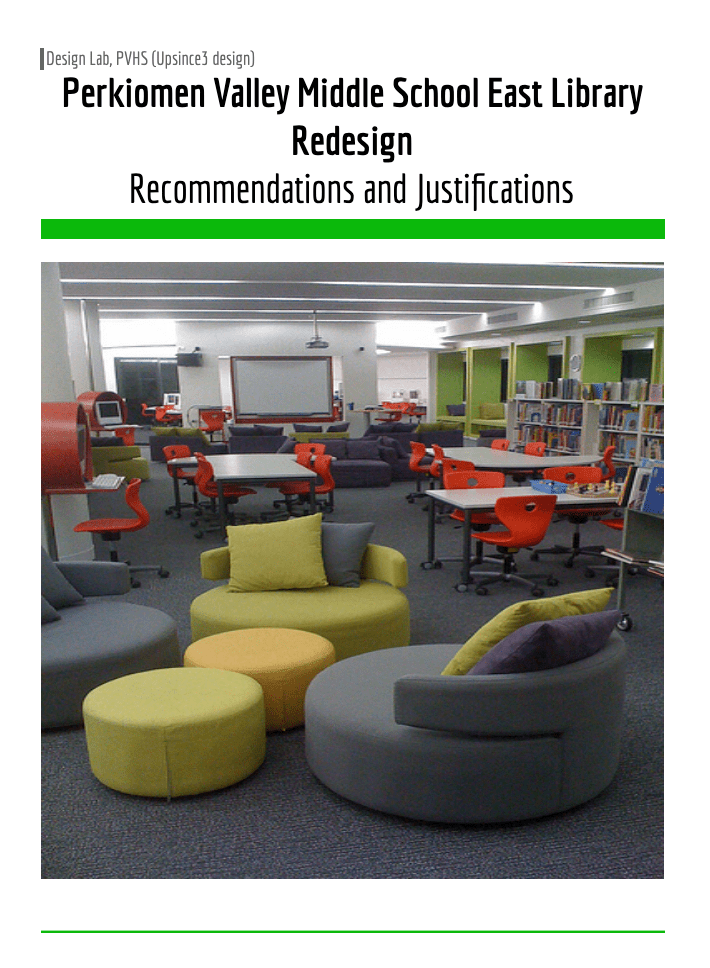
And then the class went to sleep for a while. From 2017 through 2018 it failed to roster 10 students. Then, suddenly in 2019, with the help of some of my Sophomore English students who had experienced Purpose Projects, we rostered 42 students and two classes worth of “NOVA Lab Pioneers.”
In the ensuing years, through COVID and beyond, students have developed projects on increasing voter registration among seniors, composting of biodegradable waste from the cafeteria, the creation of our current FIRST Robotics and E-sports teams, as well as numerous fundraisers and tournaments.
While all these projects have had a positive impact on the culture of our school, I have always felt something shifted after that first prototype year of 2016–namely that we’ve stopped looking to solve problems in economically viable ways, through the creation of products or services, and we’ve shifted to social or cultural movements: fundraisers, clubs, social media campaigns, and numerous podcasts.
This focus has resulted in some outstanding projects, but by their very nature these pursuits are more like passion projects with a social bent than attempts to leverage entrepreneurial mindsets towards the solution of real world problems.
Thus it was that I listened eagerly to a group of the panelists at our most recent trip to Fluxspace as they helped me gain perspective on this shift and how I might revise the class for next year to regain a focus on design-thinking and the creation of products and services that not only make the world a better place, but which recognize that profit and improvement are not mutually exclusive, which recognize that learning to navigate the entrepreneurial landscape can benefit everyone, not just the students themselves.
And so we are, quite literally, “a class in flux.”

The project presentations we engaged in this past Thursday were helpful in many ways, none the least of which is in how they will help me improve the class. I already have access to the tremendous curriculum and community of the STARTedUP Community’s Innovative Educator Fellowship (rebranded as the STARTedUP Innovation Accelerator). But even better is the input I’ve received from former students who have gone on to take college classes at places like Lehigh and Villanova Universities, or Pitt that have engaged them in the kind of design-based learning that was the basis for NOVA Lab. They’ve provided a necessary perspective. As well, we are beginning to develop a community of local entrepreneurs who have offered feedback on how to tweak the curriculum to dive more deeply into purely entrepreneurial work.

Living a life in flux is never easy and more often than not, exhausting. But change that is based in the pursuit of values and improvement is never such. It is necessary work, something we must live in order to teach.
Here, then, are some of the ideas we have for revising our curriculum for next year:
Return to primacy the use of design sprints. Make tangible things. (
Develop a deep working knowledge of design thinking early in the class. Also–Cooper Hewitt Design Competition. EARLY
Host an “Ideation Day” at Fluxspace Or Ursinus led by local designers or professors.
Spend more time planting seeds of many ideas rather than just one
Research for several weeks to discover what is being done in our fields of interest
Continue to grow our partnership with Ursinus College’s Entrepreneurship program
Use Activities from Tina Seelig’s book, InGenius: A Crash Course on Creativity
Use the Process in Jake Knapp’s Sprint: how to Solve Big Problems and Test New Ideas in Just Five Days
Daily progress logs of the type created by Jacob D and which are championed by Dan Pink on this LinkedIn Post.
Clearer implementation and use of STARTedUP Entrepreneurship Curriculum
Less open time=raise level of concern. Three days/week for work; Two days/week for content.
More work and time on problem finding and testing.
Lots of guests at the outset
Object/Design of the Day: Swiffer, OXO Kitchen Utensils, Toothbrushes, etc…
Return to binder tracking
Experiential Examples: Like Tony’s Chocolonely
Students have to find designs and read the intention.
Build.org Design Challenge in early Fall. Futures Thinking in Late Spring.
More ideas are always welcome. Please Leave a Comment to drop more ideas!

NOVA Notable #4: Connect to Learn
Let’s start with a basic tenet of entrepreneurial mindsets: The bigger your network, the bigger the opportunity for success. For the individual entrepreneur, or their team, this is certainly the case. People know other people and those people know things…and even more people.

Call it “Six degrees of separation (or Kevin Bacon)”or call it whatever you want, the statistical truth is hard and fast. Once you start telling your story, speaking about your work…the numbers game takes over and you’ve a much better chance of success at realizing your idea, bringing a product to market, or growing your organization.
The same is true for teachers. The more we discuss our work, the more we engage with personal learning communities or fellowships, the more our work grows and, more important, the more our students’ work gets noticed.
Of course, this takes a good deal of courage and confidence on the part of the teacher and the students. And as with anything, the more work we put in, the more courageous and confident we grow. In a real sense, “the work is the win.”
So it was with great courage and confidence (after a lot of work) that our NOVA Lab classes–45 students in all, 29 total projects–boarded a bus for a short trip to Ursinus College, a small liberal arts school in our district that, it just so happens, has a real and burgeoning Entrepreneurship program.
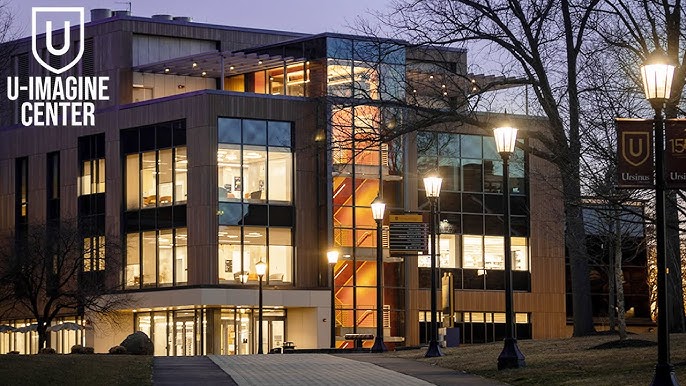
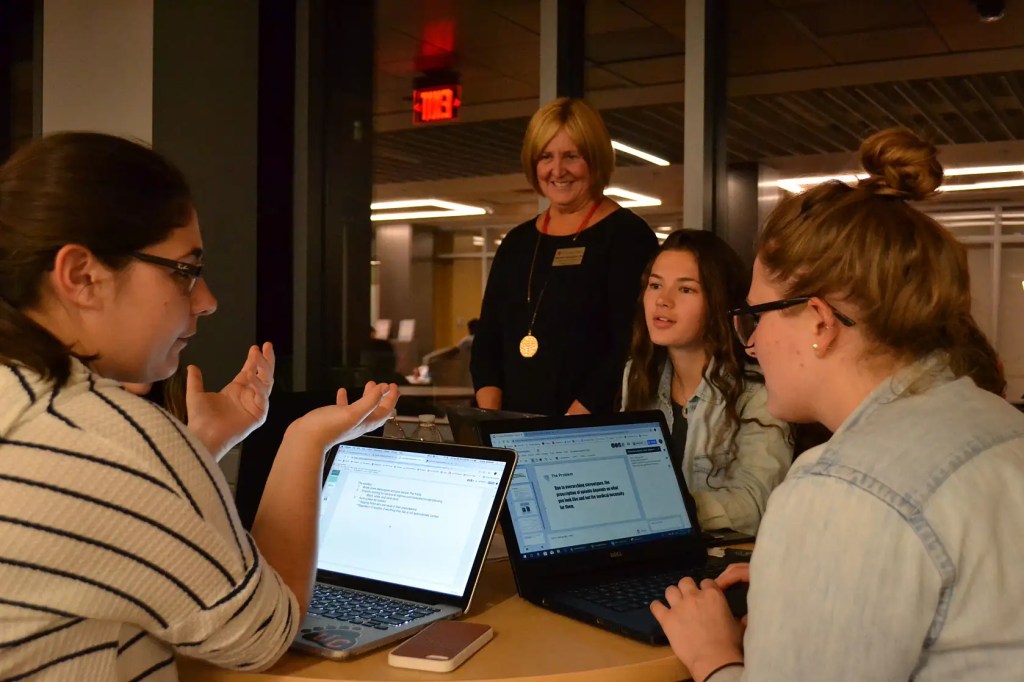

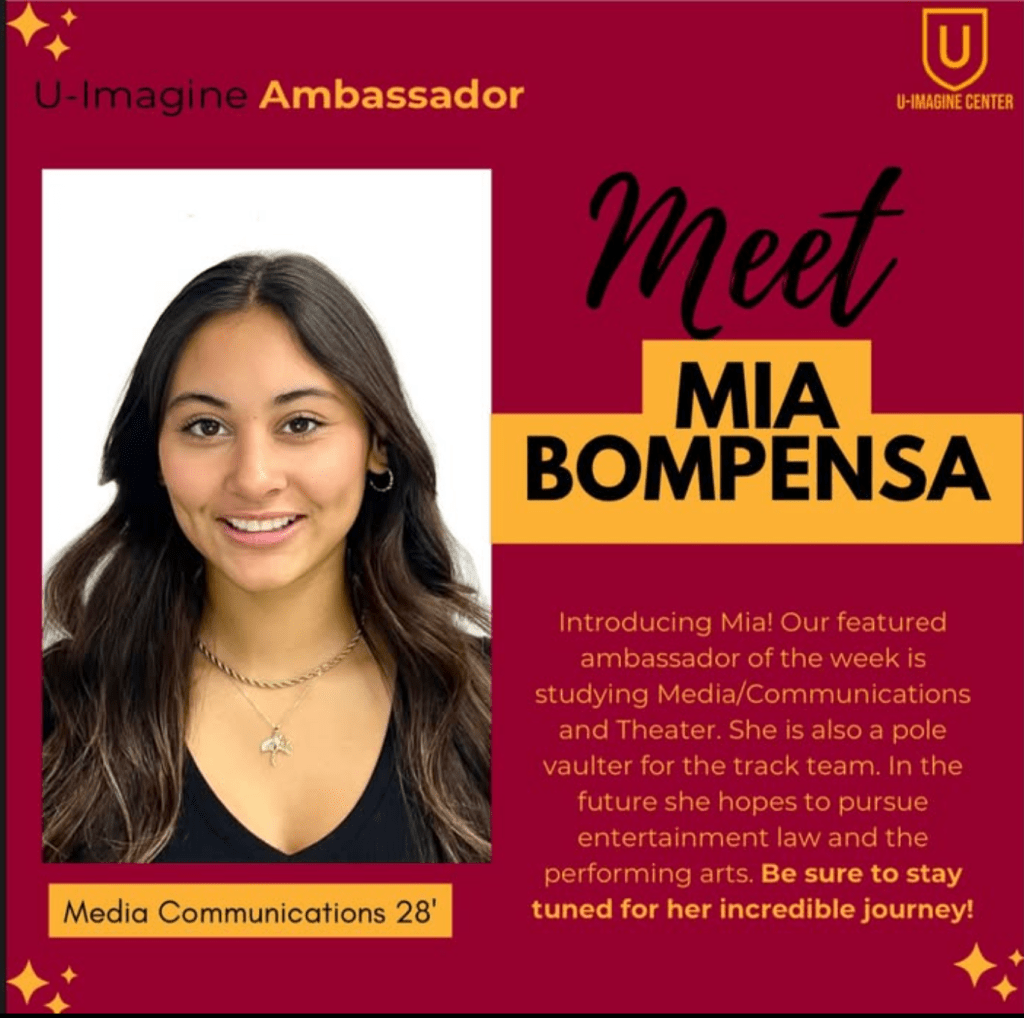
Led by entrepreneur Maureen Cumpstone, Ursinus’ program has helped countless students bring their ideas to the world and go on to great success. We first met Ms. Cumpstone in the summer of 2022 while acting as a panelist for the Ursinus HS Entrepreneurship competition. In the years since, we have developed a working relationship that allows Ursinus students in the entrepreneurship program to provide feedback to NOVA Lab student projects.

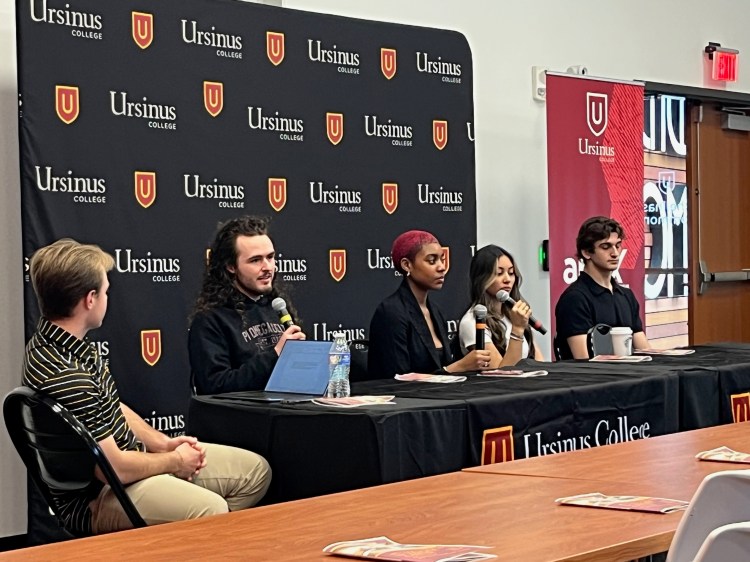
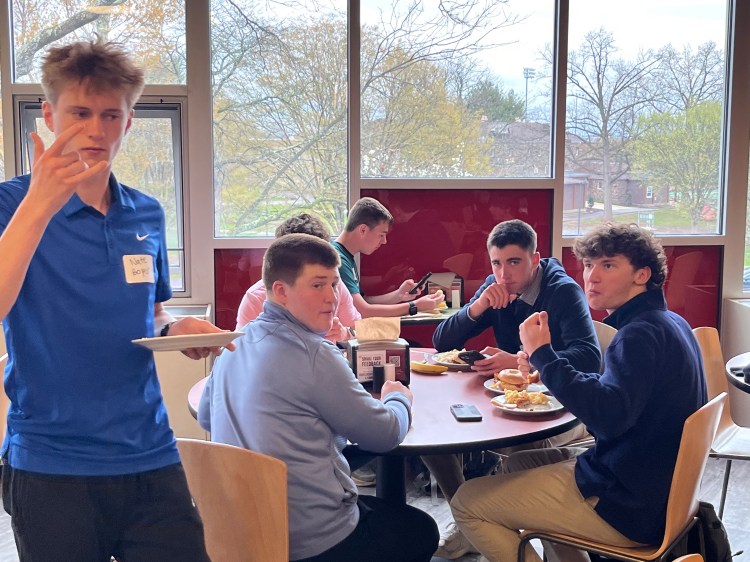
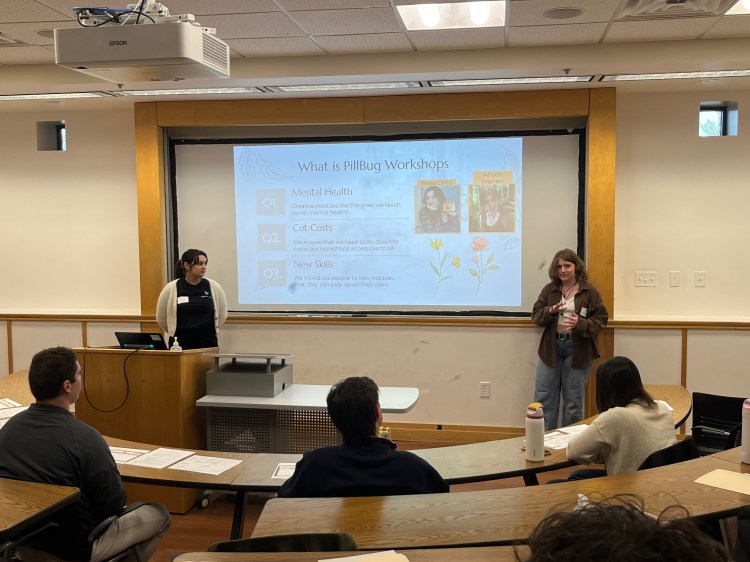
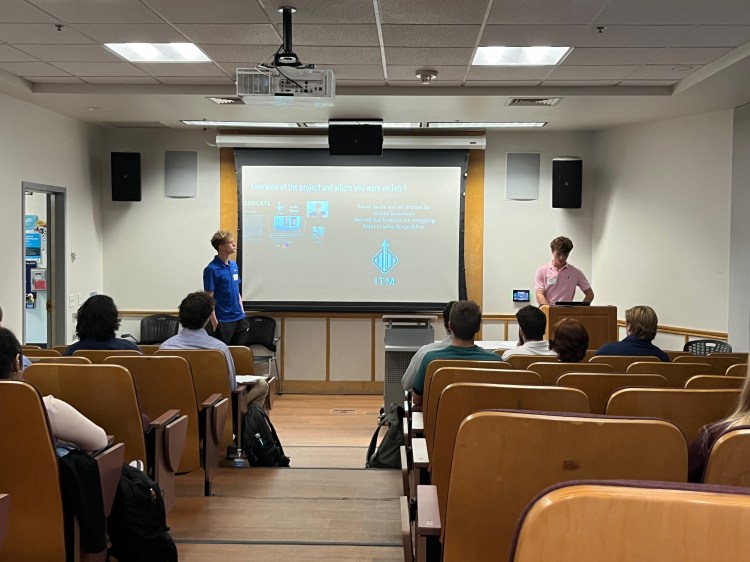
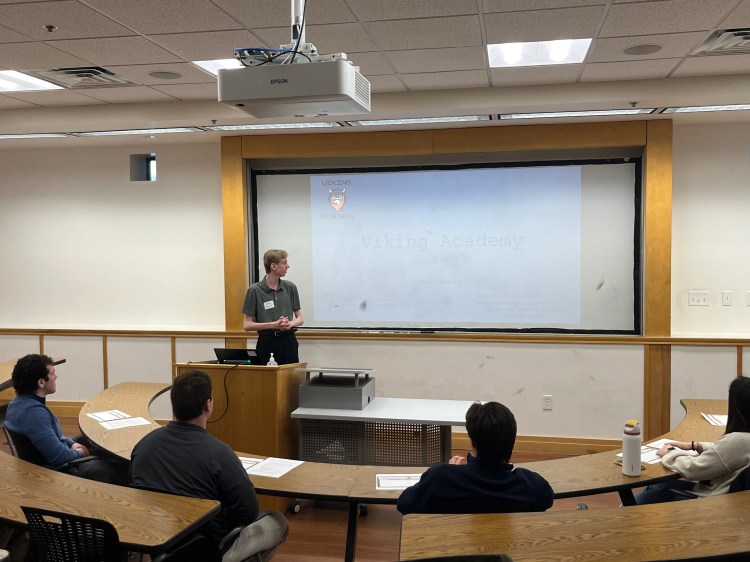
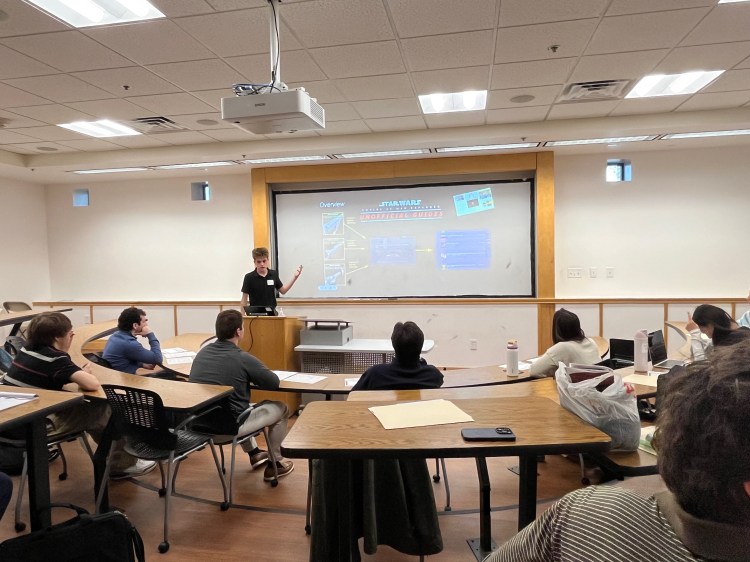

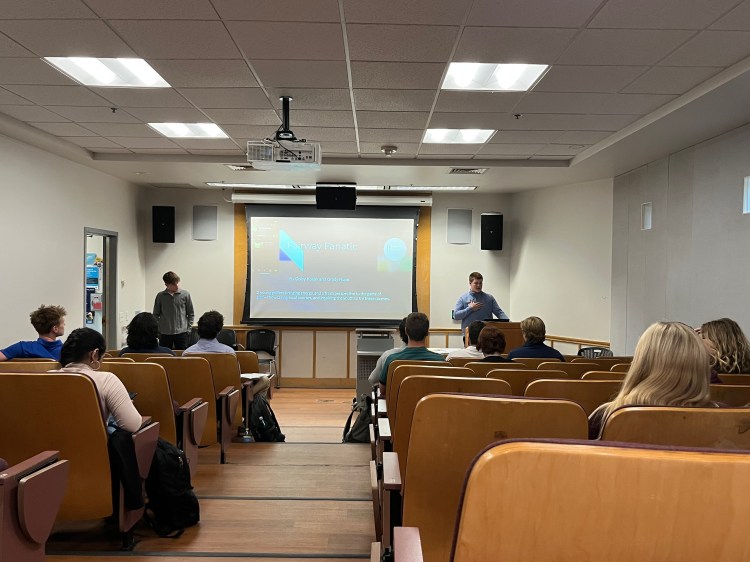

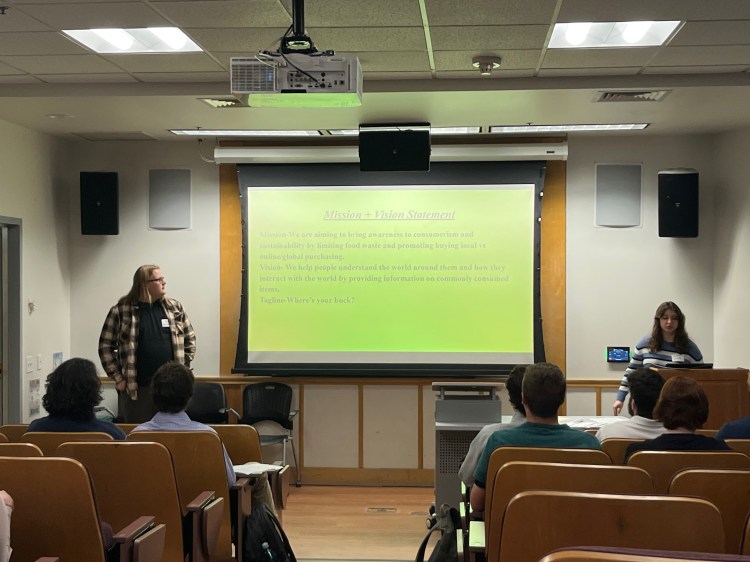
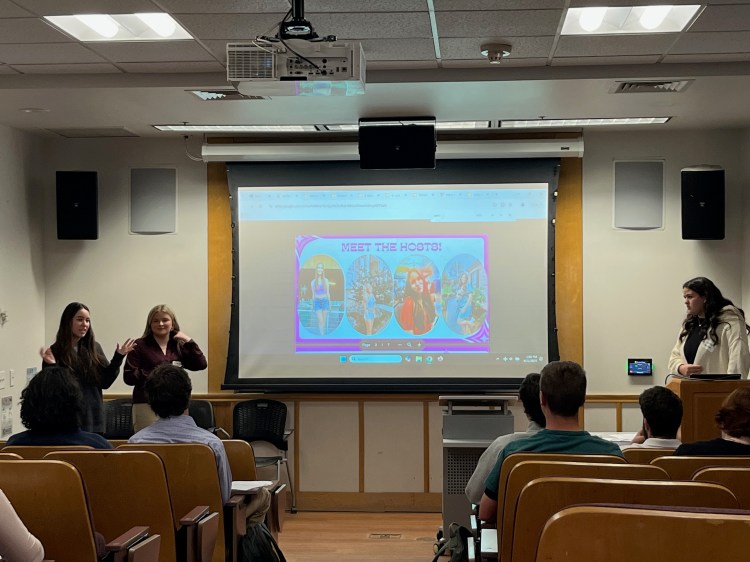


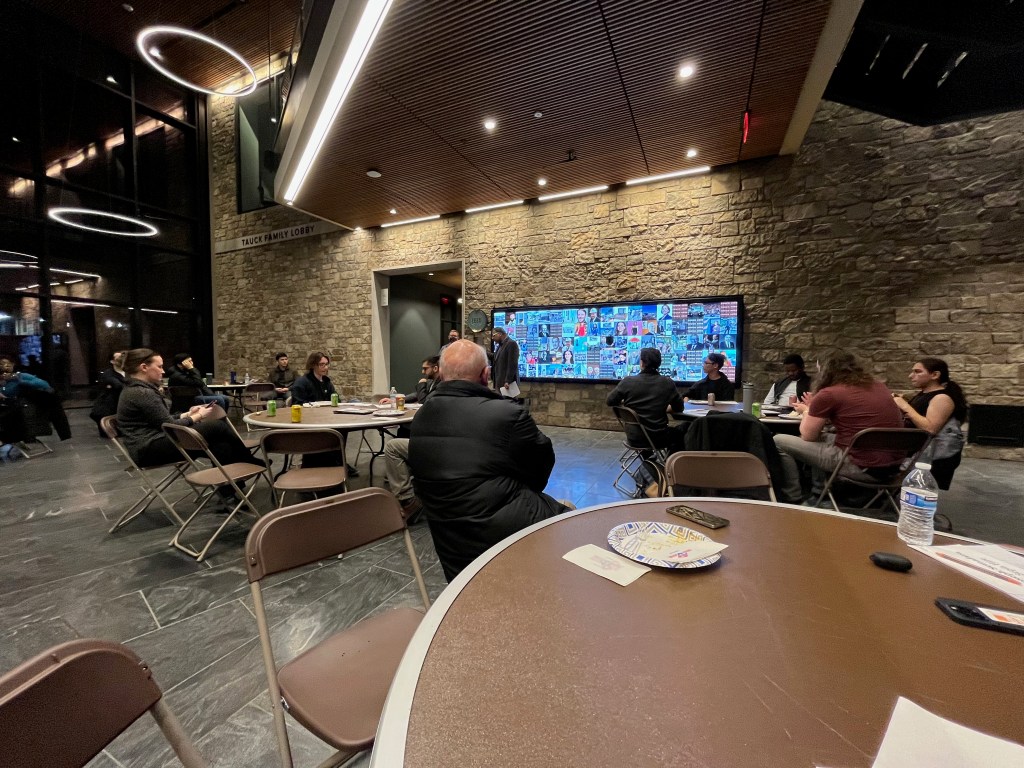
And last week, after an enlightening and tremendously eye-opening session by the Ursinus admissions department, and an amazing overview by four Ursinus entrepreneurship students on their journeys and the benefits of their entrepreneurial endeavors, NOVA Lab students broke into two groups and presented their projects to panels of Ursinus students for feedback.
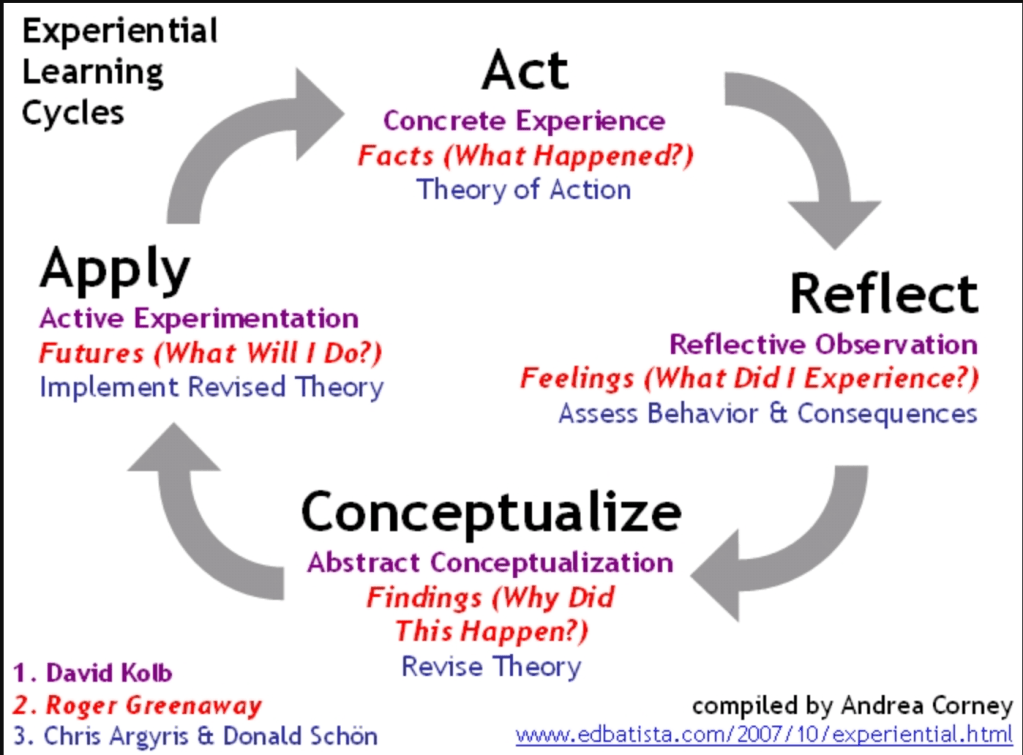
None of this learning occurs without the connections we established. And none of it occurs without work… the work of students, the work of teachers and mentors, and the work of the Ursinus students. And because there is no learning more impactful than experiential learning, this was an amazing experience for our students. We’ll be reflecting and revising our projects even further.
Thank you Ms. Cumpstone. Thank you Ursinus students, especially Tyler Griffith. Thank you Ursinus College.
We are already planning our return.
NOVA Lab Notables No. 3: Lehigh Univ. Impact Fellowships
As noted in the first post in this infrequent series, our goal in “Notables” is to point out the work of others in the field of social innovation who have helped us improve our own practice.
This month we have two groups of people to thank:
1) Chief Product Officer at Project Wayfinder, Phil Holcombe; and
2) Lehigh University’s Creative Inquiry program and their Impact Fellowships.
First, I have written about Phil Holcombe’s work as a Educational Design Consultant and Graphic Designer before. His firms, first “PlusUs” and then the rebrand, “Form & Faculty” produced some of the most innovative and creative works of curriculum and marketing for customers from The Philadelphia Center for Architecture and Design to Friends Central. Phil has a degree Graphic Design from the Rhode Island School of Design and is just about one of the most gracious and intelligent people/designers I know. This past January, Phil zoomed in with us to briefly discuss the impact of design choices on how students created marketing and branding for their projects. His insights were clear, targeted and produced actionable change for many of our projects.
Phil was also one of the many people who took the time to offer feedback on our projects when we sent them out in early February to select members of Mr. Heidt’s Professional Learning Network. (see NOVA Lab Notable No. 2)
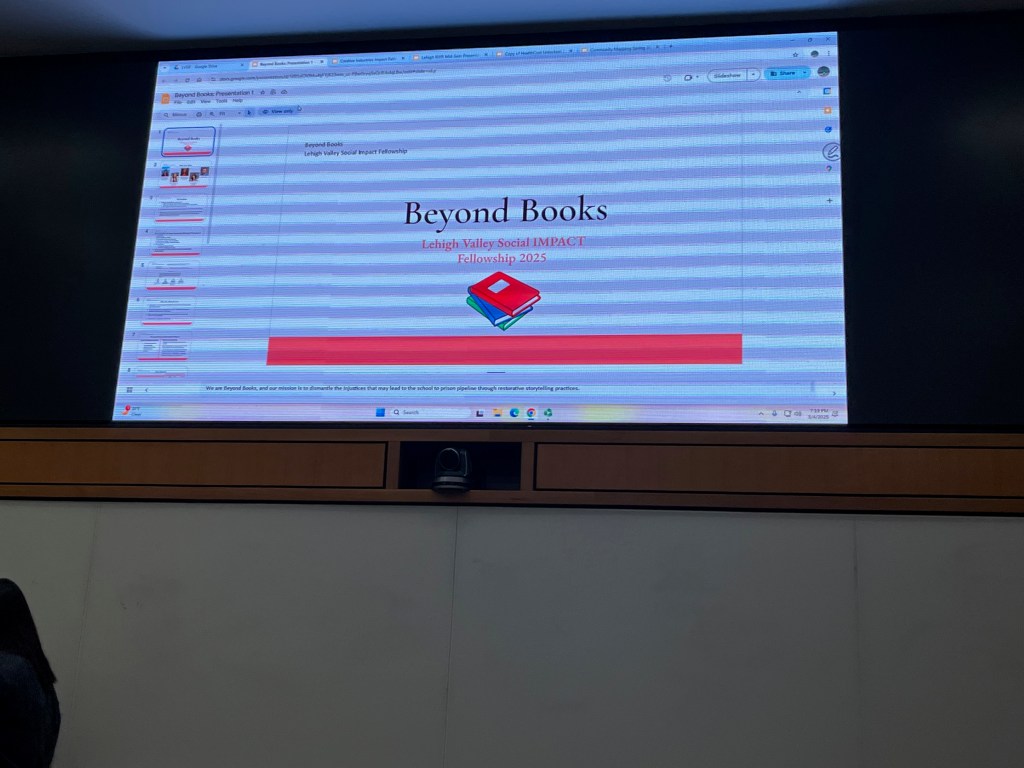
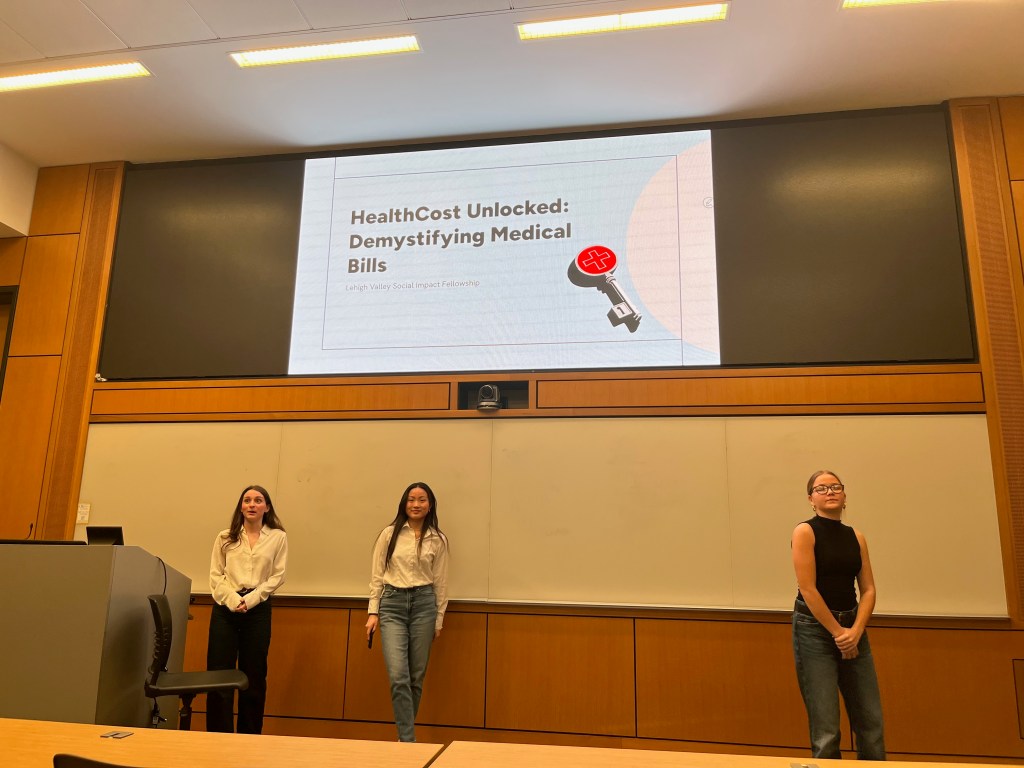
The second NOVA Lab Notable “thank you” of the month goes out to Julia Killar and the team of professors and advisors at Lehigh University’s Creative Inquiry program’s “Impact Fellowships.” Julia Killar, a former student in my sophomore English and NOVA Lab classes, is a current Sophomore at Lehigh and a member of their Global Impact Fellowship. She reached out to me a few months ago and helped me contact Lehigh’s Bill Whitney who allowed me to sit in on the Lehigh Valley geographic region’s Impact Fellow ships. And what great ideas they were! From Lehigh rIVR (an immersive VR system of games teaching about the Lehigh River Watershed) to a Collective Mapping project to track trash dumping in Southern Bethlehem, the students were engaged in such important work born of their own inspirations and aspirations but with community-wide impacts–exactly the criteria that drive NOVA Lab’s own Purpose Projects. I look forward to returning to sit on the second round of presentations in early May.

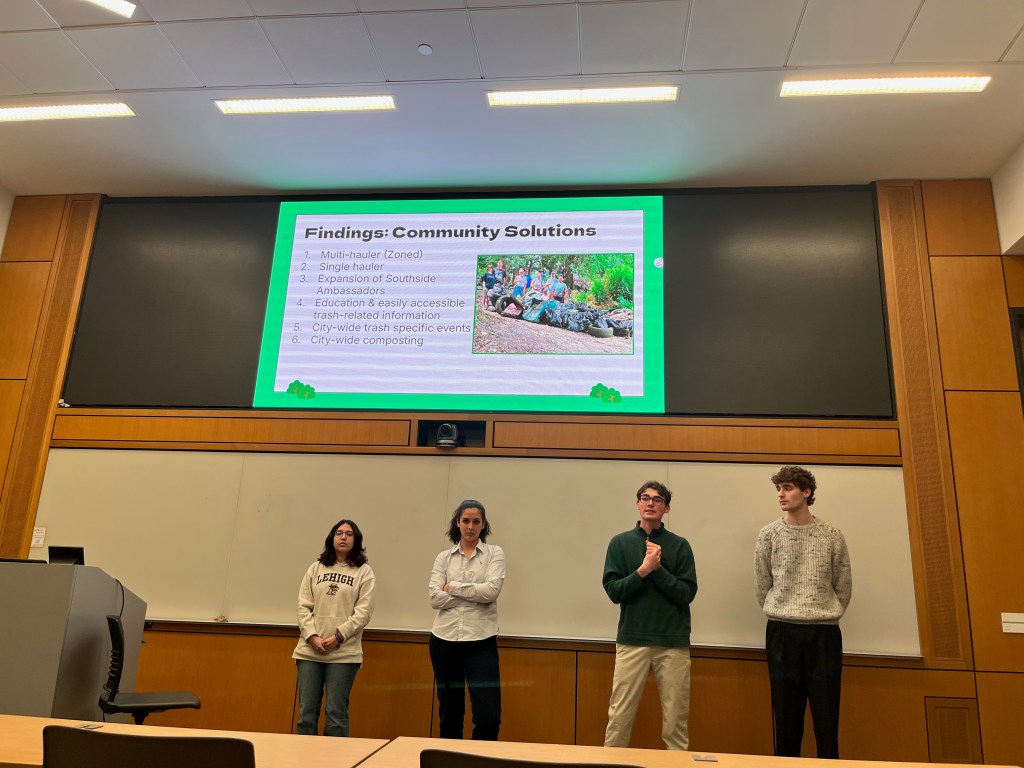
Both of these notable projects/people have offered us insights into how we might make NOVA Lab even better. There is always work to be done when the only standard is “better.” And nothing is better than trying to make the world a better place, for all species on spaceship earth. (For more on that, see our post on Futures Thinking from late October 2024.)
NOVA Lab Notables No. 2: Events, Feedback, Alumni
The second installment of our shout outs to those who help us grow and learn takes us to the work of Aysia Woods-Drayton, and the Feedback of almost 25 different people. Let’s dive in.
Aysia Woods-Drayton is familiar with the work we do in NOVA Lab. Back in 2021, Aysia spoke to NOVA Lab students about her journey from a high-school and competitive debate, to college, to starting her own company as an event planner in Washington DC. Her insights into entrepreneurship, self-determined work, and the accompanying vicissitudes of such work allowed us to see our own projects through her experience and to realize that so much of life, like our projects, is filled with obstacles to be overcome.
This year Aysia’s presentation focused on event planning and how to take a project, whether it be an event like a fundraiser or informational meeting, and prepare for four key aspects of it in such a way as to make one to remember. Aysia used four key pillars to outline this work (Uniqueness, Attendee State of Mind, DYNAmism, and Change Your World–See image below)
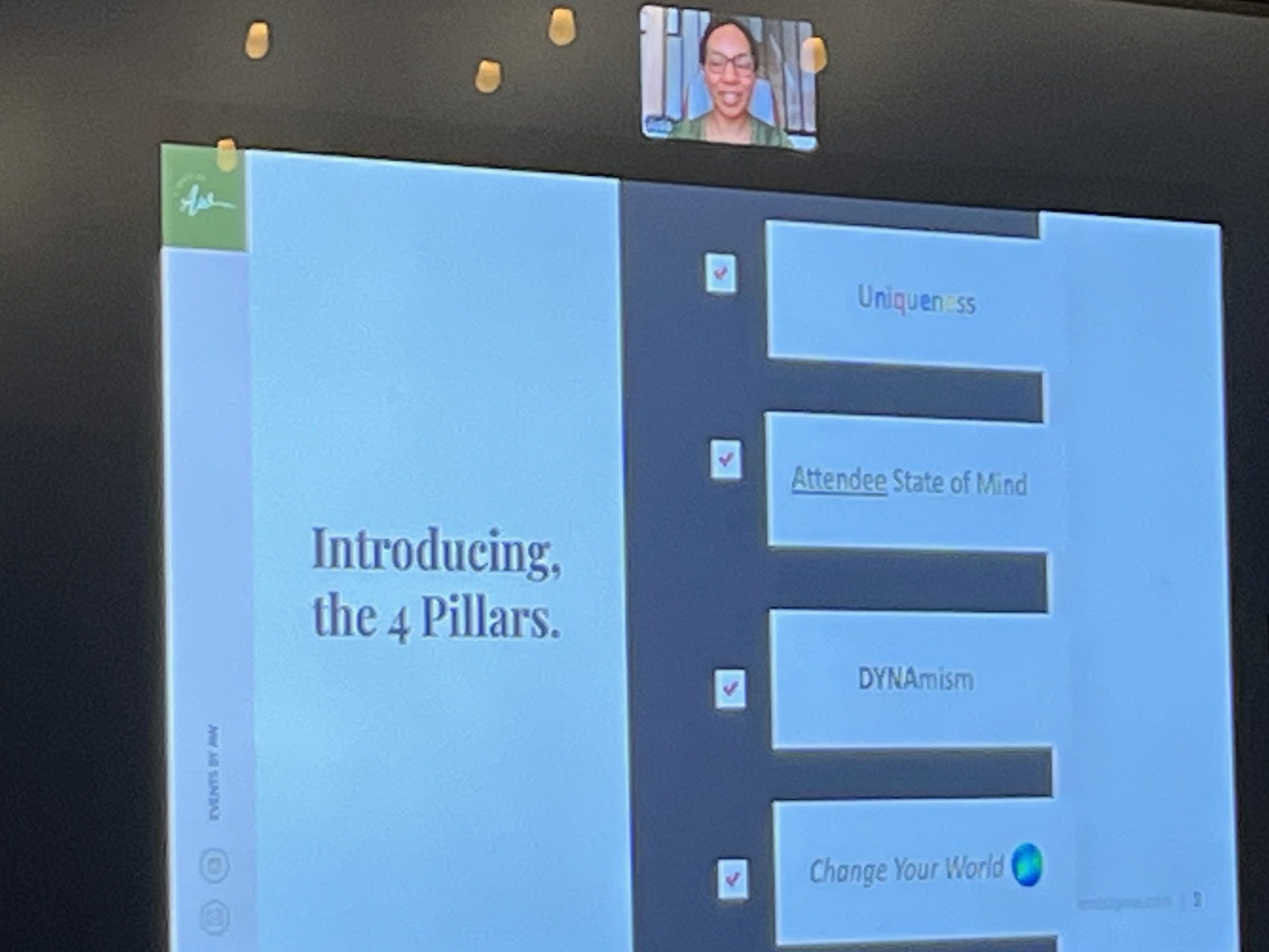
Aysia’s pillars present a practical guide that anyone can use to create powerful events. Indeed, they were constructed through her own experience over the course of close to 10 years hosting events in DC for dignitaries and citizens alike.
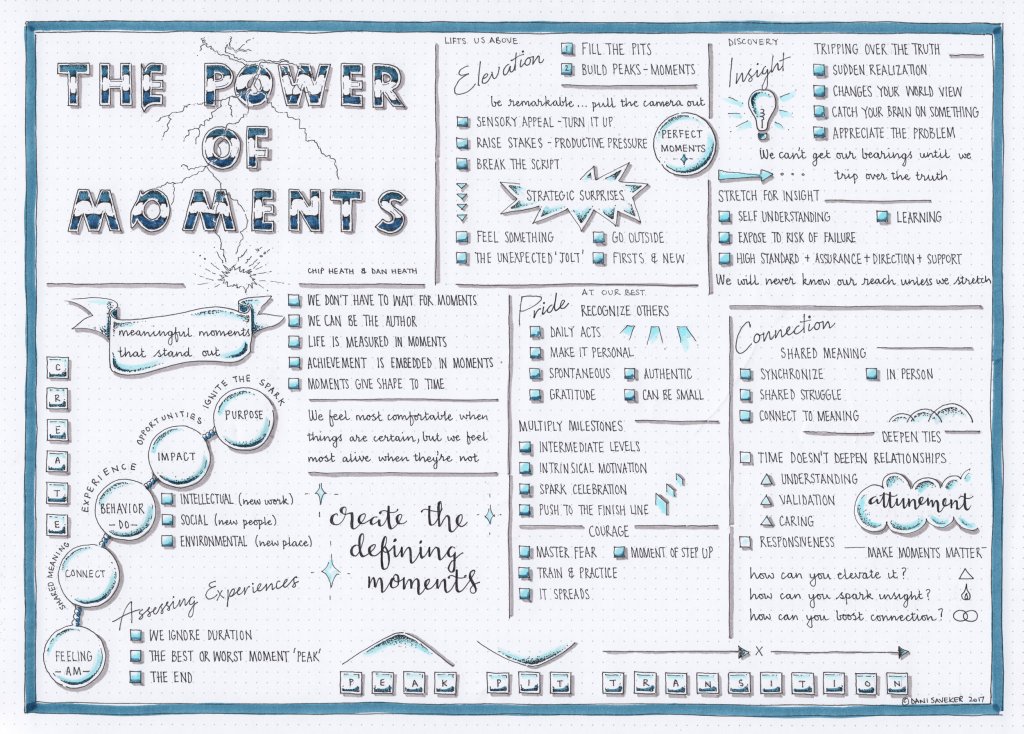
Attention to these four pillars, especially to the empathetic shift of understanding what you want an attendee at your event to feel and experience (rather than simply doing what you want to do) is key to a memorable event, or to the creation of any experience where you want to invoke what the the Heath brothers call The Power of Moments
Mid-Process Critiques: Feedback Partners
No sooner had students arrived back at school in early January than they worked on presentations of their project backgrounds, their research, and their work to send out for feedback to a group of 25 teachers, professors, entrepreneurs, entrepreneurship students, and designers. These presentations were digital, contained within a single google slide.
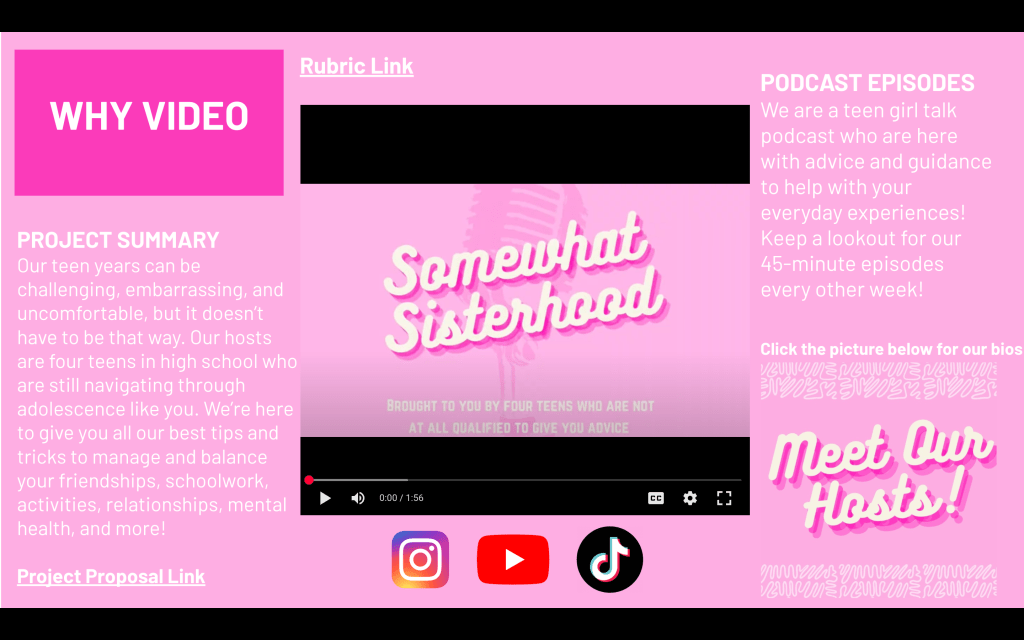

Within a week, all students received feedback from at least two people and used the feedback to help set direction and goals for the future of their projects.
With April 24th as a hard deadline for our return to Fluxspace and public presentations, we’ll be building out these projects, pivoting, or jumping into new ideas. That’s the nature of the class, the nature of innovation and entrepreneurship.
There was something about being recognized for the hard work that I put into writing my first draft, and all of its strengths, that affirmed something. … I feel more of a drive to record and produce now….
Nolan B
“It’s ok. It’s good enough. We can move on.”
Pitches and Alumni
In an early 2025 packed with amazing events, two more stick out.
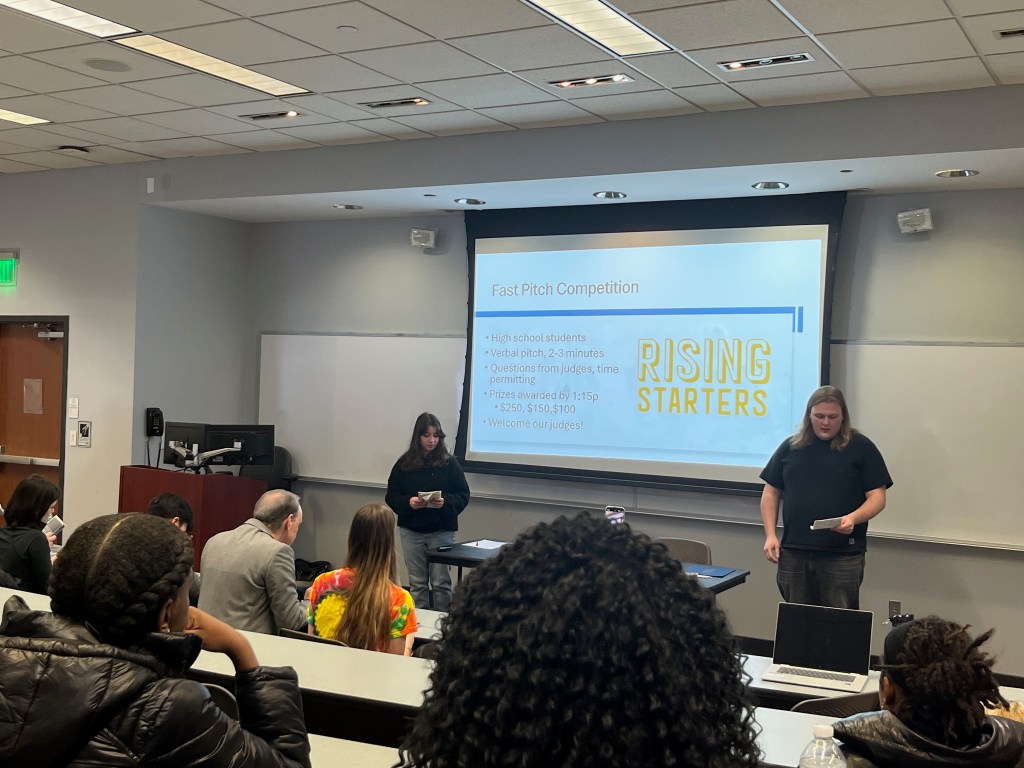
First, the team of Tyson Hunsberger and Madison DeVito with their idea for a circular economy organization called “The Price We Pay” presented at Drexel University’s “Rising Starters” HS pitch competition, taking home an Honorable Mention. Special thanks to Chuck Sacco, Germyce Williams, and the team at the Close School of Entrepreneurship. This partnership will continue to grow. Wait ’till next year!
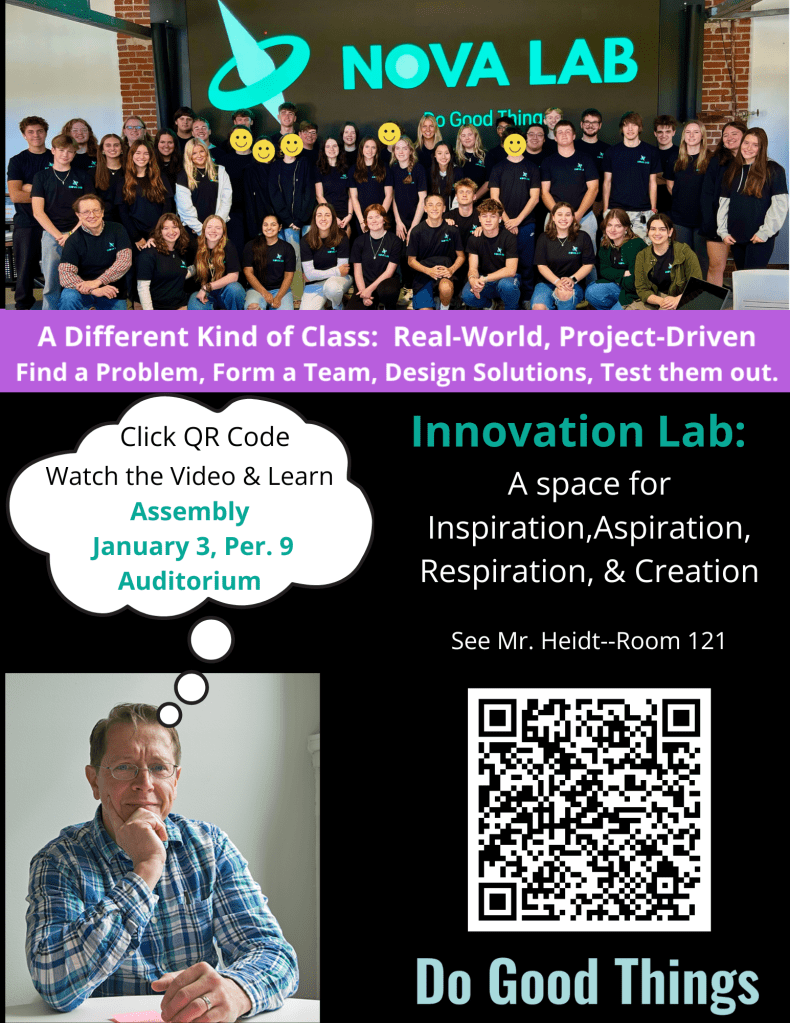
Second, a group of 12 former NOVA Lab students from the initial class in 2019 through our 2023 classes helped to pitch the course to an audience of interested students. Initiated last year as a way to communicate the vast benefits of self-determined learning to all students (not just those going off to college), the assembly has helped students better understand the commitment and investment they make when signing up for a year of NOVA Lab.
We are lucky to have such a strong alumni group willing to return and speak for the benefit and continued success of NOVA Lab. Thanks to all who attended.
NOVA Lab Notables: No. 1
We’re starting a new NOVA Lab media type–“The NOVA Lab Notable.”
These will be quick, media heavy posts that highlight a recent learning event or experience that helps us explore the mindsets and journeys inherent in entrepreneurial endeavors.
While this first post does not follow the “recent” qualifier mentioned above, it is notable as it seeks to recount the numerous people who have donated their time and effort through speaking to us about their experiences.
(Sorry…I’m still figuring out how to embed iframes into the html block. It’s not working…this is the best I can do. Click the image below)

Much more to come as we just recorded a podcast on Protopias, Futures Thinking, and AI with the amazing consultant and author Dr. Sabba Quidwai of “Designing Schools“. Another NOVA Notable on that really soon.
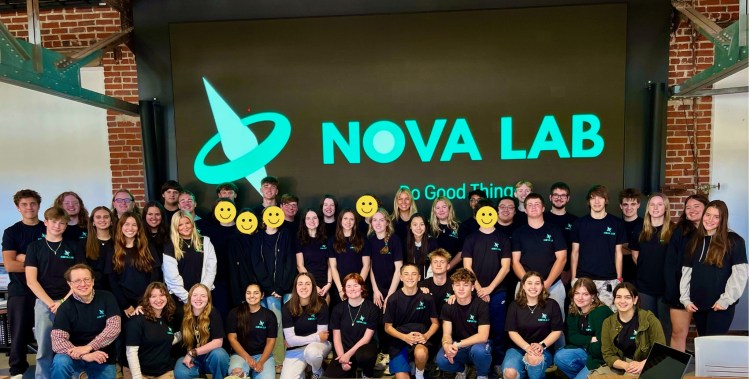
Oh, and just because it’s an amazing group of students…here again, if you’ve not seen it, is our 2024 NOVA Lab Group Photo.
Future Deja Vu
For the past 24 days, NOVA Lab students have traveled into the future. (See our first post about this work.) Working off the resources presented by PBS for their amazing series, A Brief History of the Future, we not only learned about the practice of futures thinking through understanding how to recognize signals, trends, and spot patterns, but we used our research to created the backbones for protopias, futures oriented communities designed not through an attempt to predict the future, but rather to acquire the foresight through which we could develop proactive rather than reactive measures to meet the futures we might encounter.
Our presentations of these protopian projects took place in the same amazing space we have presented our initial projects for the past 4 years, Fluxspace. Developed as an ed-tech accelerator, Fluxspace has served as the sort of decentralized, community based, educational facility that I imagine will continue to crop up around the country as we continue to question an educational system ossified by the very measures it heralds.

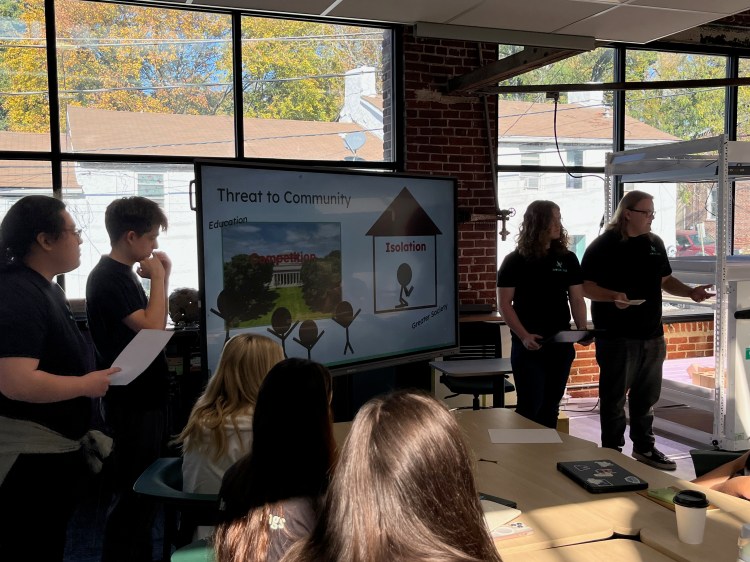
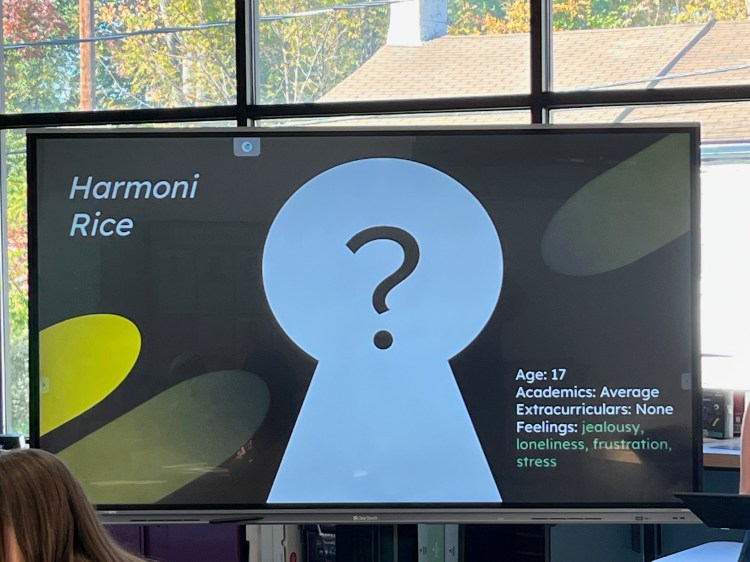
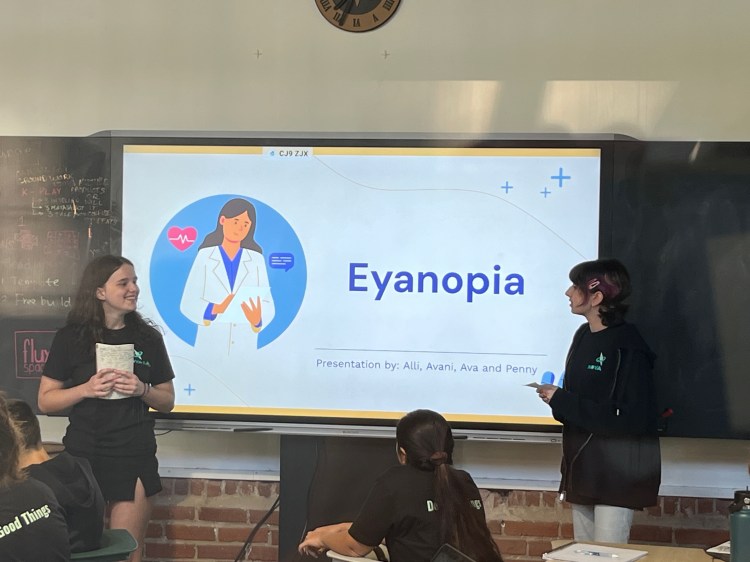
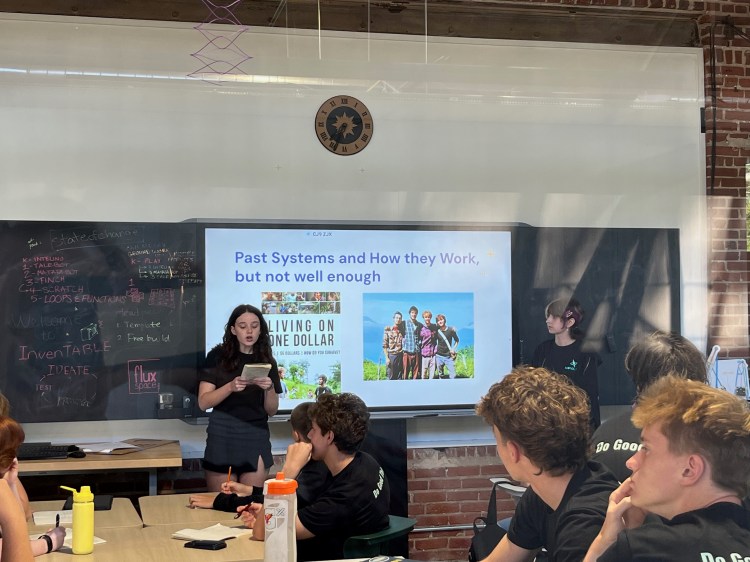
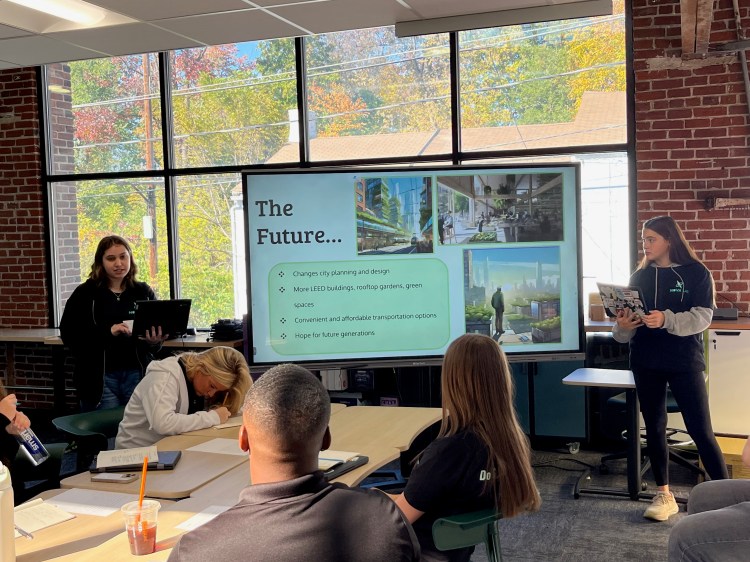


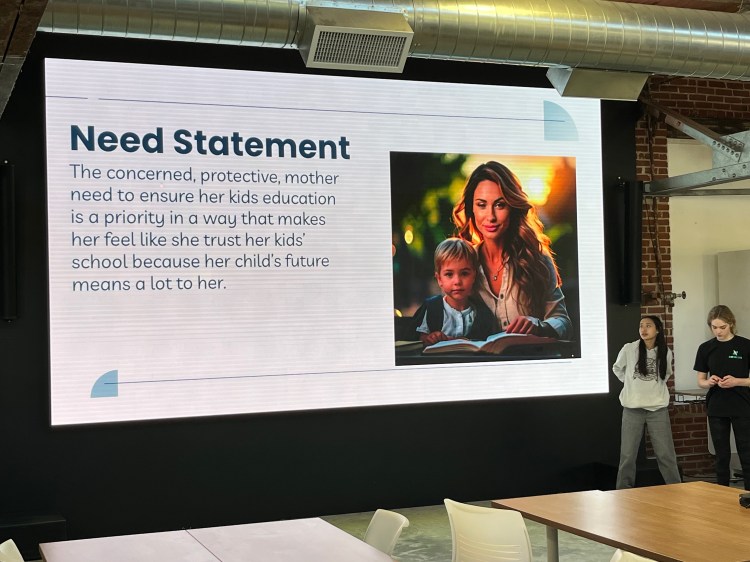
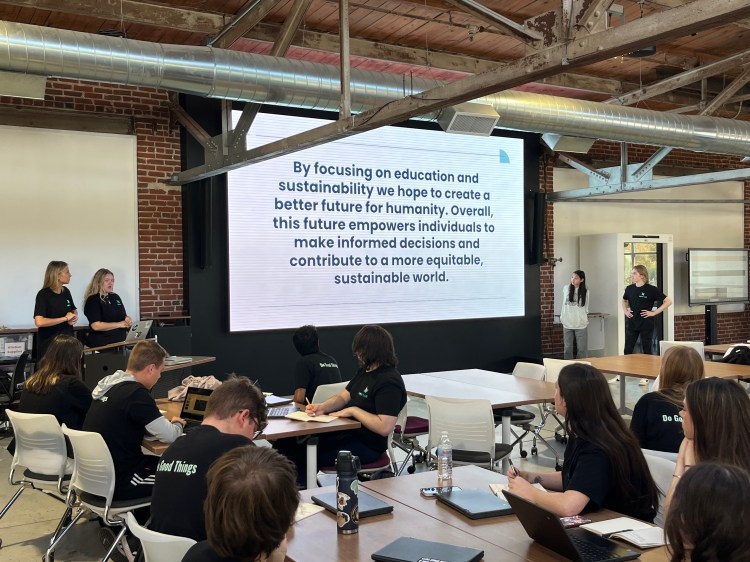
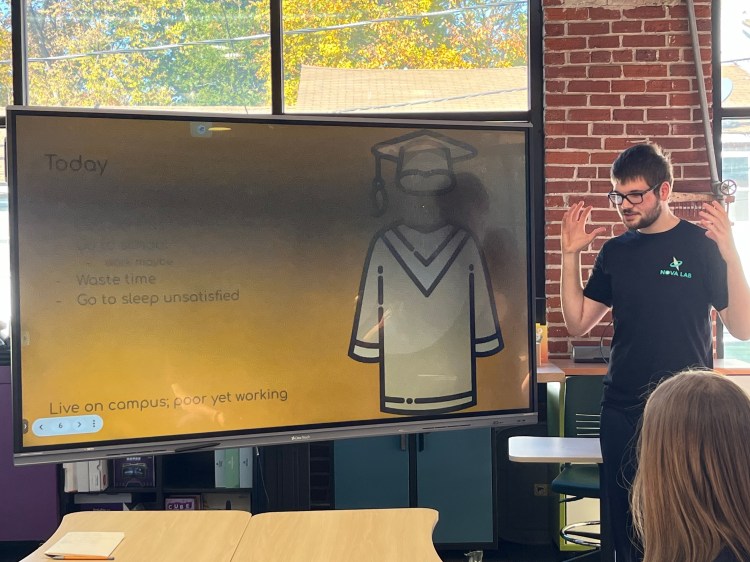


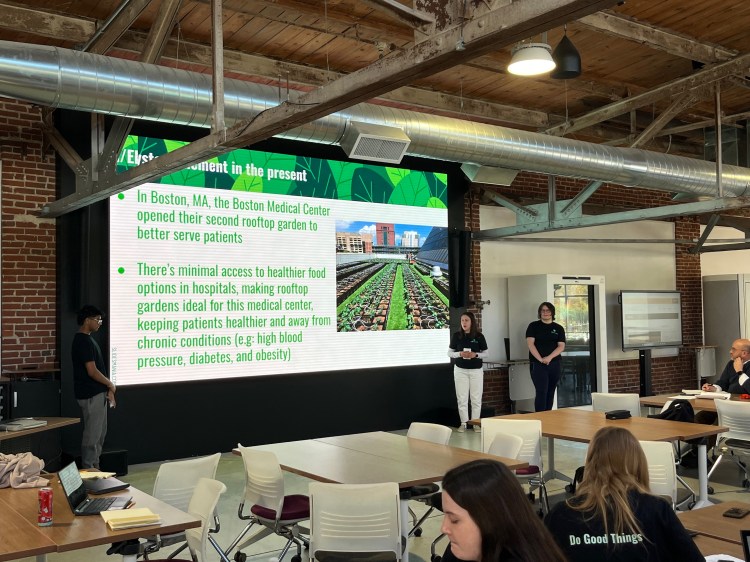


In 32 years as a teacher, I can count on one hand the projects I’ve helped manage that had the depth of engagement and collaboration this project had. I stand in awe. In reflection after reflection, students noted how important they felt their work was, even if it was only at the theoretical/preliminary level, because they felt a real responsibility to the future.
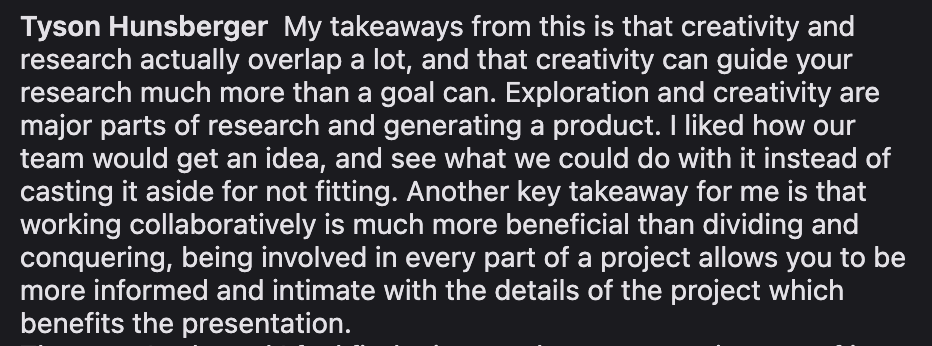
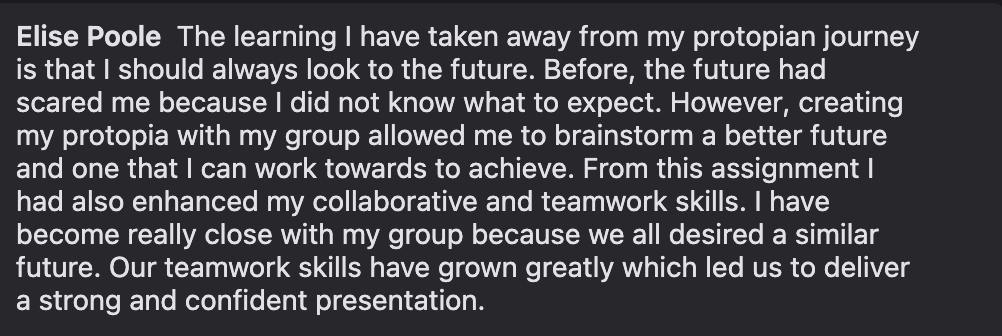
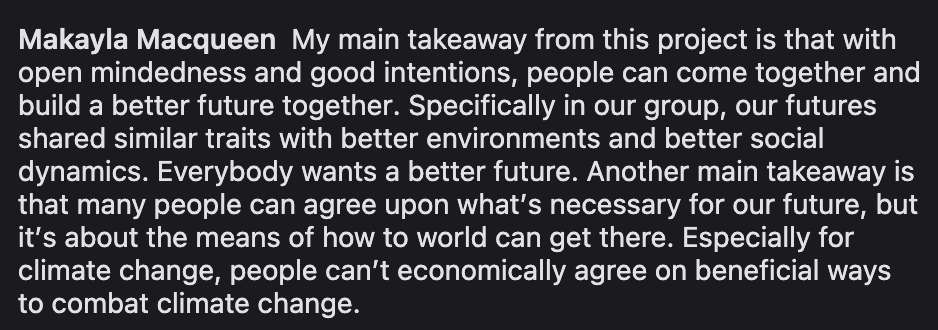
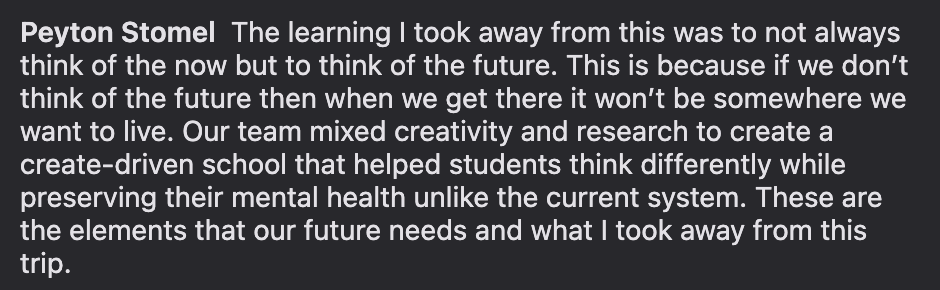
Moreover, their thinking was not hopeless and filled with despots, climatological collapse, and failed states (as is the case in most of the futuristic pablum served us by Hollywood or teenaged, angsty, dystopian literary fare). These were visions that could be achieved, that gave us faith in this current generation.
As we move forward this year, NOVA Lab students may choose to pursue their protopian visions, or they may decide to pursue their own purpose driven projects…projects that are inherently meaningful but which have an impact on a larger community. In this, we look to the guidance of what might be the most successful futures thinking initiatives we’ve undertaken, the United Nations Sustainable Development goals.
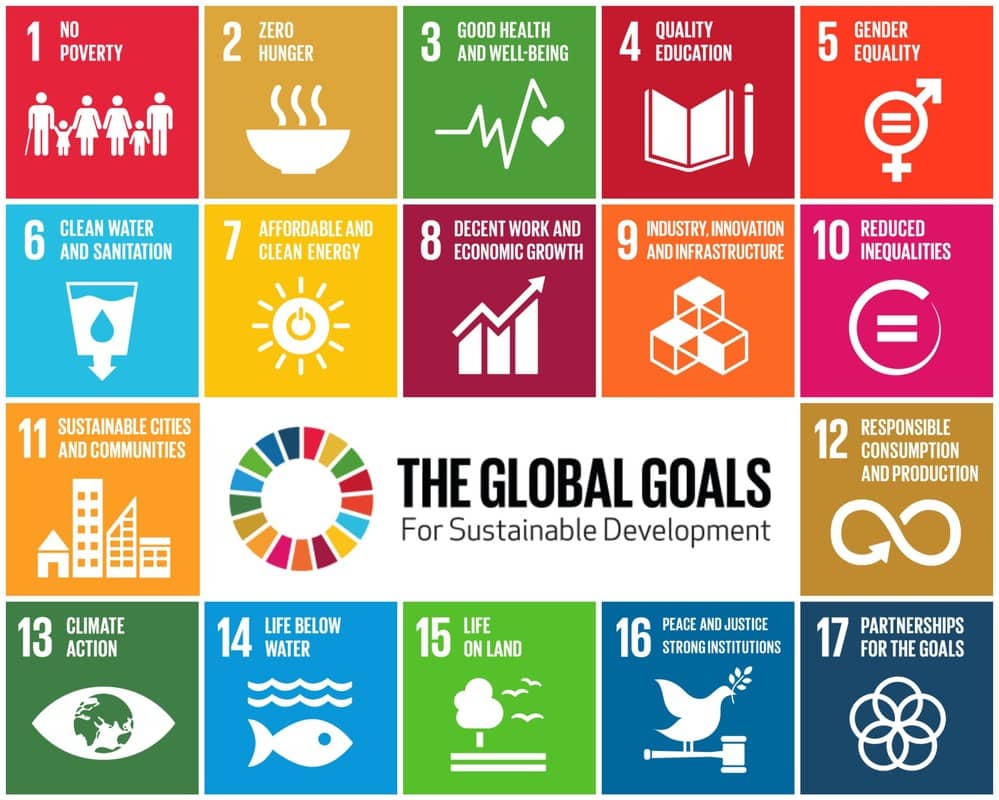
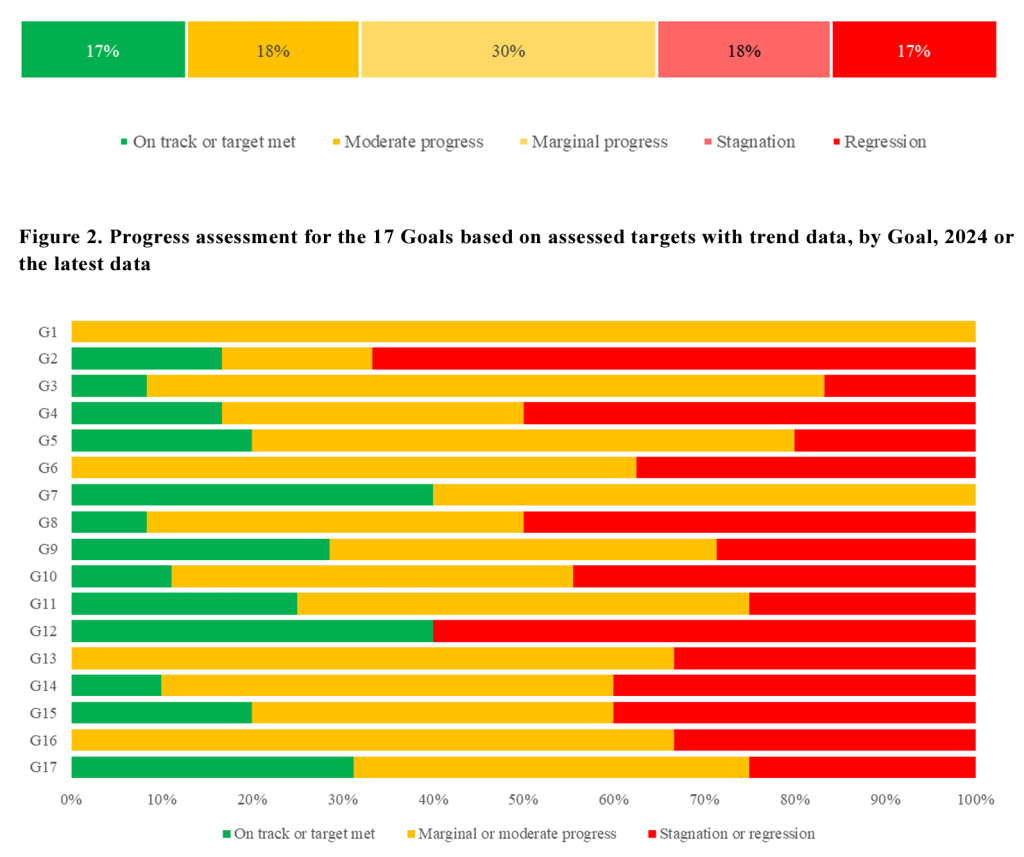
Progeny of the Millennium Development Goals of 2000 (focused mostly on poverty, education, hunger and disease ) the UNSDGs have been in place since January 1 of 2016, but most of them will not meet their goal by 2030. And while these goals are instructive and provide direction, part of their directive, unfortunately, is in how we have failed by them.
It’s tough to make predictions, especially about the future.–Yogi Berra
Years of infighting among (mostly) first-world countries more interested in profit and dominion, countries who have rarely felt the impact of sea-level rise, devastating monsoons, and who have the infrastructure and deep straws to turn droughts into inconvenience have turned the 2030 target into a pipe dream to the detriment of the planet itself. The countries, the USA among them, have rarely assumed a custodial view of our responsibilities on this, our only habitable spaceship. What are we to do when we can not even agree on our own survival, let alone the survival of all species? Perhaps look at the statistics and shake our heads? Or maybe admit that Yogi Berra was right?
It seems futile to leave it up to our governing bodies. Like many bureaucracies (schools among them), they suffer from a failure of the imagination. They and, by proxy of our vote, we, have failed to create visions of the future that save us from ecocide, that allow us to reconcile our differences in ways that engage us in a common human objective–recognition that this is all we have. And that failure is largely the result of stagnant stories. We can’t see beyond the way things have always been. When we lack the imagination at the level of leadership to even dream of different futures, we are in deep trouble.
That’s where NOVA Lab comes in. These students, and students like them all around the world, who would dare to dream a future of prosperity for all rather than the top 10%.

Think what you will. Label them hopeless idealists. At least they have imaginations and a belief that they have a responsibility. Let’s hope the visions of some of them are brought to reality. They are hopeful, intelligent, and motivated to do good things.
From Design Thinking to Futures Thinking (part 1)
While Design Thinking has been the heuristic of choice for the NOVA Lab pioneers since our inception, the scope of the class has changed. As precarity, permacrisis, and other aspects of a Volatile, Uncertain, Complex, Ambigous (VUCA) world come to predominate in this “Time Between Worlds” (see Zach Stein), and as many prognosticators struggle to imagine our arrival at the 22nd Century if our current appetites and drives continue, I’ve come to adopt a more systems thinking approach to our work.
It is not a new approach, only new to us: Futures Thinking.
Our first encounter with the concept was probably grossly overlooked, but this summer, laid up by a torn achilles tendon, I happened upon the PBS series A Brief History of the Future with futurist Ari Wallach. Consuming all the episodes in a few days, I rethought the entirety of a marking period and may have, quite literally, designed a future my students had not anticipated.
If you’re not sure your tax dollars are doing anything of value in terms of the Public Broadcasting System, you’re not paying enough attention. First, the series is incredible in its scope. From recognizing the importance of native wisdom and the value of being a good ancestor to climatological impacts of all we do, to how we as communities and individuals can shape the futures we desire, rather than react to the ones we unthinkingly arrive at.

But what makes the rhetoric of the film making even more valuable is the educational materials behind it. The PBS Learning Resources for this show are immense, and the depth to which they allow educators, who may be only briefly familiar with the concept of Futures Thinking, to take their students is incredible. In a mere two weeks, our NOVA Lab students will have done deep background work in thinking like a Futurist, practicing Foresight Thinking, Signal and Trends spotting, Scenario Planning, and Protopian design.
I am filled with the giddy anxiety of a teacher who has jumped into a space I know is valuable, but who is learning along side my students. What I know from my 31 years in the classroom is that there is no other place I would rather be than learning WITH my students.

While I am learning along side my students, I am also, as is my habit, jumping down this rabbit hole of Futures Literacy. I’ve recognized much of what I’ve discovered as a sort of updating of design thinking (the Institute for the Future has called it the “new design thinking). This is a space my classes have occupied for decades, and so jumping into the future, and following people like the Institute for the Future, Zachary Stein (see Education in a Time Between Worlds) Will Richardson and the BIG Questions Institute , The Human Restoration Project, The STARTedUP Foundation, Benjamin Freud and Coconut Thinking, and countless others is second nature to me.
However, bringing our NOVA Lab students to the space, especially with the help of PBS and others, is, perhaps, the greatest work of my life. After all, it is the closest I’ve come to living out with my students the two questions that are the credo of our classroom:
Why are things the way they are?
How can we make them better?
I don’t know if this will help anyone follow us or help lead you, as well, to working towards more regenerative, protopian futures, but I used an AI site called Gamma to take this article, a primer on Futures Thinking from the Institute for the Future, to create a slidedeck on Futures Thinking (see below). Perhaps, along with all the other sources, and the Wakelet I’ve started on the subject, others will follow / lead the way to a better future.


Over the course of the next 10 days, NOVA Lab students will be designing future cities around trends and signals they have identified with the goal of developing protopian futures. They will develop the criteria, but only after research and sifting through the static to find the patterns and trends. Many, I hope, will use AI to expedite this work.

Whatever the outcome of this prototype, I am sure it will drive us forward towards futures far better than those we find in the movies or even our current collaborative dreams. If you are an educator interested in Futures Thinking and how it can help us imagine better futures not only for education but also for all species and humanity, if you believe in Buckminster Fuller’s idea (either from the quotation above or from his brilliant “World Game,” if you have hope instead of complacency in the face of the dystopian futures that populate so many of our texts…. Well, if you “feel” any of that, I’d love to start a group, or be pointed to one that already exists, to share ideas and dream/imagine/invent/wonder about these things. Please reach out to me at gheidt@pvsd.org, or touch base with me on LinkedIn.
 Innovation Lab