Yeah, I know it’s not original, it might not even be something that’s sustainable for me, though I can get help from the members of NOVA Lab, I’m sure. (We’re all about encouraging and helping each other.)
I was reading Ryan Holliday’s blog, the Daily Stoic, recently and learned about what things were marks of success for the great Stoic, Marcus Auerlius: good character and acting for the common good.
As I read more on Marcus later in the week, I got to thinking about how I might bring that stoic wisdom to NOVA Lab with a bit of rebranding, and I thought about our slogan.
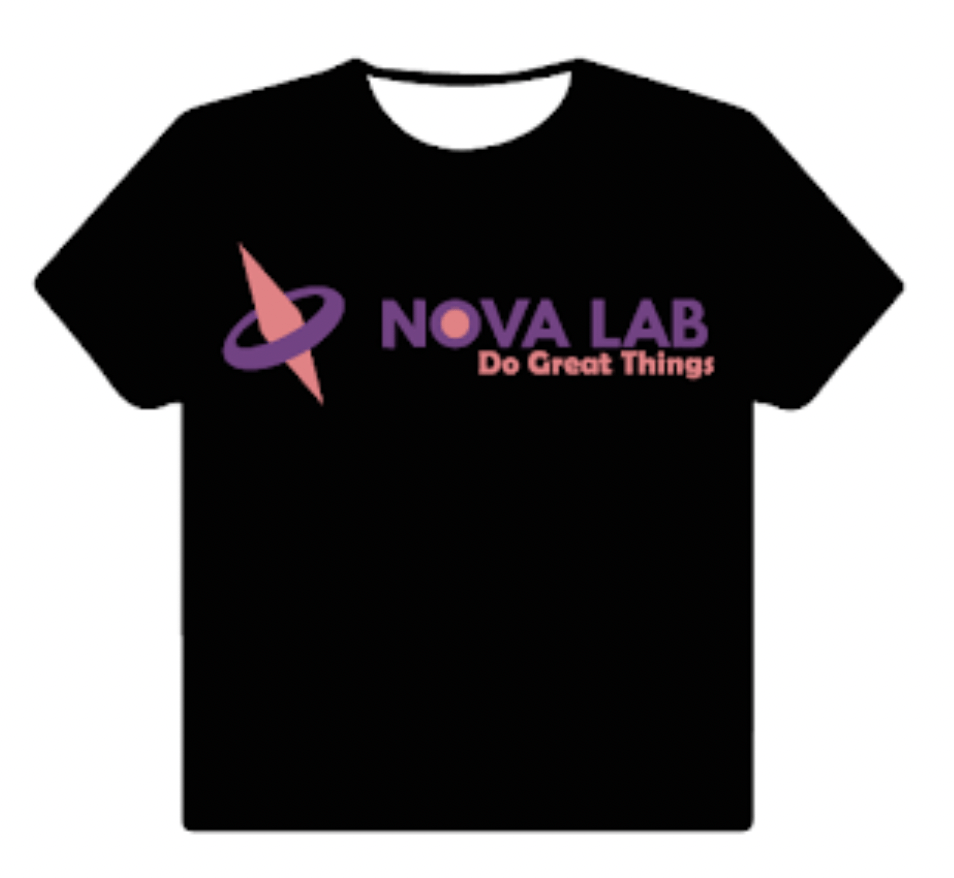
For the past two years, I’ve issued a daily call to my NOVA Lab students to “go do great things.” And when marketing the class, it was an easy lift to simply adopt that as our slogan (see t-shirt mockup at right). But in thinking over what Marcus Aurelius said, I am wondering if “do great things” is too much license, or too much pressure. Great things may be accomplished in many ways, and those ends might justify means I wouldn’t want to justify. And given the rates of anxiety in our teenagers, the pressure to “be great” or “do great things” may be…well…too great.
So I thought about “Do Good Things.”
I love the ambiguity there. At first it seems like the statement of an underachiever, like “this is good enough.” What entrepreneur would consider only ever being good?: “I make good soup.” “I make good apps.”
After all, we do live in an age of superlatives, and maybe we can thank PT Barnum for that, or the advantage of America’s ascension to dominance in the 20th century. Whatever it is, it seems our wont to be the best, the biggest, the greatest. And I wonder if in doing that we’ve missed the fact that great rests upon good. If at its foundation the core motive of an act is not “good,” or “to do good,” then “great” becomes a facade, a label. And “Do great things!”, then, is mere entreaty without moral intention.
So the rebranding for NOVA Lab, strange as it may seem, is to step back and step down in order to step up. I want to tell my students to do “good things.” After all, that’s the end, the goal of Social Impact design. And we can know good things, and do good things, and measure good things if we at least agree on moral standards of what it means to “do good,” or to act, as Aurelius reminds us, “for the common good.”
Some might look to this with cynicism. That is the habit of our post-modern world: To always question and distrust the motives of others. Some may even react with a bit of derision, “Who is he to believe that by doing good things he could change the world.” I’ll take both challenges, for the greatest thing I can do, is to foster a focus on and belief in the common good and the role we must all play in it, however small that might be.
For me, that role is in creating learning spaces where a focus on and belief in the common good is foundational to our community, both in and out of the classroom. And this is why NOVA Lab exists, because it allows me to live knowing I tried to do all I could to make the world a better place rather than simply bettering my own place in the world.
A week shy of two years ago, students in the first iteration of my inNOVAtion Lab class traveled to Fluxspace, an educational innovation space attached to the headquarters of Corbett Inc in Norristown, PA. The trip, our second in as many months in the prepandemic fall of 2019 (after a trip to the BPHL Innovation Festival), was also the second of two of the greatestevents in students’ academic careers, at least as self-reported by the students in attendance at both events.
As one of the few adults who attended these two trips, as their teacher in the inaugural year of of inNOVAtion Lab, as a teacher of 26 years at the time, I agree.
November 19, 2019
In 26 years I’d had my share of classes that blew me away. But for the most part, that astonishment was confined to the classroom, which is a safe and limited(ing) space. How students fared once they left? Once they stopped playing by the rules of my classroom (however loose I may have set those rules) and moved on? Like most teachers, I rarely knew.
But our first trip to Fluxspace changed that. It became a benchmark for us. It was the place where we wanted to return, the place where some of my students would go on to intern and bring their talents and insights to others.
It was also the place we would not get to return to for two years. COVID made sure of that.
Until yesterday.
Our return to Fluxspace had been something I’d designed for over two months. All the work of the entire first marking period was chosen to prepare students with the skills to succeed and the knowledge to reflect upon. I was intentional in my choices (see * at bottom), and my intentions were, at least in part, to see if it would be possible to capture lighting in a bottle twice.
This, the third cohort of NOVA Lab, made that magical task a reality.
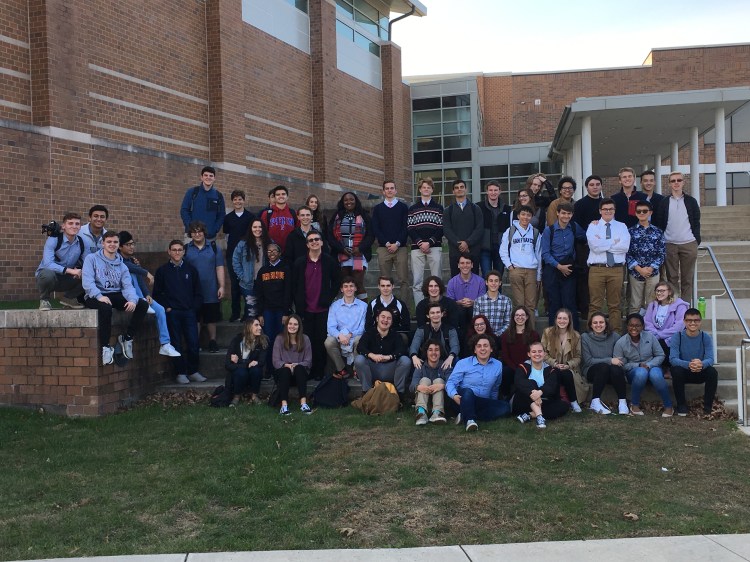
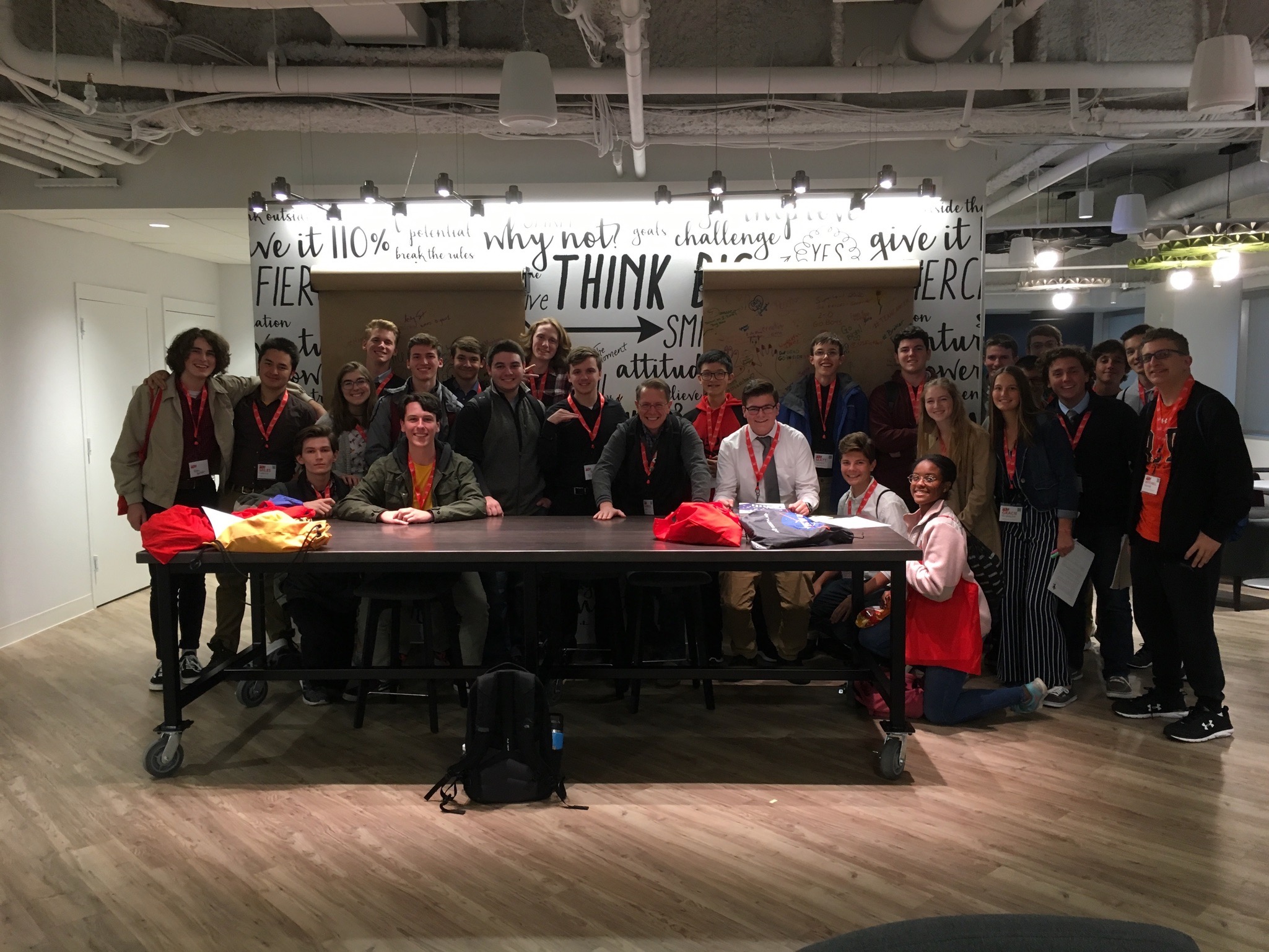
On November 12, 2021, after almost exactly two years, my 35 NOVA Lab students returned to Fluxspace. Primed for a presentation from Drexel University and an afternoon of presentations to panels of parents, professors, and professionals, these students had the kind of nervous energy that any coach wants in his players before a big game.
And what a big game we had.
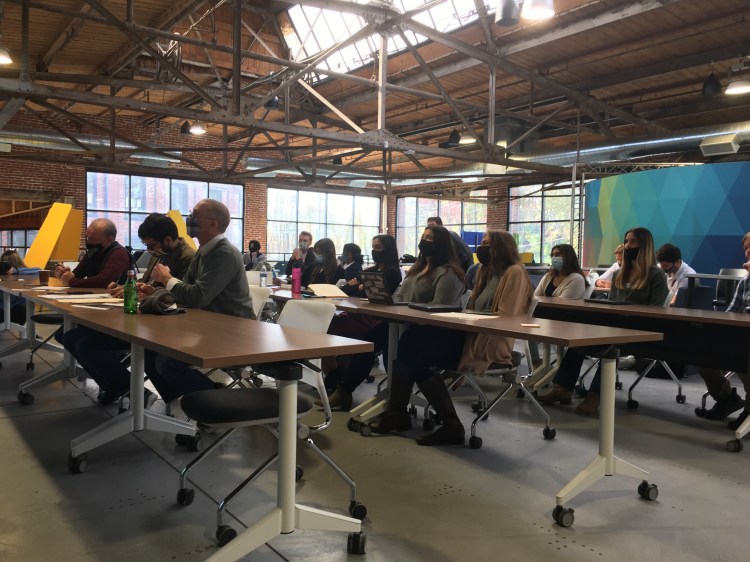
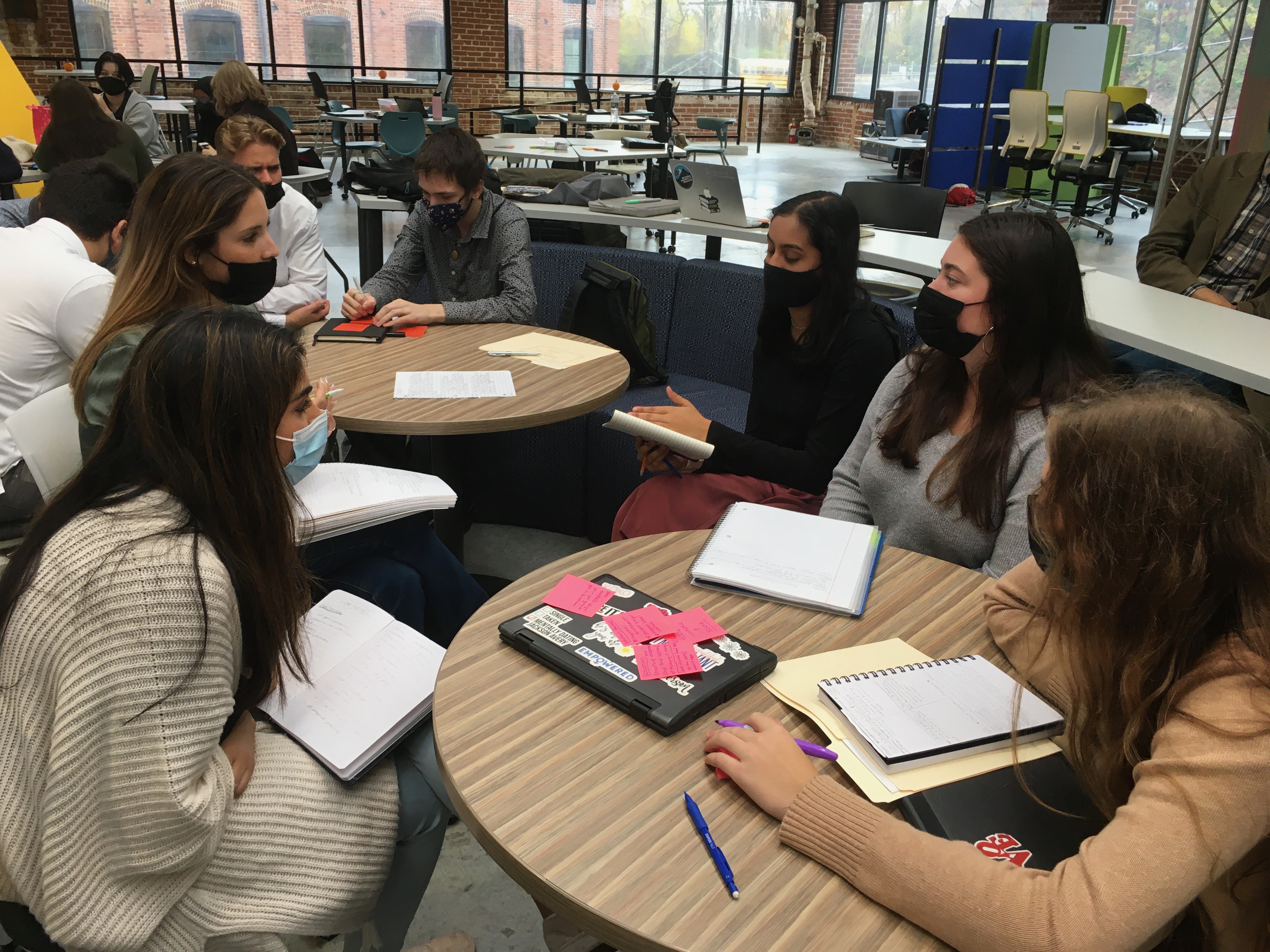
Chuck Sacco, Liz Herzog, and Barrie Litzky from The Charles Close School of Entrepreneurship kicked off our morning with an informative and interactive look at the Entrepreneurial Mindset. After background information on the traits, skills, and characteristics of the mindset, student teams had 20 minutes to come up with an innovation with social impact.
The two months of background students had in innovation and design thinking proved valuable as teams of designers who’d never worked together before created diverse and approachable solutions to a host of problems from gentrification to unemployment to over-incarceration.
Wait… twenty minutes to solve the world’s problems? Not going to happen, and the students know this. But they also know that they’re the generation next in line, and they won’t miss the opportunities we’ve missed. One team even approached me after the presentations to ask if they could work together to continue their project addressing food deserts.
And while those moments were outstanding, what really stood out was the way the students shifted into their roles as design teams in the afternoon to present their designed solutions to the Build.org National Design Challenge for 2021.
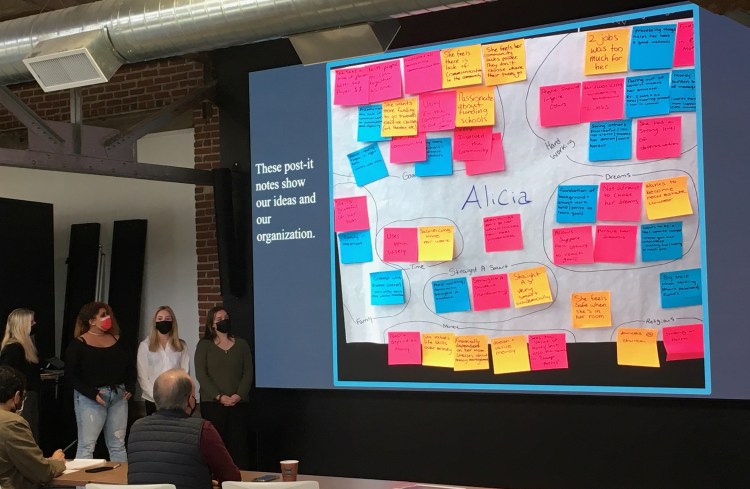
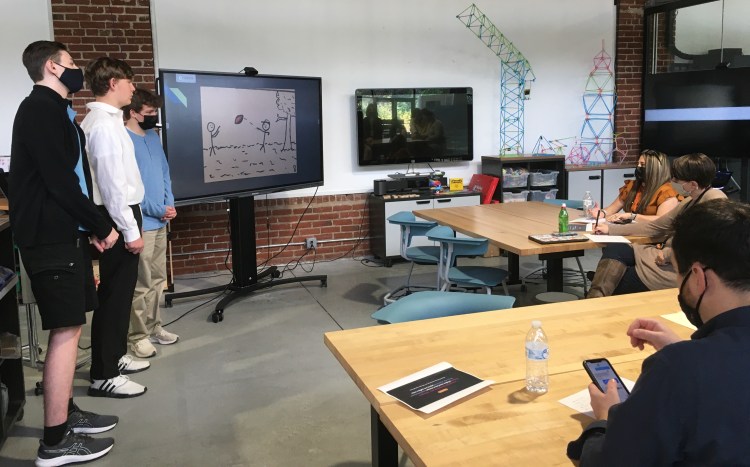
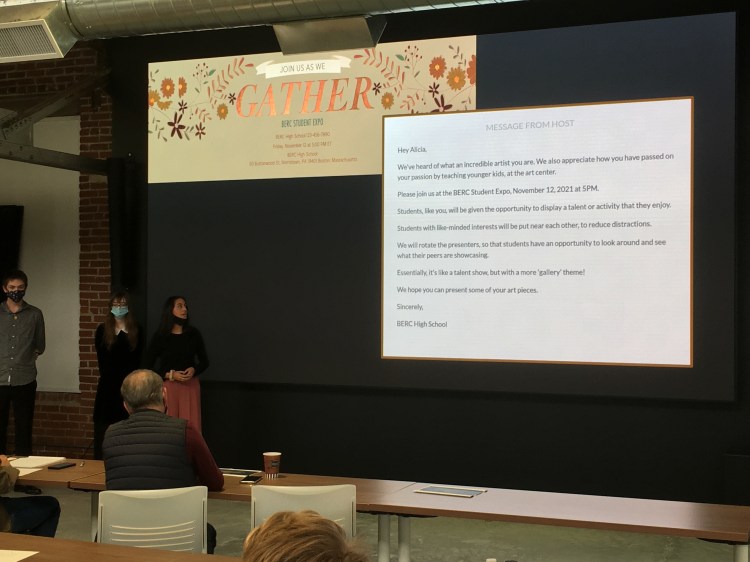
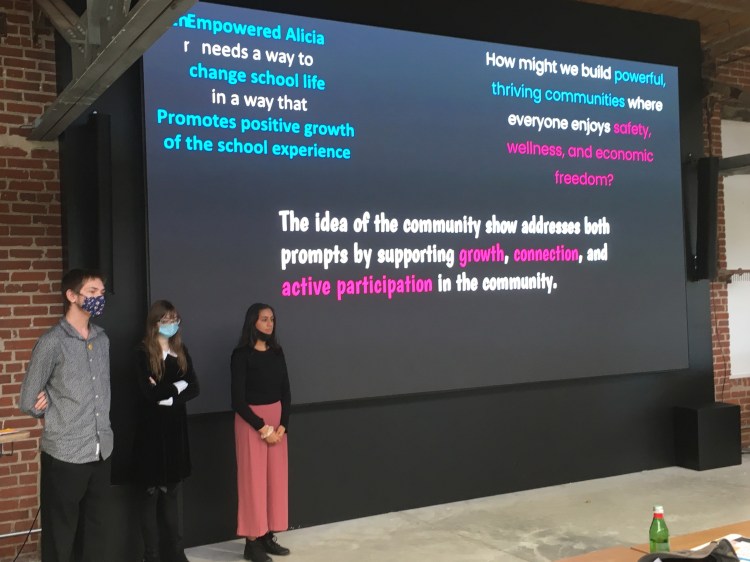
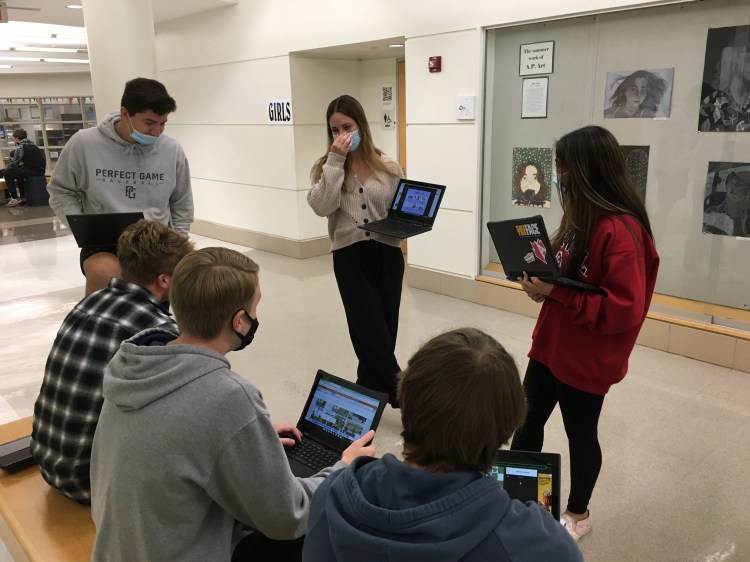
Split into two groups of six teams each with ten minutes for presentations and feedback, these students handled the task before them, to tell the story of their client and their solution, just like design students . I’ve seen design critiques before. My students were part of college design student mid-crits at Philadelphia University in 2012. And that is how I set up these presentations. With only twelve days on-task for this challenge and maybe 8 hours of class time, NOVA Lab students floored their panels with their empathy, research, creativity and professionalism. What’s more, they exhibited something I rarely see in even my own English classes–they brought heart and energy to these tasks. They collaborated like mad, relied on each other, and communicated an empathy for their clients that is missing from most self-absorbed, individual (and even group) work that is done in the classroom.
I don’t need to have 28 years in the classroom to know that when students are intrinsically motivated, the learning is deeper, more relevant, and “sticky.” As I noted in my first post about Fluxspace in 2019, this is the kind of experience that shifts the mind utterly, that reveals something we’ve hidden from students behind tests, and rules, and most of all, grades. . . .
This is the Joy of Learning embodied.
*Below is the basic outline for how we worked through our first marking period. All the work listed has specific timelines and is based on key concepts at the heart of Innovation and Design Thinking for Social Impact.
Community and Culture building, Creativity and Communication skills, Innovator’s DNA and the Adaptable Mind, Design Thinking, and, finally, the Build.org National Design Challenge.
“We teach to ensure the world can be better than we found it.”
Were I to found a school for those who sought to be teachers, this would be a mantra. And yes, it is aspirational, but nations who have no aspirations, or who have lost them due to their own selfish desires…who have no foresight or care for the damage they inflict today? These nations will perish, and cause others to perish with them.
We can be better than this. Almost a decade ago I gave a presentation at the Industrial Designer’s Society of America called, “S.T.E.A.M. Power for a Better Future.” I began in similarly aspirational ways by claiming that design and design thinking could help save the world.
I was naive, smitten with the insight and beauty of the mindsets that populate design thinking. I realize there are no silver bullets that will save us. It will take hard work, at all levels, to assure that we actually reach the 22nd Century. But I still believe Design Thinking will get us there.
Apparently Serena and her classmates in NOVA Lab think so, too.
Serena C., Senior
So far this process has been an obvious enlightenment for my peers and I, seeing that this design sprint is our first purposeful project in a gradeless class. As Mr. Heidt pointed out in his usual attention grabbing manner as he spoke in German, he reminded the class that this project was not only important for the client on the receiving end of our innovations, but it was also providing us with a Weltanschauung, a “world view or outlook” unlike any other we were used to seeing. Today we elaborated upon that outlook by bringing our prototypes to life and tying up the loose ends of our presentations.
Testing and Practicing
After a small prologue in the beginning of class, groups were unleashed to work on concluding the test/pitch phase and preparing for final presentations that are now less than 48 hours away. In a gradeless class, trust and honesty between the teacher and students is key; we’ve already proven ourselves in the past, making this innovation process much smoother and easier for each group to take control of their own responsibilities. The path to success is already paved. The only difference is that as groups, we now have to help guide each other in our own decisions instead of looking to the teacher for answers to regurgitate.
However, there was no doubt of the rising tension in the room. With groups racing to Mr. Heidt and to their peers to receive feedback in hopes of reaching peak performance, the idea of a design “sprint” seems to satisfy the environment and paint the right picture. The space was filled with emotions as nervousness, excitement, and a little bit of tiredness were all swept up into a whirlwind. Everyone is scrambling for the final pitch on Friday at Flux Space, and for that final relief and payoff of all the hard work we’ve dedicated to this project for the past couple weeks.
Homegrown Design’s vision for a Community Park for Sixto
Although today’s work didn’t entail much new material, I was able to take away the important aspects of presenting as we added in the final components of our slideshow. My group finished all of our work and already had the beginnings of external feedback from other groups, so we dedicated today’s time to making our visual clear and aesthetically clean. We also divided up responsibilities of the presentation, which was executed better than I had imagined. It’s obvious how much time and effort everyone in the group spent towards this design challenge when they all demonstrated their pronounced base of knowledge through their connection with the client.
Now that we have all the information we need, it is evident that the storytelling of our presentation will most likely be the determining factor in audience engagement and the lasting effect of our innovation. Our story is going to be vital for connecting the audience to our client and keeping them engaged throughout the pitch. We’re coming together as a group with an immovable deadline driving us to the finish line, which seems daunting, but it only motivates us more.
Looking forward, I’m beyond excited to share our innovation with the “real world”. This class has given me the opportunity to apply my ideas beyond grades-in-a-system, and I finally get to see the work that matters to me have an actual effect outside school walls. Not only am I excited to introduce myself and my personal contributions to the world on Friday, but I’m eager to hear and learn more about innovation. The Build Design Challenge taught me a great deal about the design process, yet I still find the desire for knowledge and personal improvement knocking at my door every day.
The world can be intimidating, especially in today’s modern age, but we are the next generation. Despite the hesitation among the stubborn who refuse to open their minds, we have the power to make a difference and change the status quo. We can help those who struggle in a world where it’s easy to drown, and we can do it through human-centered innovation processes exactly like this one. We can be the ones who finally create meaningful change, and it’s all starting in a high school classroom.
Two days left. Presentations, Final Touches, Storytelling, Roles, Responsibilities…So much to do still. Luke R. picks it up from here:
Luke R., Junior
Presenting our prototypes to get feedback
Hello friends. Today in Nova Lab, we were submerged in the Test phase of the Build Design Process, where each group refined and practiced pitching their projects to other groups. My group first actively listened to a pitch from a few peers, and when they were done presenting their idea, the 3 members of my group gave them feedback on it. One of my peers was adamant about speaking after the feedback, but she had to hold it in and accept what was given to her. This helped her, as well as me, come to the realization that you know more than anyone else about your project. If feedback is given to you about something that wasn’t interpreted right, then you as the presenter did not make it clear enough when pitching it. This caused me to take a step back and think about what would be unclear to other people in my own project, and how I could take a step back and see from those perspectives to improve my work.
We pitched our project to another student, and the experience enlightened me that I need to work on my body language and flow of language when I speak. I have to remain passionate about what I am explaining, so that I can instill passion into my audience. After our presentation, we moved forward with the “prototype” phase, revising our idea. We have most of our actual content figured out, at least the base level prior to revisions. We have been working on putting everything into a slide show, creating a storyboard, and making our prototype, which was a drawing on a poster, more refined.
This entire process has me extremely excited for our presentation Friday, and I think it is important to note that enjoying something makes it much easier to work towards. During this project so far, me and my two group members have each had a moment where we say to ourselves or each other, “this is actually going to be really good.” That sentence means a lot for a highschool student, because for many, school isn’t something people enjoy or want to work towards. Just today, one of my peers in my group texted me about how this project was actually really exciting and that they couldn’t wait for Friday, and that made me super happy to see that it was being treated seriously, because I had the same realization earlier in this process.
“I’m tired of people saying, ‘that’s not how it is in the real world’.
Mr. Heidt
Excitement needs to be a tool though, not a distraction. It is important to realize that our ultimate goal is to help our client, and to learn while doing it. Today Mr. Heidt said something that stuck with me. “I’m tired of people saying, ‘that’s not how it is in the real world’. We ARE in the real world.” He’s right. The world isn’t the same as it used to be, and in a week it will be completely different than it is now. The real world is what we’re living in, and we have to take advantage of every opportunity, because opportunities only knock once.
One last thing that I’d like to mention is that this project has helped me grow closer to my peers, especially the ones I’m working with. I have friends in Nova Lab that I knew previous to the class, but the two people that I am in a group with, I did not know prior to taking this class. I can now say that I say hello to two new people in the hallway when I see them, and that has been one of the most valuable aspects of this class for me. Our group has merchandise, a solid team name, and the majority of the time in class is spent smiling and laughing, while getting significant work done. Life can go by fast, but living in the moment with people you genuinely enjoy being around can help slow things down.
Most of our prototypes will be done and ready for testing on Friday. As well, short, story-based slide decks will be ready to go and practiced quite soon. With Friday at Fluxspace looming on the immediate horizon, we have to tighten things up in order to be loose and adaptable for our presentations. Jackson takes it from here:
Jackson B., Junior
Today, my fellow innovators and I continued prototyping our design, testing our design, and revising it to make it both aesthetically pleasing and realistic. Evan and I attempted to discover a location for our park, which needs to be near the Hollywood/Los Angeles area. While it has been difficult to find an area, we believe we have achieved this with a large empty grass space on West Cyprus Street, which is just outside the Compton Airport. This is a massive breakthrough for our group as we have been attempting to discover a large enough area in the dense Hollywood to place a park, and we believe this street accomplishes that. As we were accomplishing this, CJ began revising our original prototype to make it both more professional and aesthetically pleasing.
This past week it has dawned on ushow meaningful this project is on both the life of Sixto and the community. As an area that suffers from gentrification, discrimination, and possibly being a food desert, it is special to have the opportunity to provide the community with an outlet from these issues. Our group is building a park with a stage and possible restaurant, but the community, and relationships that are built within the park are the bonds we are striving to create. If Sixto’s community is stronger, it will be easier to push back against gentrification, discrimination, and help solve other social issues. Knowing that our project may help Sixto’s community is a great feeling, especially knowing how much Sixto cares about this.
It’s hard to tell where all the time went. We’ve 4 days this coming week to complete our prototypes, test, reiterate if teams can split to do so, and then build out slide-decks for presentations on 11/12 at Fluxspace.io .
We’ve so many good ideas, but many are large scale. I’m not sure if that’s my own poor leadership at this juncture in this “new to me” project, or if it’s the nature of the challenge and its community impact requirement. Regardless, these designers are working to produce the best prototype they can for Friday. Here’s CJ to tell us about one such prototype:
inNOVAtor Insights
CJ, Junior
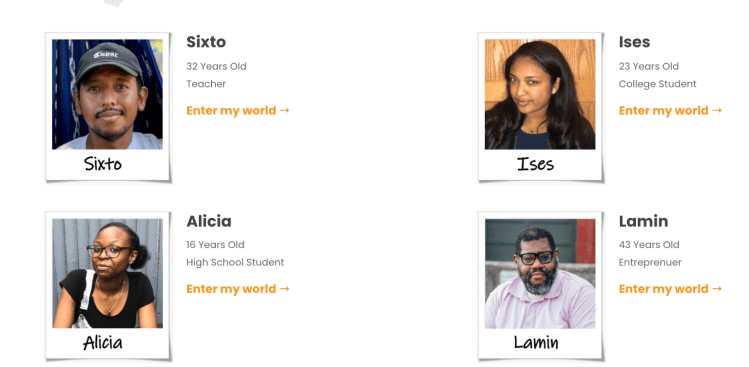
Finally, it is prototype day, we can spill all of the knowledge that has been building up in the empathisize, define, and ideate stages of our design challenge. If you, the reader, are familiar with the design challenge from previous posts it will come to no surprise that we are on a mission to build empathy within our client’s community. If this is the first post you are reading then let me give you some essential background information, our class was given the choice between four people that all are experiencing a different struggle in everyday life. We were told to choose the person that resonated with us the most.
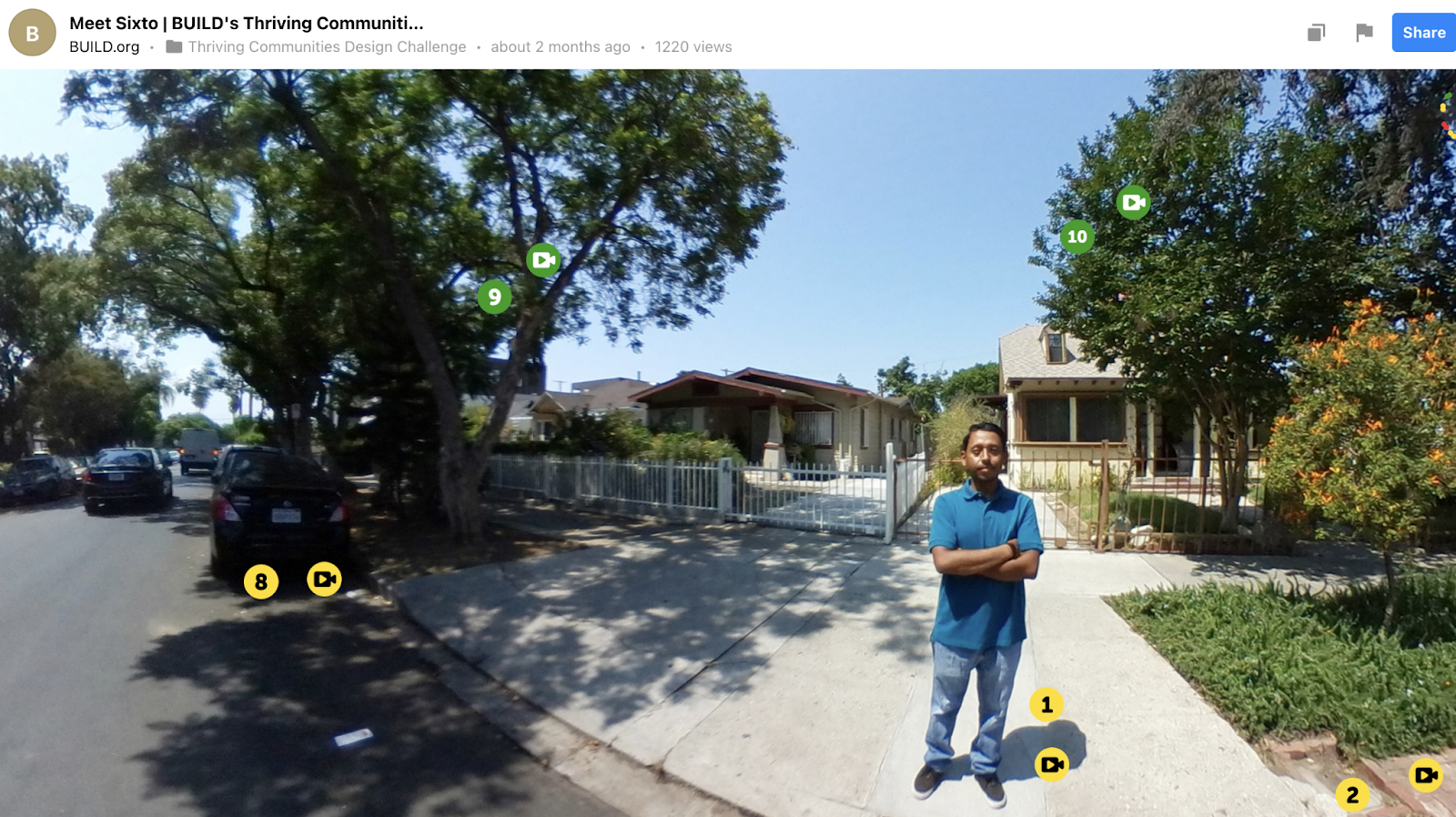
I had chosen Sixto because I relate to how his life flipped upside down more than others during the pandemic (but also because of his unique name). Sixto is a Latino 32 year old Male that teaches to make a living, he is involved in his community but has a hard time getting over health, money, and racial problems. However there was no question to answer, in other words the problems he faces are widespread problems that many face everywhere, so my group had to figure out how to restore empathy in his community before we can begin to think about the bigger picture. That is when our group needed to define the problems and take a deeper look into Sixto and his community.
Now that you get the gist, my group has started with laying out all of the insights we have gathered via the interview videos provided. Everyone had taken notes on Sixto; he is a father of one with a second child on the way, he is part of a hip-hop music club, he relishes the importance of family and community, and he is facing problems with gentrification. Gentrification was a word I have never heard of until this class, it means that wealthier individuals change poorer areas in many ways. You would think that it is good but that makes everything more expensive, to wealthy people it isn’t a problem but to those less fortunate it forces them to move. With this information provided by builduniversity.org, we began creating a prototype.
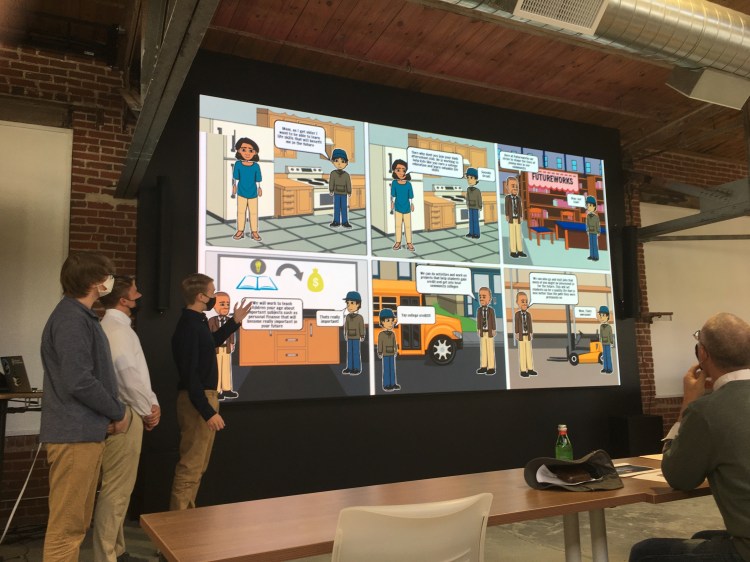
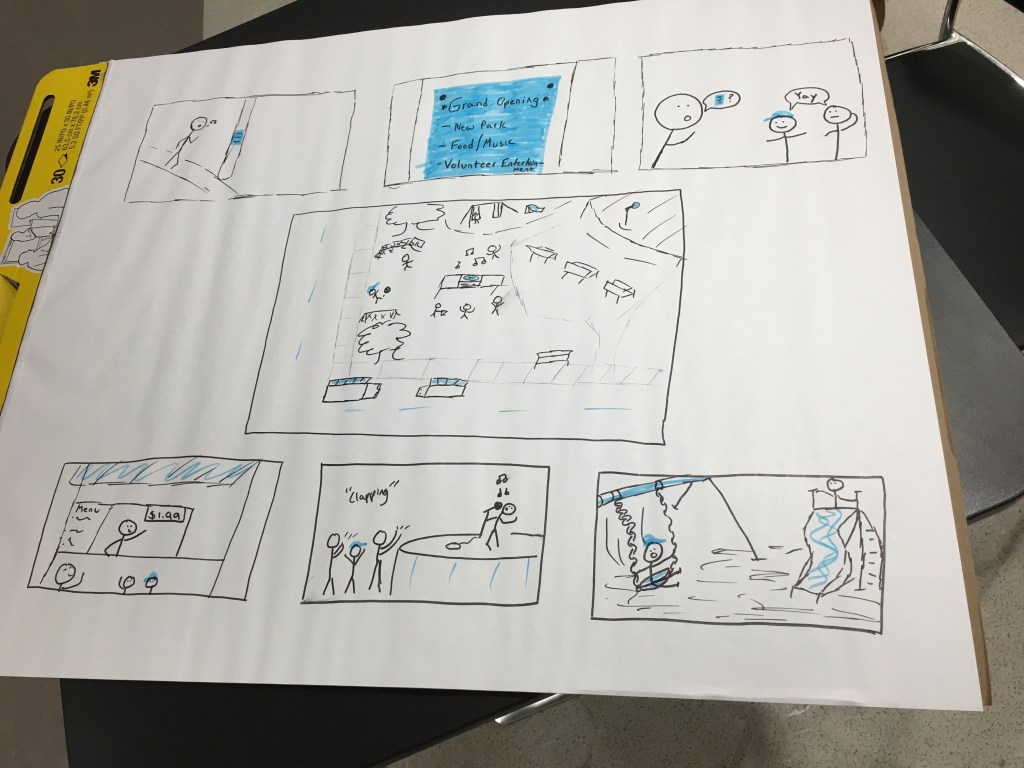
Now, it is definitely not the prettiest but when explained by our group it will make sense. Essentially we have designed a park theatre, in this theatre there will be entertainment on both screen and on stage live. The theatre will be non-profit accepting donations to families that struggle with gentrification. There will be food trucks of cultural cuisines that can let not only the Latino community but any culture shine. This would be a place for people to erase their mind of stereotypes and to let themselves have fun with whoever they want, no matter the race. The comic/storyboard follows a family that sees a flyer and they make plans to go to the event, the word is spread to others and they enjoy the live volunteer-based performances, cheap cultural food, and provided park swings, slides, and sporting equipment for the younger attendees. Our group thinks that this was the best way to combine our ideas and still hold practicality. We definitely feel as though this is a possible solution if everyone comes together with the sole purpose of living life without a grudge and having fun alongside anyone.
There are still challenges in this design project like finding a location in such a densely populated area (Hollywood, California). We look forward to presenting this idea at fluxspace.io on the 12th. I hope I can lead my group to not just a good grade but an outcome where people can see our work and be proud and inspired.
I wrote this in 2016. Before NOVA Lab existed as a class. But the sentiments here, especially in point #2, are the ripples I was creating that grew into this wave we call NOVA Lab. So cool to be able to look back and see the way my thoughts have transformed and manifested themselves. Or to see how I set myself on this path, and the determination I had to make something happen. I know that’s not just me. We all do it, but I still think it’s cool.
I’ve written about this before, but the other day, as I was saying goodbye to my Design-Lab students, I was overcome with the feeling that what I was doing in that class was so right. I mean this in a way that’s more like an old baseball glove than a mere, “good fit.” Here I was, teaching something I’d studied on my own for over a decade but never had the chance to fully apply: something I’d written about (see above) and presented on at conferences, but something I’d never had the chance to teach or facilitate in and of itself…something I never had the chance to dive into deeply with interested students.
And as the students left, the comfort of that situation, the way I could flex, and give and move with such a natural ease in that class…it didn’t leave. It’s still here with me.
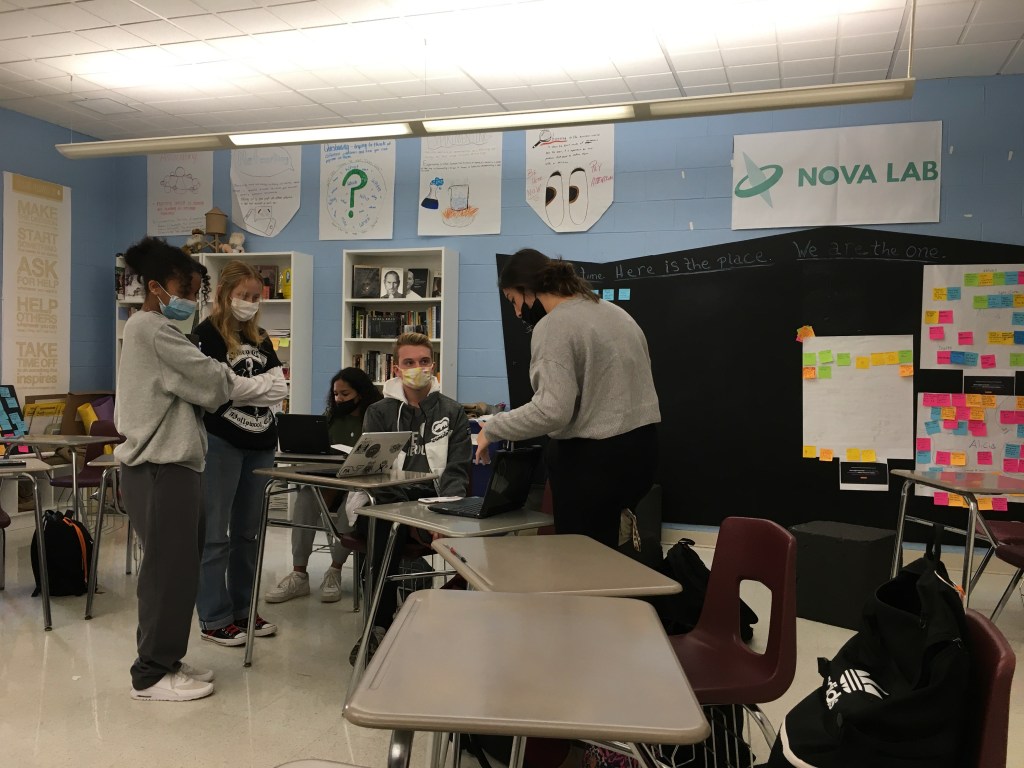
Now the work is really heating up. Student teams are diversifying. Some are working on storyboards, others on research, going back to their empathy maps, rewatching some of the client interviews, even looking up client businesses and correlating those with public transit routes, or getting a sense, through Google earth, of the larger context of client neighborhoods and communities.
One of the things I love most about Design Thinking is its integrative nature. As a champion of the liberal arts (see the mindmap of Prof. William Cronon’s “Only Connect: The Goals of a Liberal Education” above), I am enthralled by activities that draw on vast, and vastly different types of cognitive and physical work. Nothing I’ve ever done has approached that in the deep and meaningful/purpose-driven way that Human-Centered Design Thinking does.
I think Casey would agree. Please read her post.
Casey, Sophomore
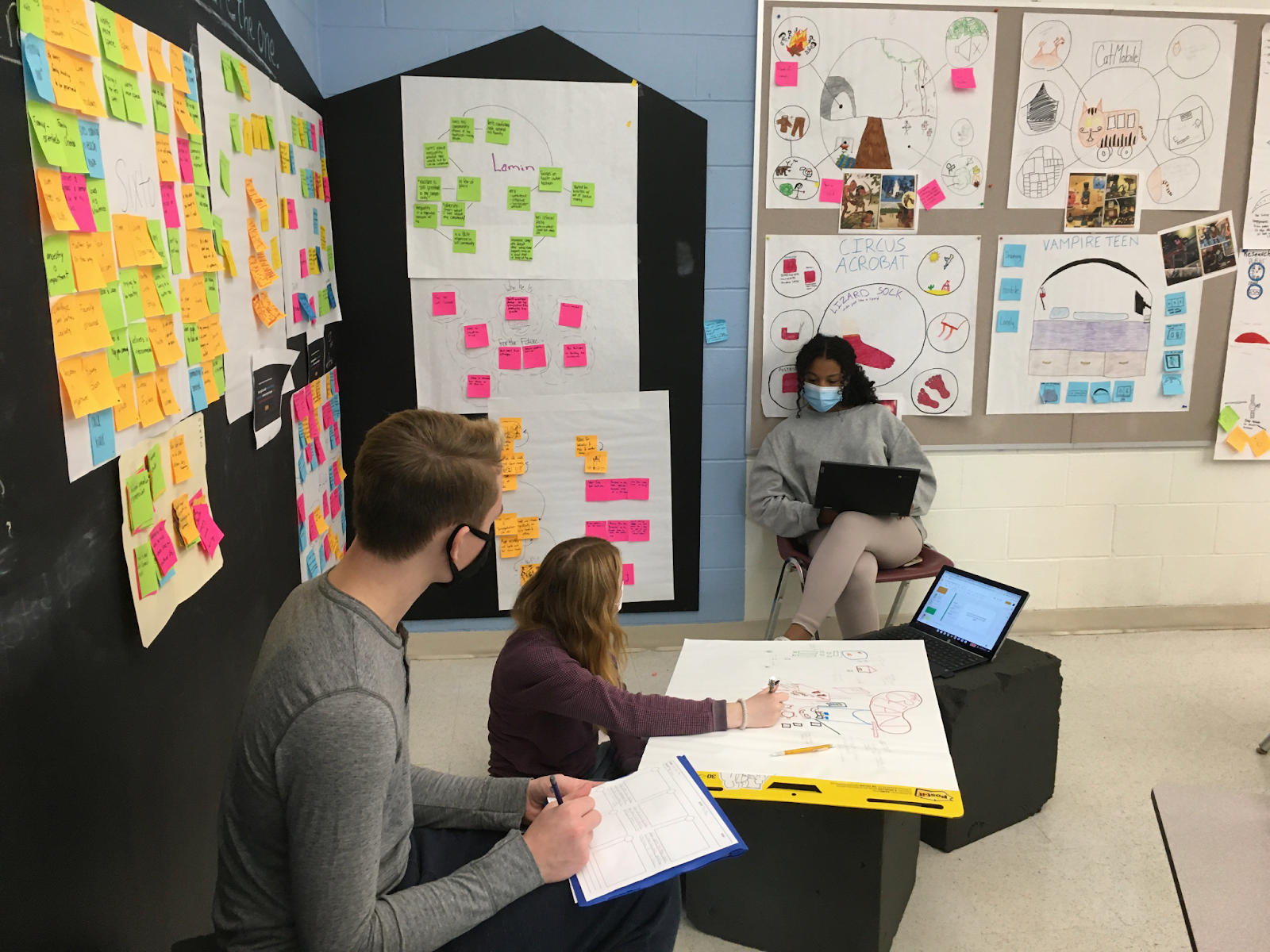
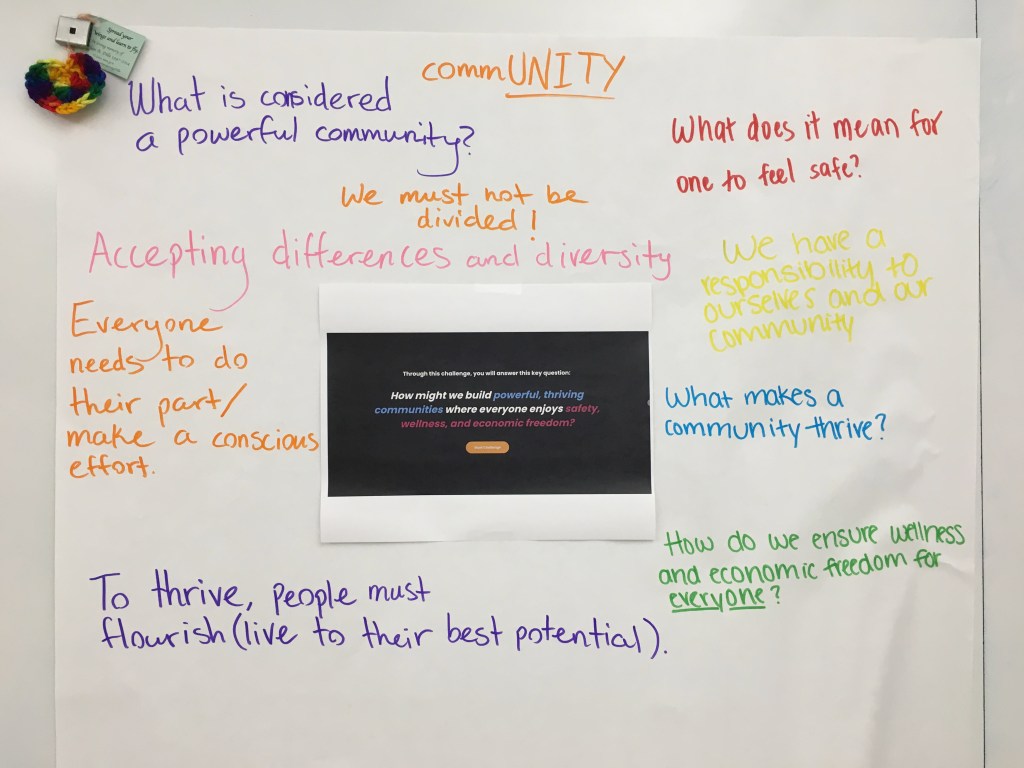
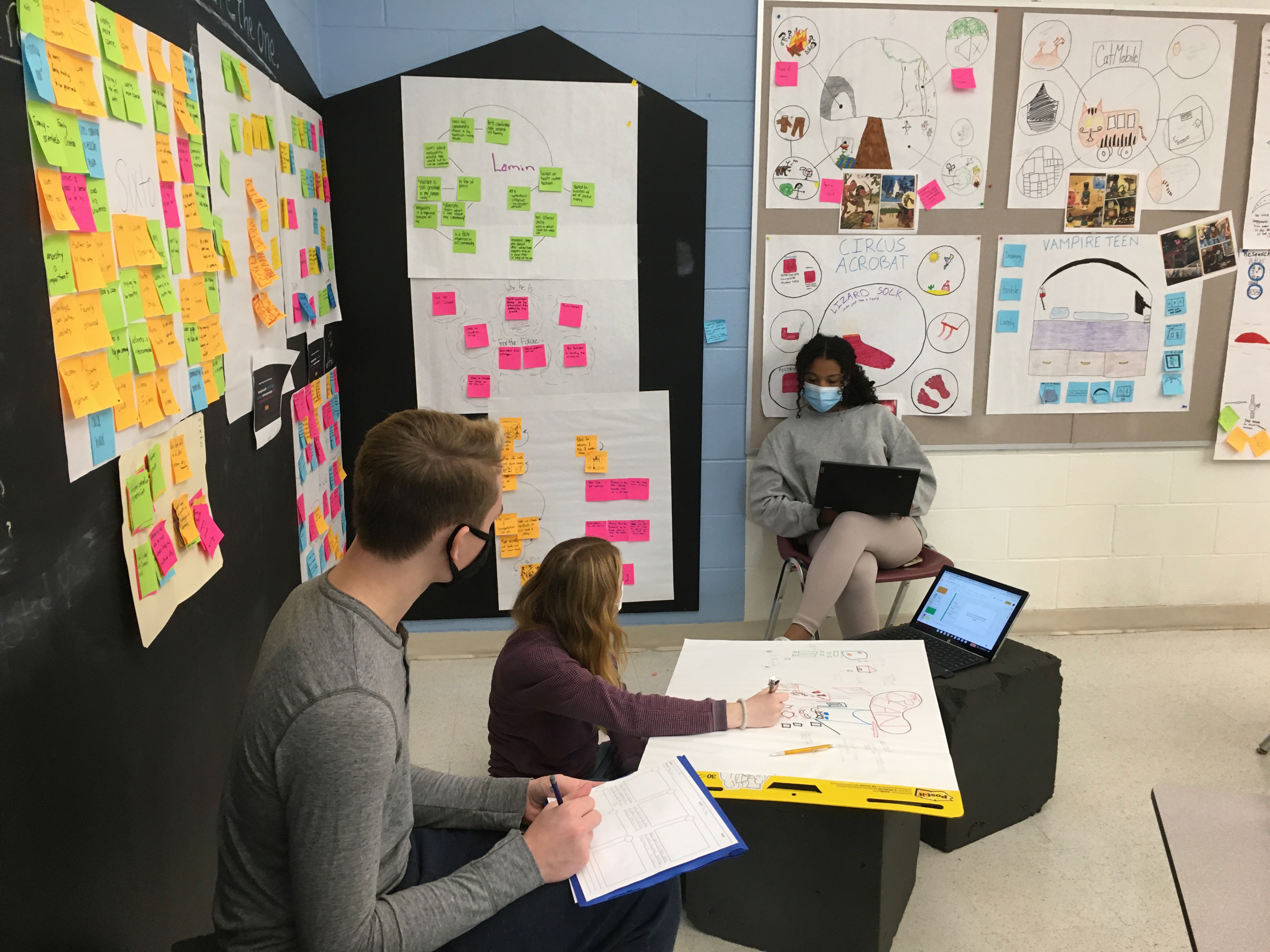
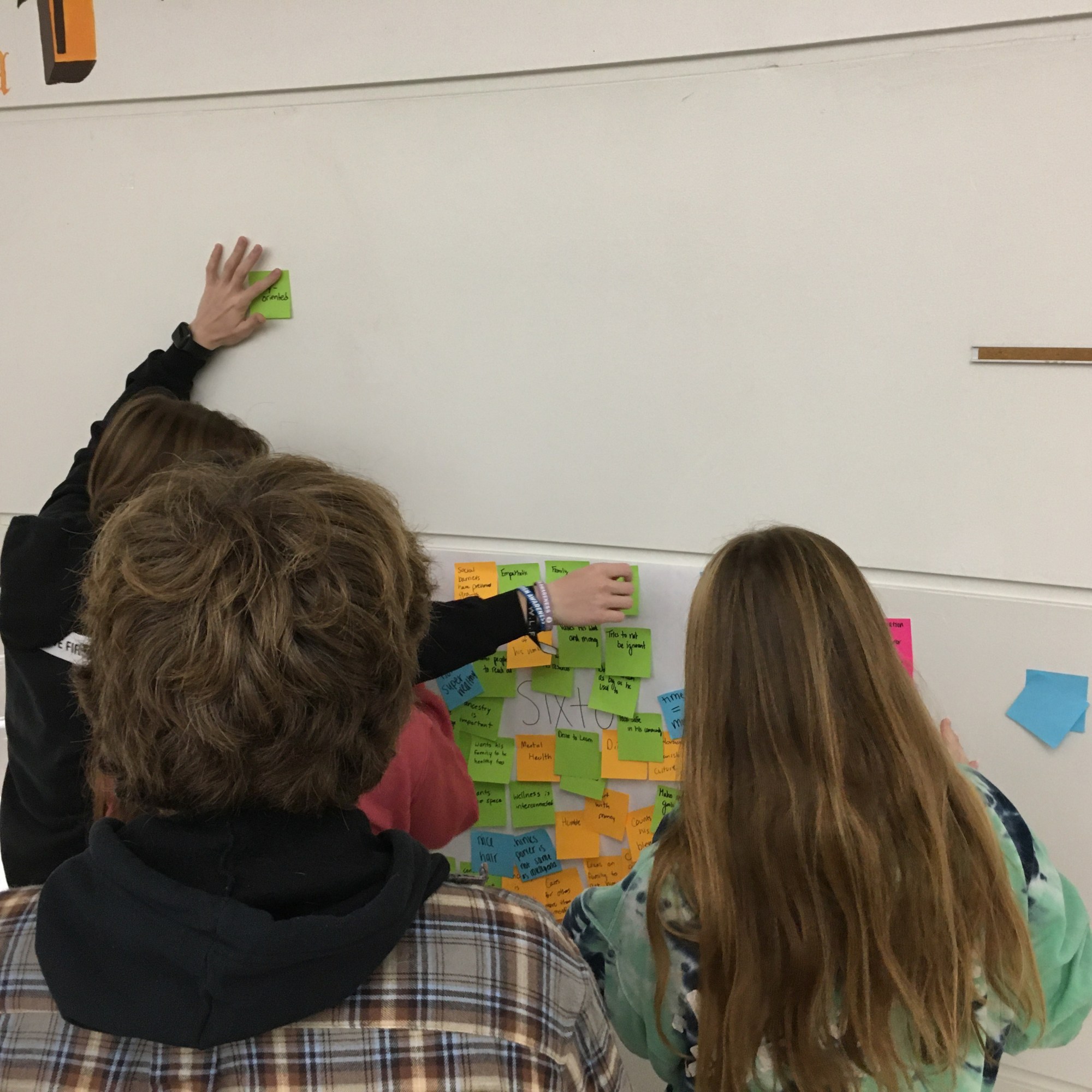
As our class progresses through the Build Design Challenge, it is fully consuming our creative minds. Immediately immersing yourself in a person and attempting to decipher what they need, what their passions are, and what they internally struggle with is easy- on the surface. Building empathy for the four clients which we interviewed was quintessential in the design thinking process. Committing to the “Empathize” section of this challenge is without a doubt the most important action we as ethical thinkers must take to proceed towards a feasible solution. Diving deeper into body language, setting, and so much more truly tells us about our client. After each student chose one of the four people, we were put into groups who decided on the same client (I chose Sixto). Defining problems comes next. Through endless amounts of sticky-noting, our group selected issues or traits about Sixto that could lead us in the direction of innovation. As seen below, we were very generous in our Post-it collection.
After defining point of view statements, it was clear to see the priorities our group set for Sixto. Ideating took place the past two days. My group was able to use our chromebooks to sketch out our final idea and we are moving forward to research and prototype soon. I am slightly nervous about venturing into human-centered design, simply because we are humans. We have more similarities than differences and ultimately, the success and effort of our final idea is equally important as the next group. By working together and understanding varying mindsets within the group, it opens up more possibilities for inventive action.
I am so honored to be part of a class that is as trailblazing as this one. I honestly feel anxious about this entire challenge because of that. Oftentimes, I make myself think that my ideas are worthless, and I will go nowhere in this space. This is all sprouted from my worried mind, but failure in terms of my own standards is a battle I constantly struggle with. I find myself feeling at home here, being, instead of simply existing. I stand by the fact that living an unapologetic and free life is good, but applying that concept to myself is difficult. Creativity seems like it just does not come easily to me. As I continue to grow here, I hope to shift my mindset. Going to Fluxspace makes me excited, because I have faith in the intelligence of my group. Being in that space will be so interesting. I can not wait to see what I am capable of.
Passionately working is so different from working with the sole purpose of finishing. I commit my mind to openly creating…throughout my life.
Casey, Sophomore
In reference to the cumulative project, the self-determined, Purpose-Driven project I want to explore in marking periods 2–4, I have had an idea for a few weeks now. Still, I find myself doubting it before I allow myself to create. I think this Build Design Challenge is such an important gateway to the final project. Passionately working is so different from working with the sole purpose of finishing. Often, we as busy humans are subjected to cram tasks into our day, instead of being truly infatuated with what we are doing. I sincerely hope I commit my mind to openly creating throughout the duration of this class, but also throughout my life.
We’ve been working feverishly. Empathy building and Defining our challenge…those aren’t easy things. They take time and heart, and wording a challenge for a real-life client is fraught with “what if I forget…” or “how could I ever…” type statements that instill doubt and hesitancy. And yet, how productive and important is this struggle?! Crafting these point of view statements is a complex problem to be solved, and it also frames a complex solve we will be solving. It’s thrilling, daunting, and utterly engaging. Here’s Julia’s take on it all:
Julia, Junior
These past few days my group and I have learned a lot about a man named Sixto who is a loving father and teacher. The Build Design Challenge tasked us with observing and building empathy for our client which was an eye opening experience for me. I was looking into someone else’s life who was struggling with things I have never had to deal with before such as health issues, lack of economic freedom, and compactness in a community.
During the “cluster” stage of the challenge I worked with a group of six classmates, compiling our insights about Sixto. We wrote each of our insights on post-it notes and categorized them on a large poster. The most prominent categories were community, health, gentrification, family, and teaching. We used those categories to create point of view statements representing Sixto’s needs and conflicts.
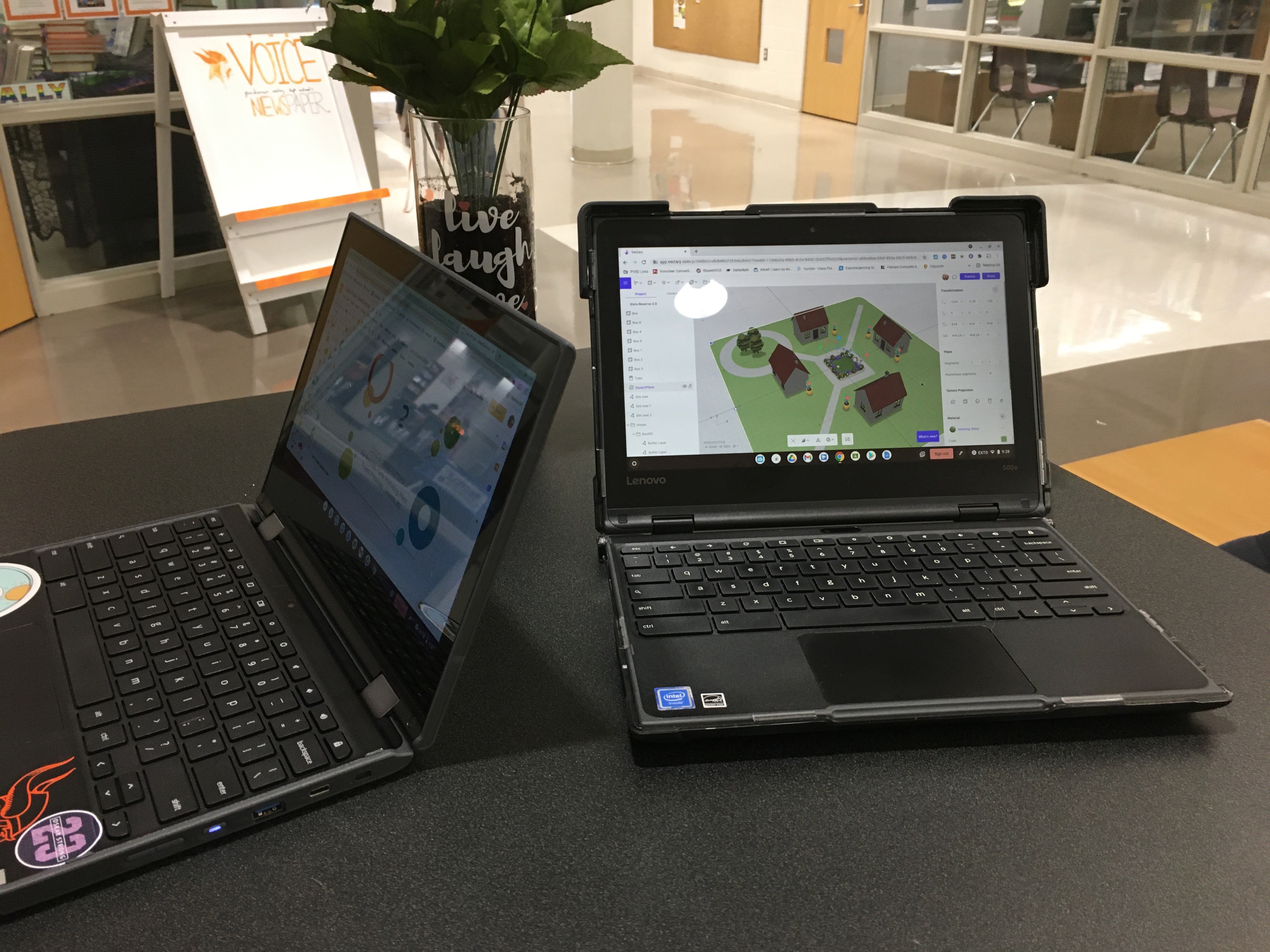
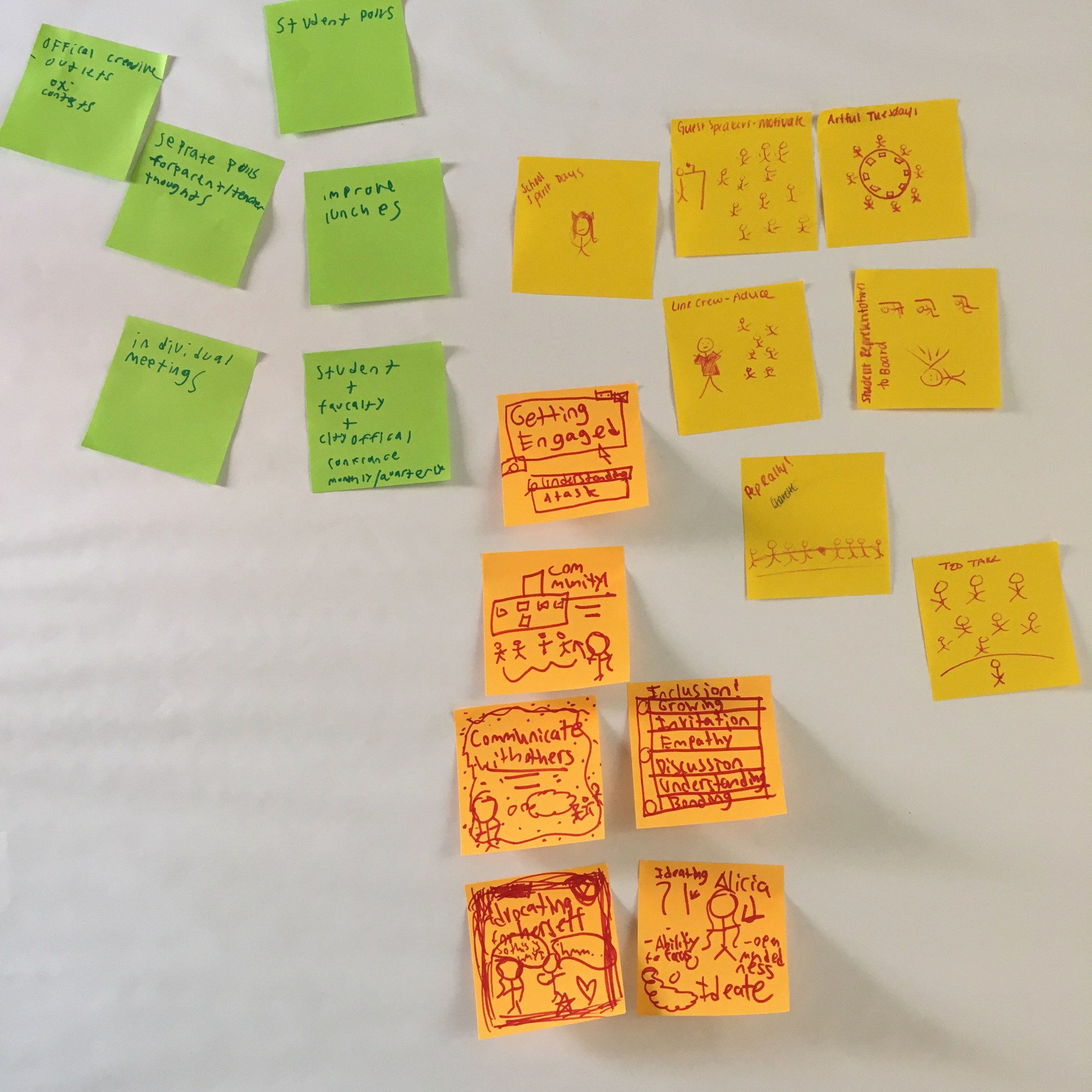
Today in class I worked on the next step, ideating, with my small group. This required us to choose a point of view statement and start brainstorming ideas that would help Sixto. It was not very difficult for us to choose a point of view statement, because the conflict that stood out the most was Sixto’s lack of space in his community and neighborhood. After doing so, we used our point of view statement to come up with around 15 possible solutions to provide Sixto with a more comfortable lifestyle for him and his family. Some of our ideas were very random and wouldn’t be the best solution for him, however we were able to combine a bunch of them to create a rough sketch of an ideal neighborhood and community for Sixto and his family that would give him space to live comfortably. This sketch includes a lot of greenery, a park, playground, rec center, garden, walking paths, etc. My group and I cannot wait to start the prototype for this design.
But I also found myself questioning whether it was important for this design to be realistic and affordable for our client. After talking to Mr. Heidt, I gained clarity that for the moment it didn’t matter how realistic this design was, because it was just about brainstorming all possible ideas. I know I will likely struggle with keeping an open mind and thinking about multiple options before choosing one for sure, because this idea about a spacious community has been in my mind the entire challenge. Moving forward, I am excited to start bringing these designs to life and creating visuals and prototypes for them. There are definitely some nerves about presenting the project in front of people, but I have faith in my group that we will be able to successfully capture the needs of Sixto in a well-thought-out design.