The other day in NOVA Lab, as we were working on empathy mapping for the build.org National Design Challenge, one of the students was tying her shoe. Others were watching, and they questioned how she was doing it, trying to teach her other ways.
Now, most people tie a simple bow knot and leave it at that, retying the knot as they need, or tying an extra square knot to keep the bow knot in place. This, of course, makes untying the knot a hassle.
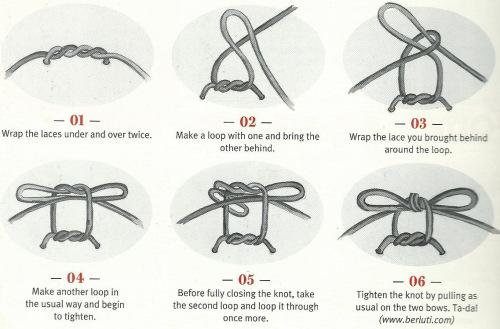
So I showed the students another way. After tying a bow knot, I take the bow in my left hand and pass it over and through one extra time.
Maybe there’s another name for this knot. I don’t know. But I know no one in my class had ever seen it and it fascinated them.
Apparently it is called the Windsor shoelace knot. I suppose that’s easy enough, but still, it was foreign to most all the class.
Clayton Christensen defined 4 key discovery skills that characterize the Innovator’s DNA. One of them is Observation. To a certain extent, observation is to turn to the world and see it with fresh eyes. Such is one of the key characteristics of all creative people.
It can be done!
And on that day, last week, we saw, some of us, for the first time, a plainly rote and mundane action, tying shoes, with different eyes. And maybe some of us saw where innovation starts–with seeing, and thinking, different…as the campaign that resurrected one of the world largest, most innovative companies used to say.
Friday, October 29 found us gathering in groups around our clients and sharing all our insights into the client’s life. Culling all those observations and then organizing them into clusters through affinity mapping will help us identify pain points, opportunities, or needs that we can solve to help the client and their neighborhood develop into powerful, thriving communities. Ryan will take it from here.
Ryan, Senior
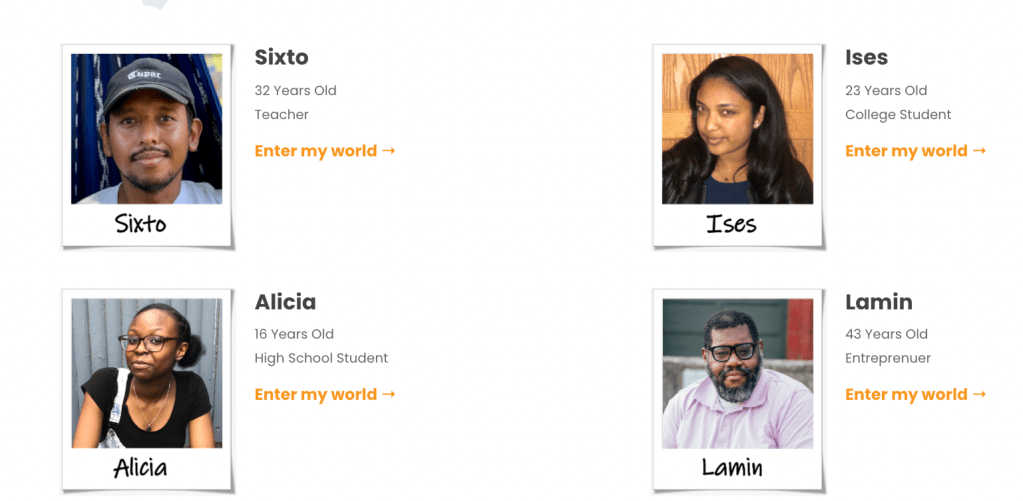
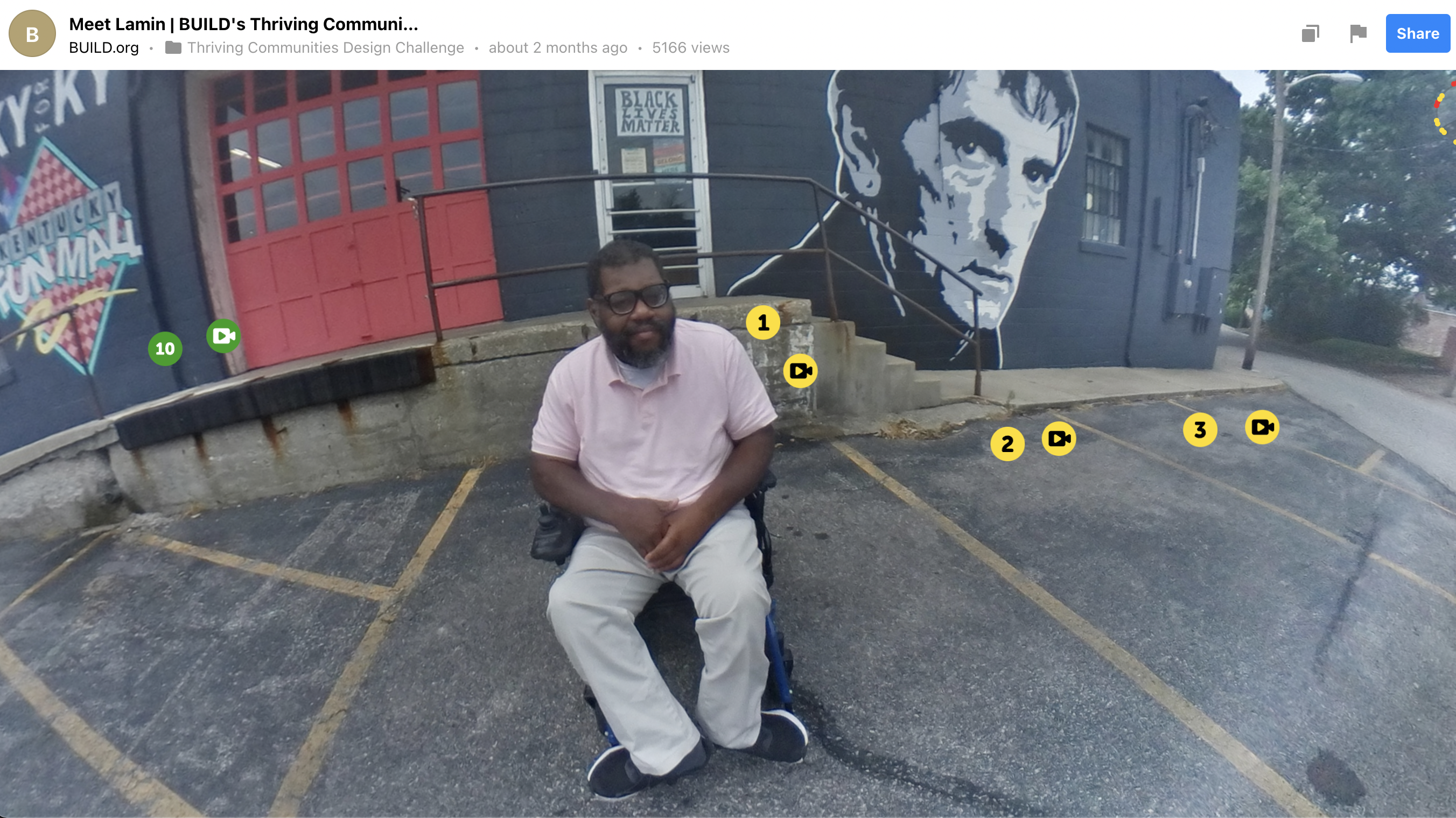
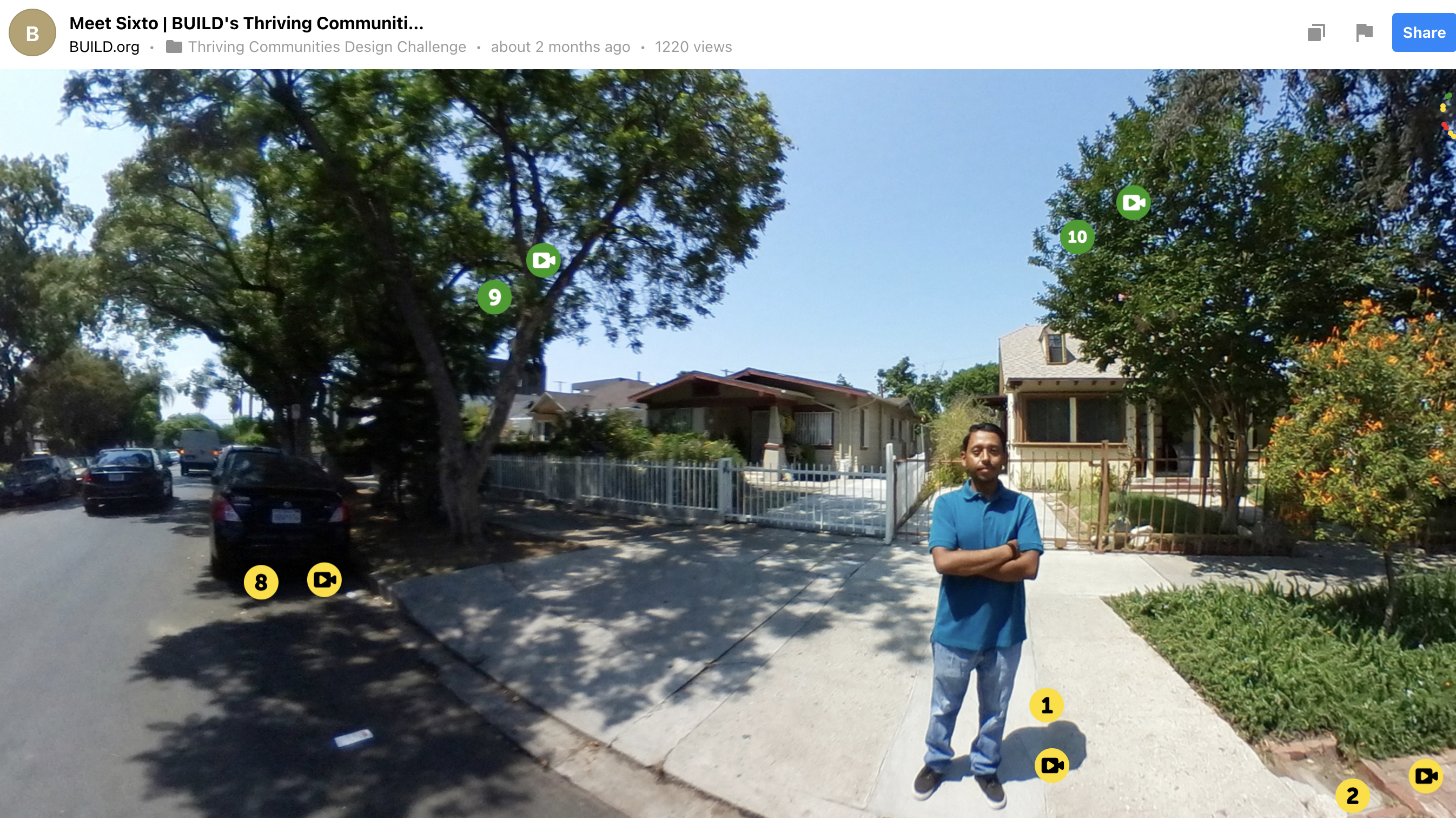
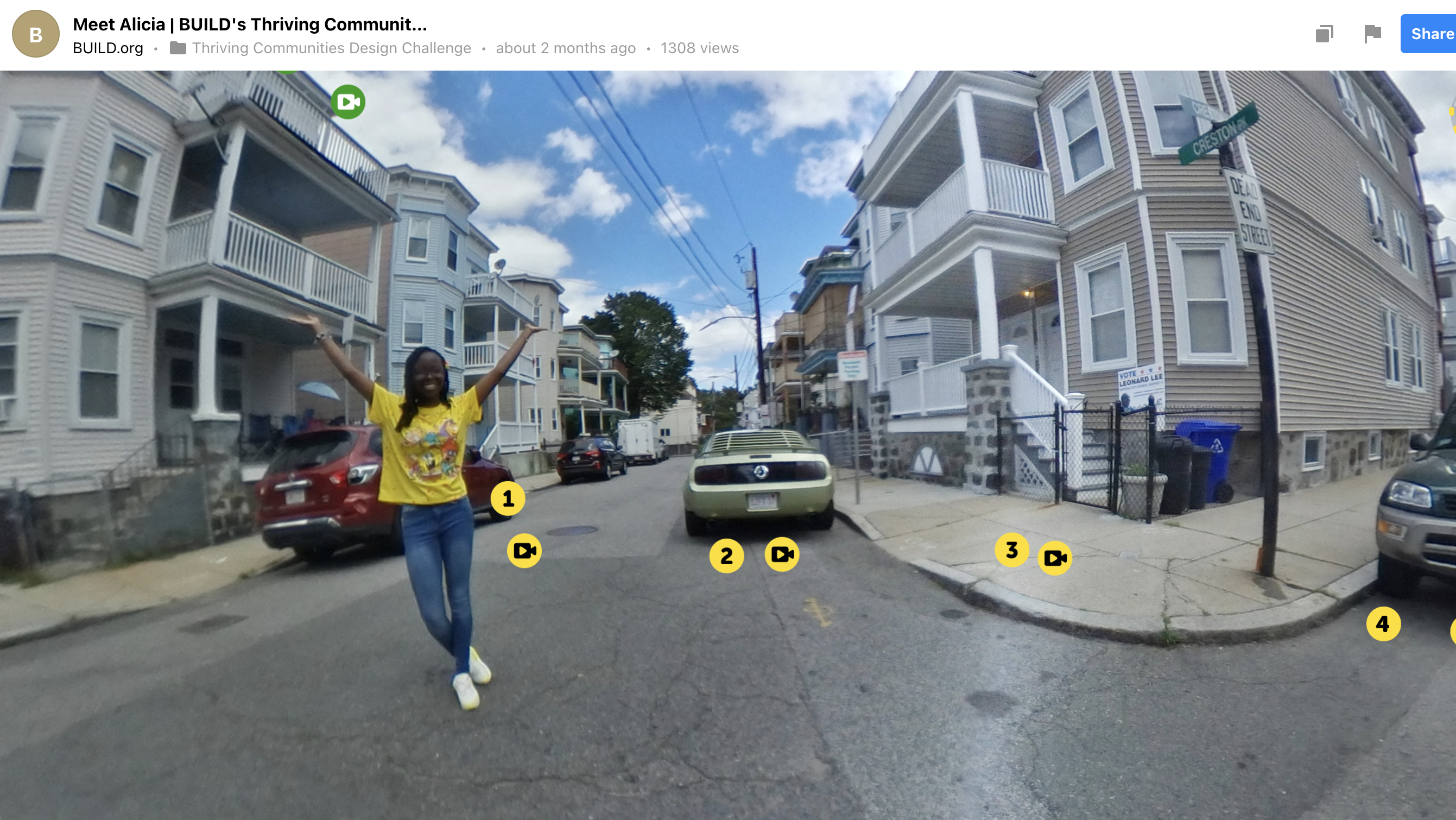
The last few weeks our class has been moving towards a goal of working on empathy mapping and continuing to build our abilities to feel empathy for others to help solve personal problems. We have begun competing in the Build.org challenge to practice our empathy skills in more realistic situations. Our assignment was to watch a few character videos and pick a character that we felt most connected to. Each character had a completely different background, living in different conditions, different ages, and had different goals for their future. Although these people were diverse they all shared a common trait of wanting to improve their community. Personally I felt most connected to Sixto, a high school english teacher, who cares deeply for his family and young son’s upbringing.
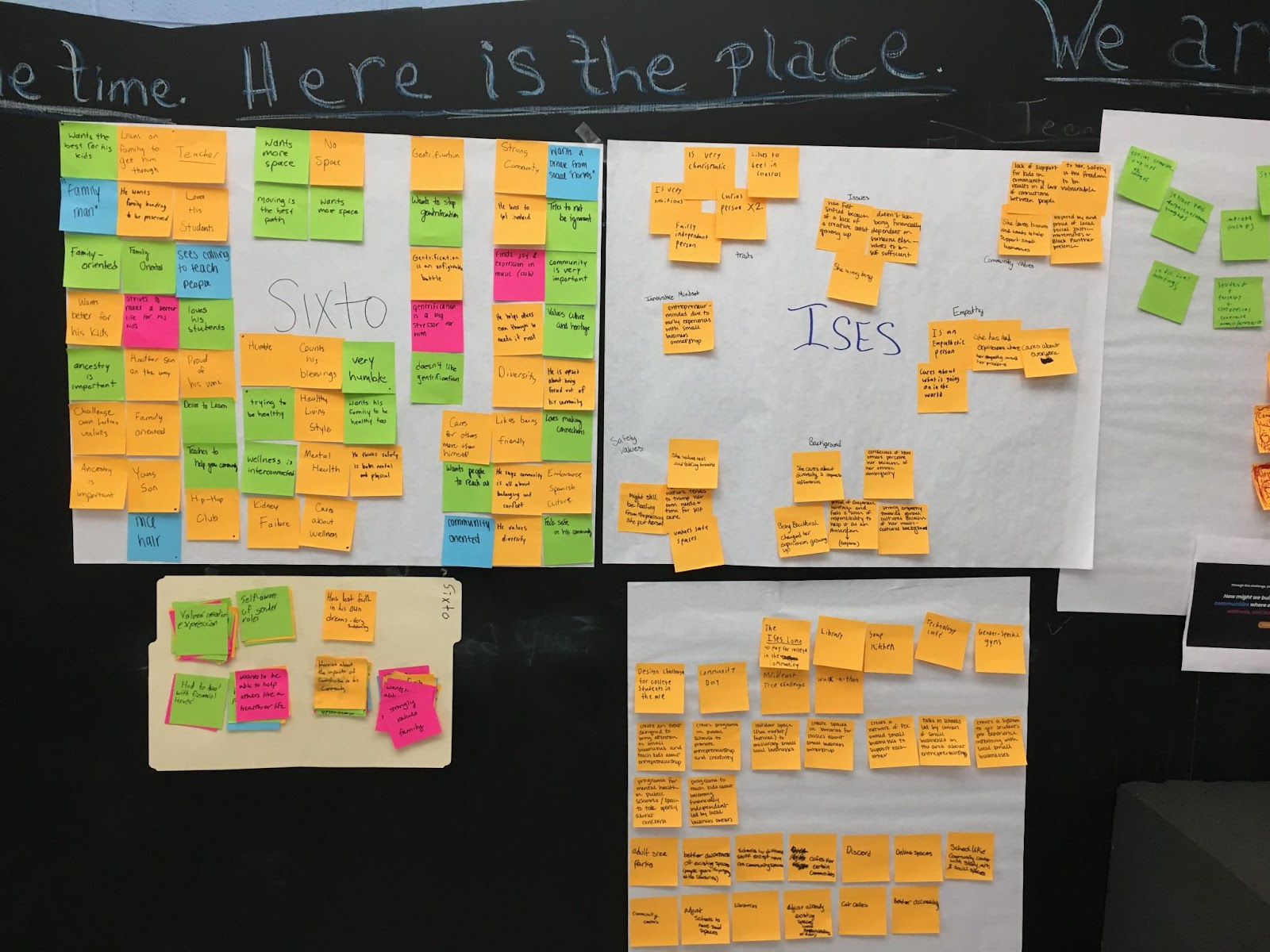
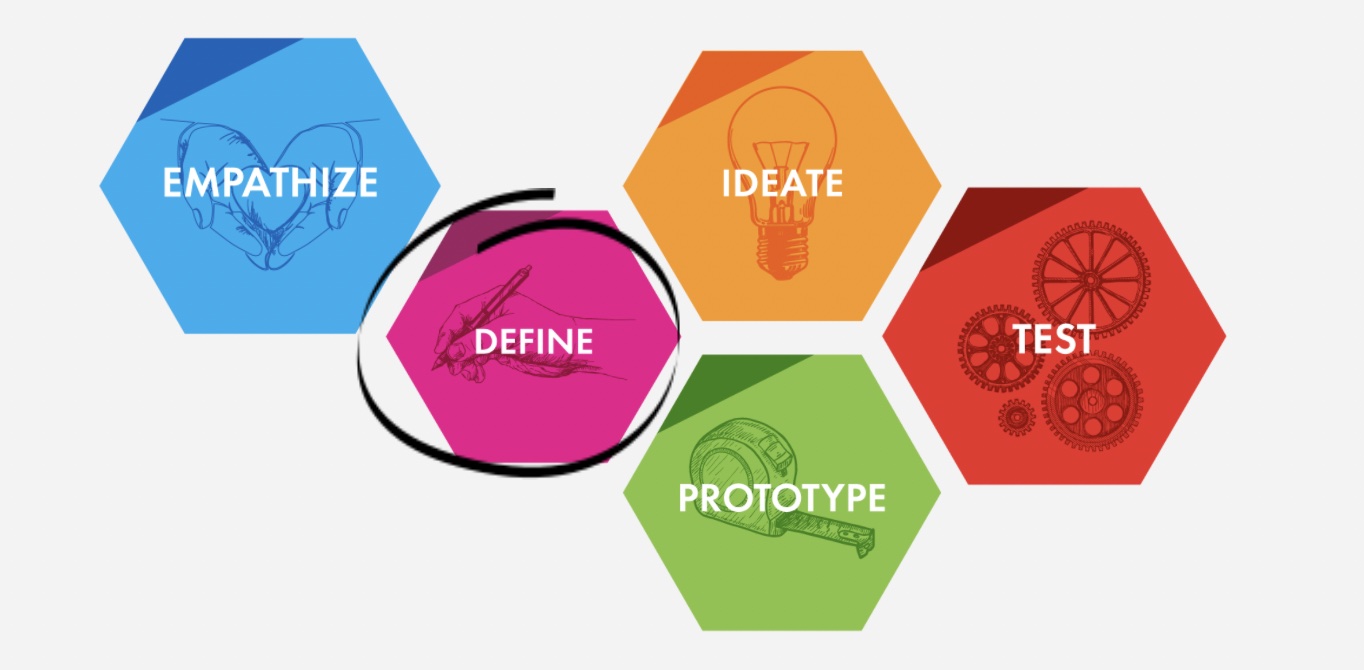
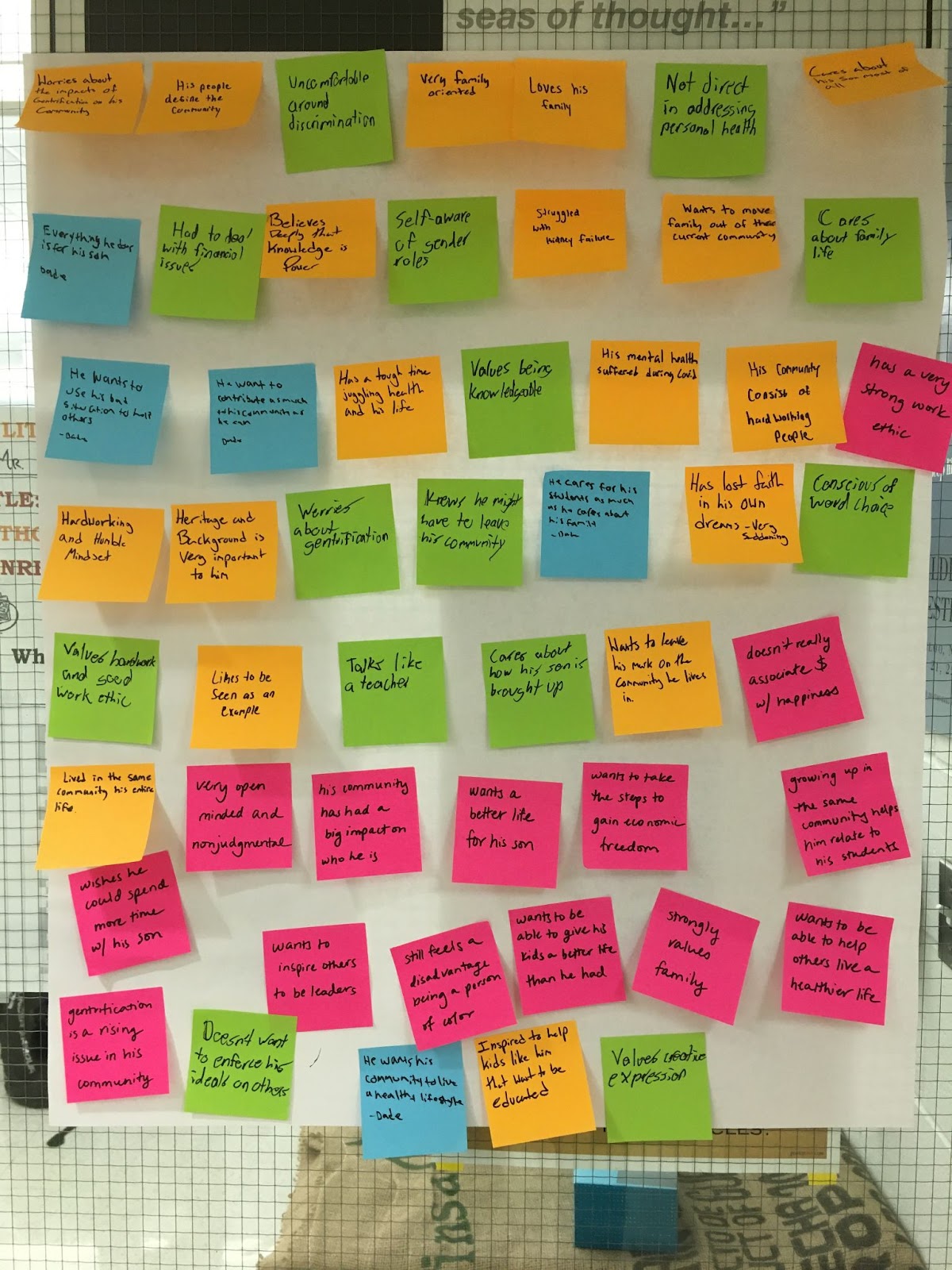
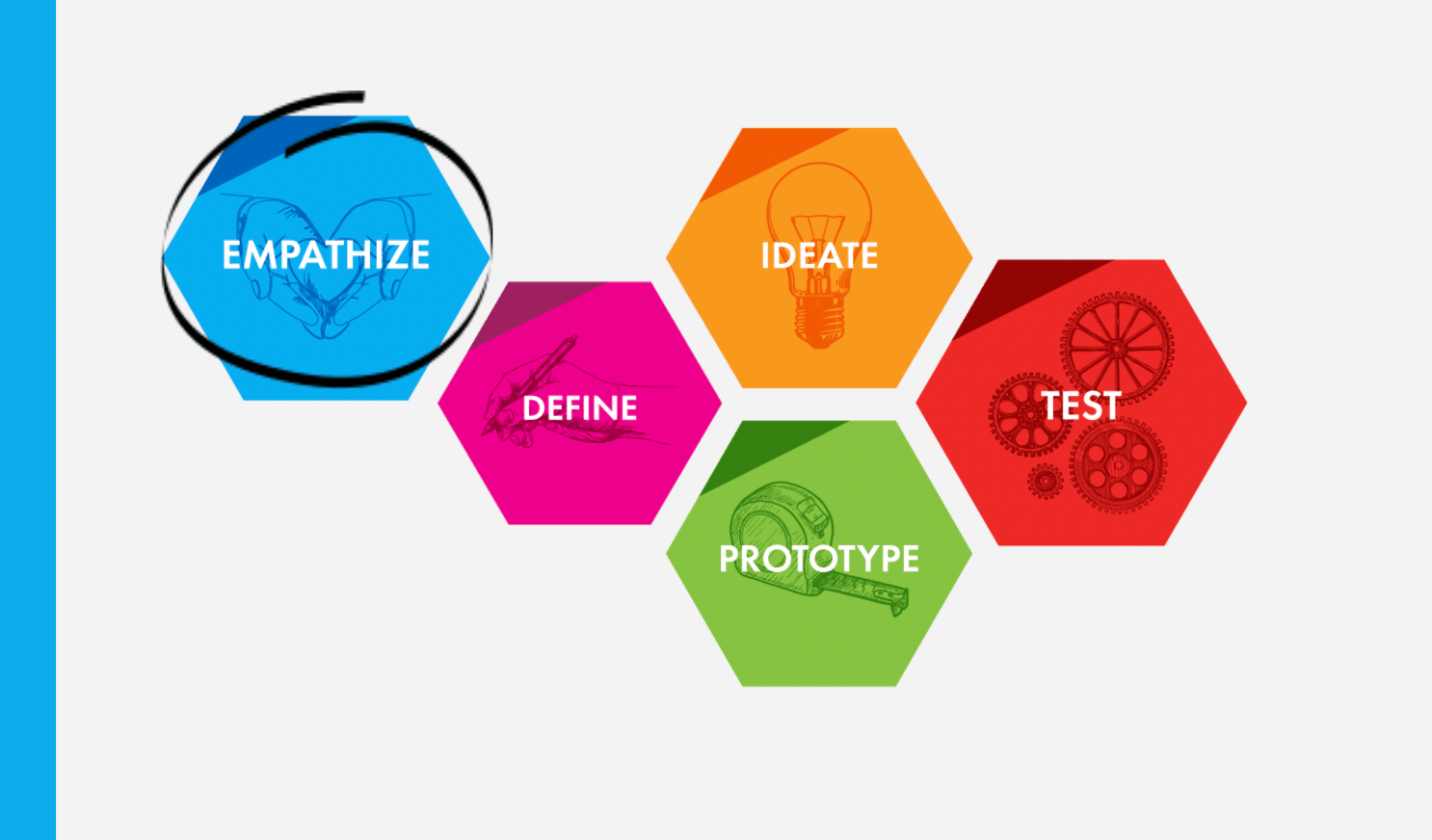
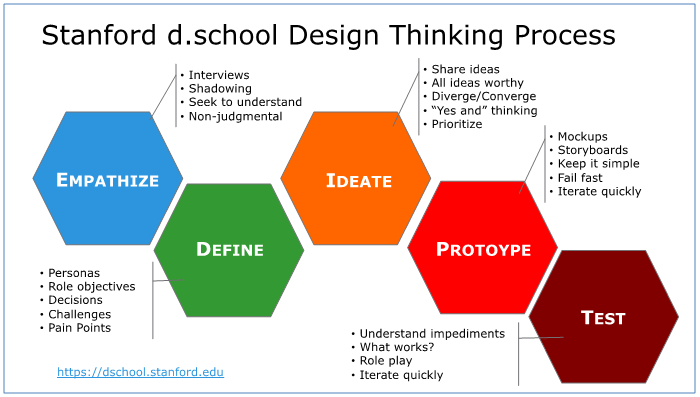
The step of the Design Thinking process that we reached in today’s class is the define stage. In this stage our group came together to share our ideas and define different aspects of the characters’ life that are recurring themes. We need to isolate a single issue to focus on and by doing this it helps the group to get an understanding of Sixto’s priorities and a better understanding of his main problems. We completed this task by using post it notes to share our ideas as seen in the photo above and then separating the similar themes into distinct piles. The result was that we had 5 themes- Community, work, family, gentrification, economic/financial issues. I’m excited to see how my group will continue to collaborate our ideas throughout the defining of the issue stage and the next stage of the Design Thinking process (Ideate).
We’re on our third day of Build.org‘s Design Build Challenge. There’s plenty of time to join. Check out the website!
What’s most impressed me about Build.org’s work on this year’s challenge is just how real Build University is trying to keep the experience to the Design Thinking methodology. Today’s work on empathy is excellent and the intention behind how they’ve organized this part of the activity is outstanding.
We started looking at empathy today, trying to determine a “client” whose life we will dive deep into to honor the human-centered nature of the work. I’ll let Ava, one of my sophomores, take it from here…
inNOVAtor Insights
Ava, Sophomore
At the moment, we are at the beginning of the design process and we are working on developing our skills in being empathetic. Yesterday we continued with our design sprint challenge by focusing on observing and building empathy for people from a couple of different images. We looked at words, colors, facial expressions, and body language in each of the images and then discussed common themes to create key concepts for our designs. We found that each image displayed themes of community, peace, empowerment, and flourishing and decided that this would provide some of the foundations for our projects.
We also annotated the Design challenge and developed a better understanding for just what the question is actually asking of us. (See yesterday’s post for that work)
Builduniversity.org
Today we again focused on becoming more empathetic towards those we are designing for with the intention to get to know the user of our product and to design it to best fit their needs. We met four potential clients, all from different backgrounds and age groups and all with different goals and aspirations. We watched an introductory video for each client to get a feel for them and decide who we want to work with for this challenge.
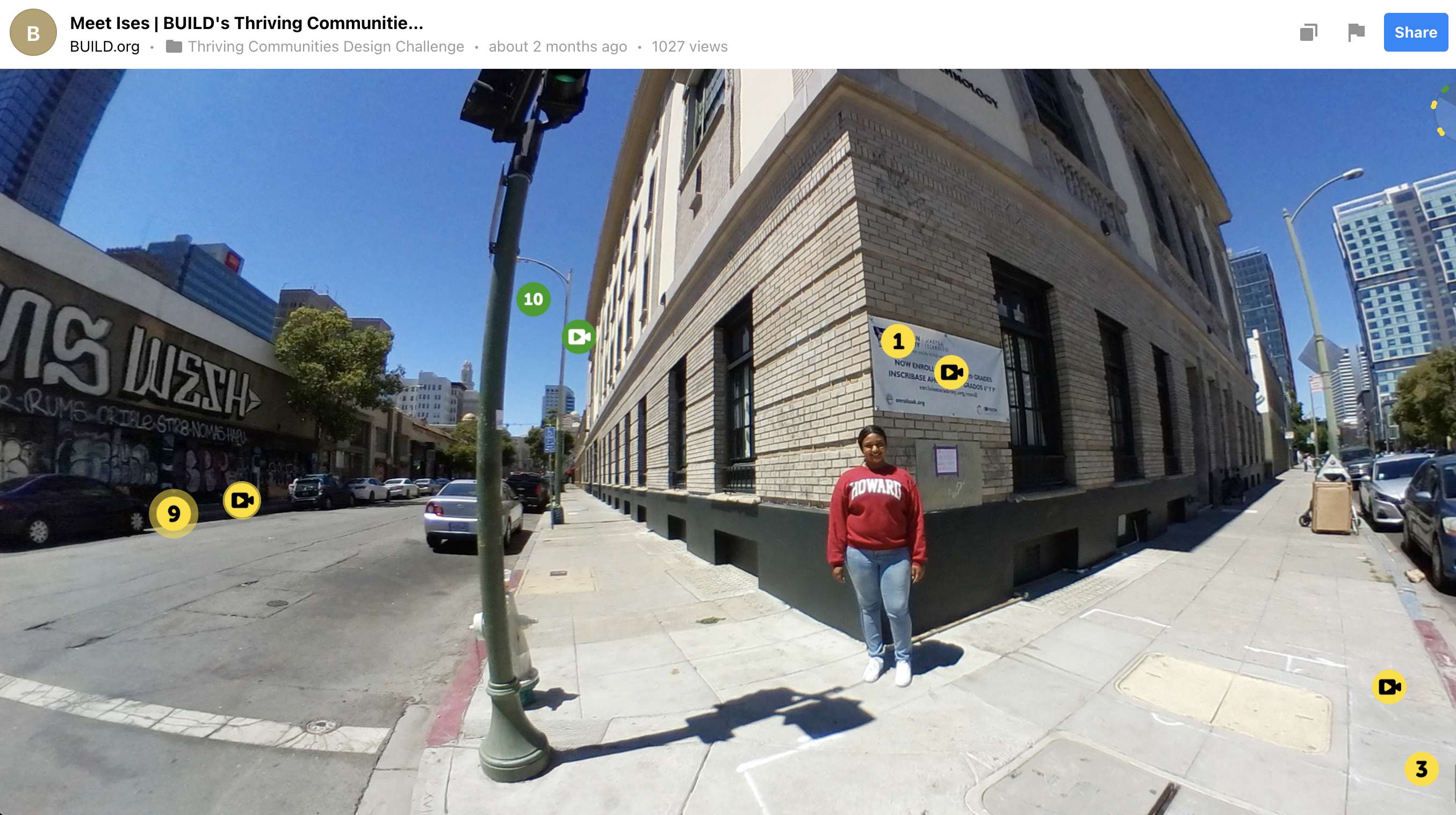
I decided I would be able to work best with Ises because I felt that I connected with her best as we are both committed to making things better for those around us, whether that be in the form of food security, financial stability, affordable and effective healthcare and housing, etc. I’m interested in learning more about her and figuring out what exactly I can help her with. I think she seems determined truly interested in creating meaningful change in the world and I’m excited to help her do so.
Overall I do find myself having some reservations about the best way to go about finding a solution to whatever problem we decide to focus on. While we have spent a lot of time in class working on becoming more innovative and thinking outside of the box, I still have noticed that I struggle with this at times. If anything though, I think that obstacle will make this challenge more fun because it will allow me to experiment with becoming more creative and unconventional in my ideas. I think the best way to describe my current feelings toward the events of the coming weeks is cautiously enthusiastic. While I am slightly nervous about the way this will turn out, I am also excited to see what we come up with and all of the different ways we find to solve a problem.
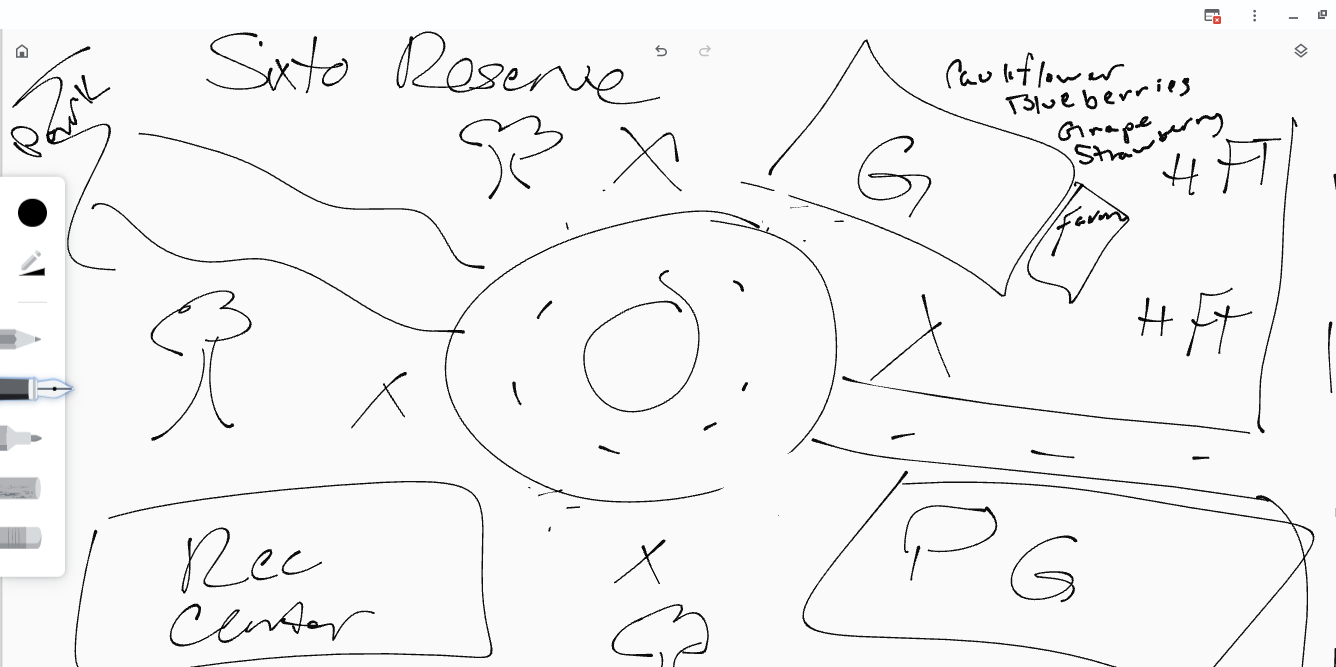
This year I’ve scripted the curriculum for NOVA Lab a bit more tightly during the first marking period. In the past, things were more open, exploratory, and…well…chaotic (see map below). There was a beauty to that. We discovered opportunities, lunged at hunches, and explored numerous though tangential paths of thought.
The linchpin in this more streamlined (though still exploratory and flexible) curriculum is Design Thinking (DT). I’ve taught DT for years, stretching all the way back to 2008, and for me, it has become the actionable methodology through which we exert our creative minds on the world.
As NOVA Lab’s pedagogical foundation is, generally, experiential learning, I do not teach DT through lecture or handouts. Instead, We use a series of design sprints and games to engage in the method at different levels. From Snake Oil to Mockups to The Extraordinaires Design Studio, students move from simple mashups and ideation activities, to more criterion based tasks, to empathy driven “extraordinary” user-centered” methods.
This year, I’ve decided we would engage in a final design sprint using the national challenge at Build.org What follows here and in several succeeding posts is the story of our work through this challenge as told by the students. Please read on…
Build.org Design Build Challenge 2021
InNOVAtor’s Insights
Eli, Senior: Two days ago I walked into class and Mr. Heidt had a large question projected onto the whiteboard (see image above). I wasn’t exactly sure what to make of this as the question had many answers, and as I contemplated an idea in my head, Mr. Heidt started to explain what the question was and why it was the main idea of class for that day. The question was part of a worldwide challenge posed to students across the world. A design challenge to be specific. The goal was to design something, anything, that could solve the problem posed in that question. Of course, with a question that has many moving parts and multiple questions within itself, this was not a one-day task. Turns out, in reality, we would be spending 2 weeks working this design challenge.
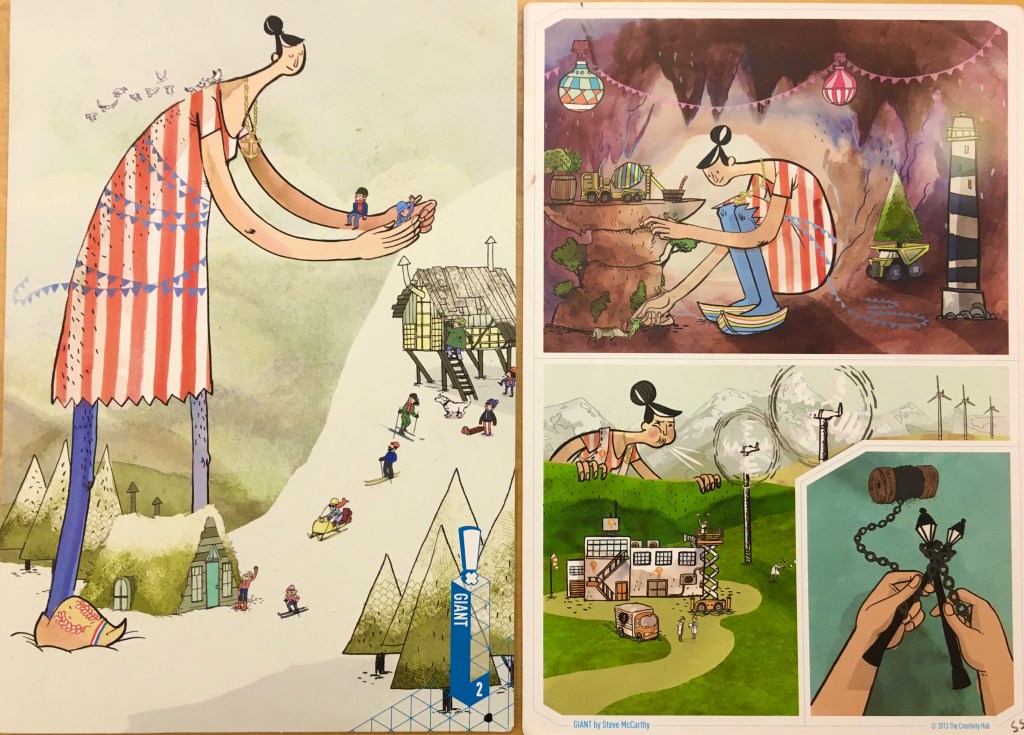
Extraordinaire–The Giant
A few days prior the class had participated in something similar to this, a game called the Extraordinaires Design Studio. Through this game, we were able to get a working familiarity with the Design Thinking process and really engage with what it meant to design based on empathy for the user. While the Extraordinaires was “just a game,” it had built our DT muscles, especially our ability to develop empathy for the user.
The first day of our Build.org design journey had us looking at images that helped us derive key themes and concepts related to the challenge. The goal of this activity was to work on and improve our observation skills–a key aspect of our innovator’s DNA. To really be able to examine something, you need to be able to observe it from many levels. Observation skills paired with empathy are really important in design because that is how designers create a connection between a problem and what they can do about it, and it’s why we always start our design challenges with observations and empathy. This got the ball rowling on our design process.
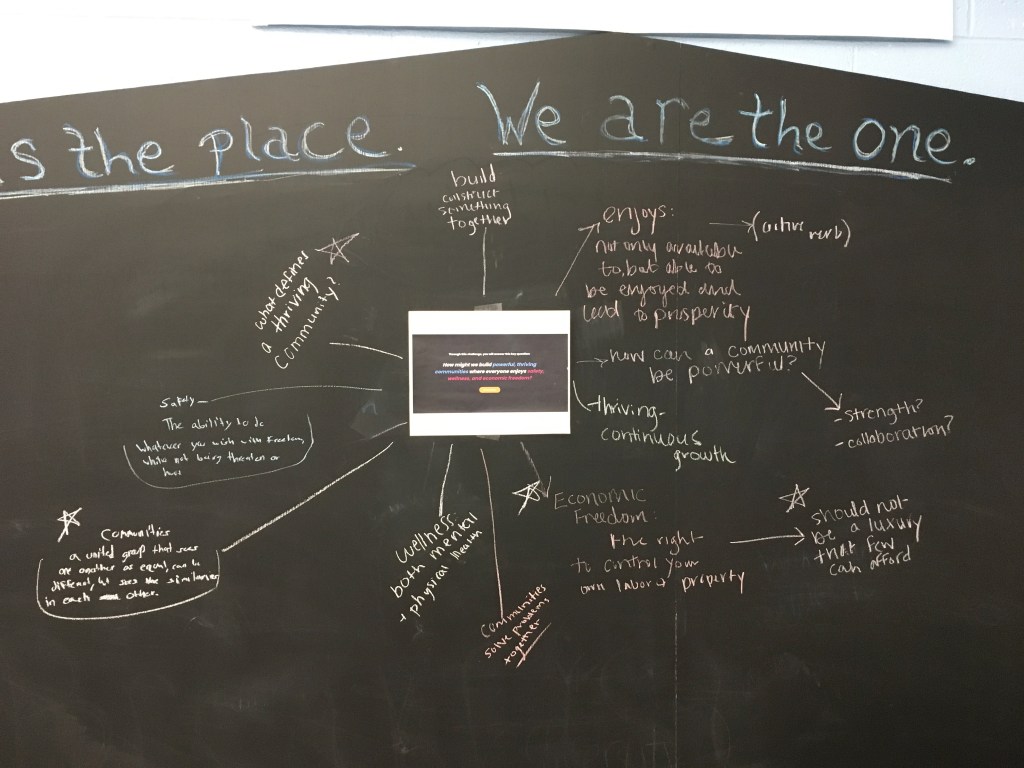
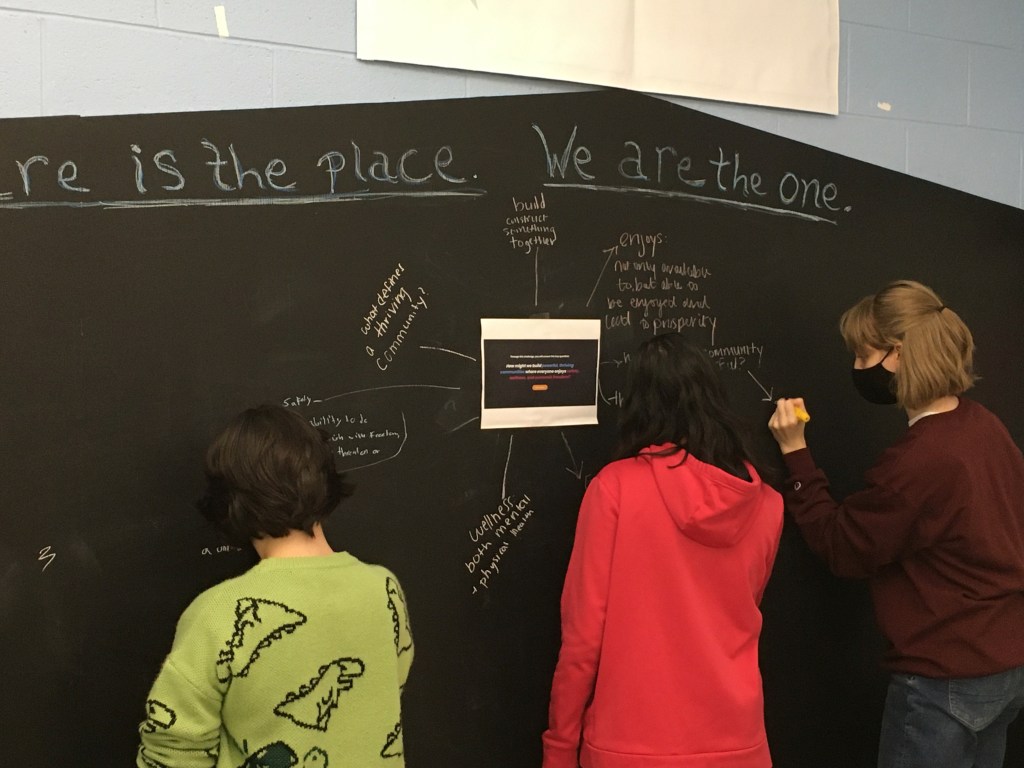
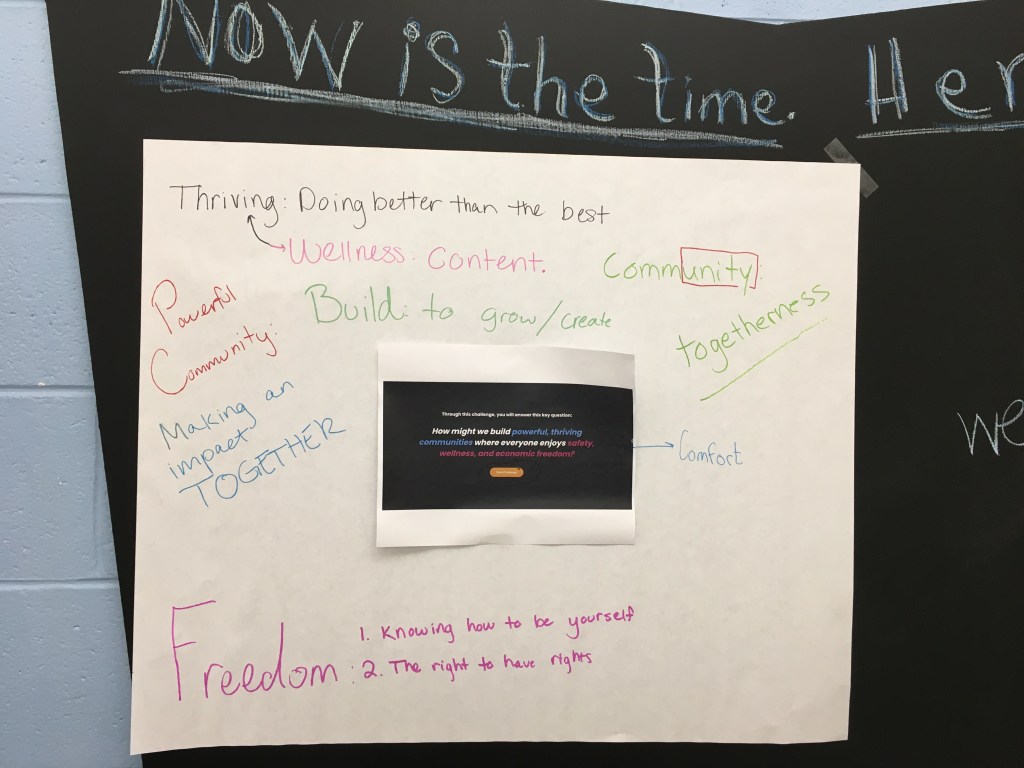
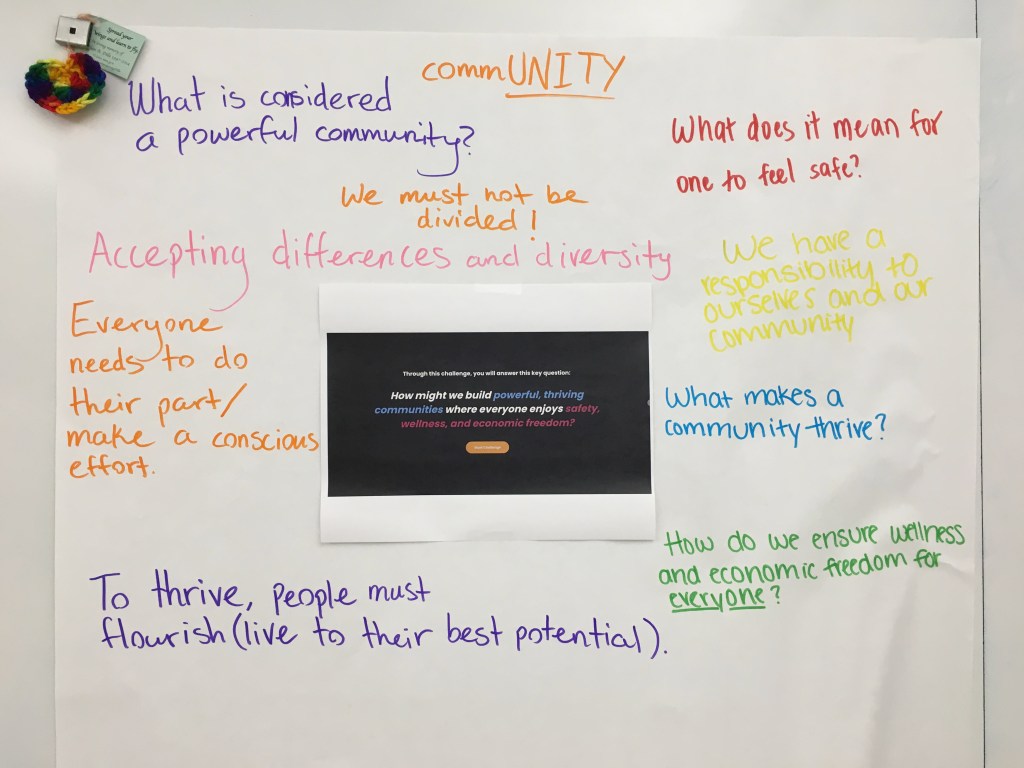
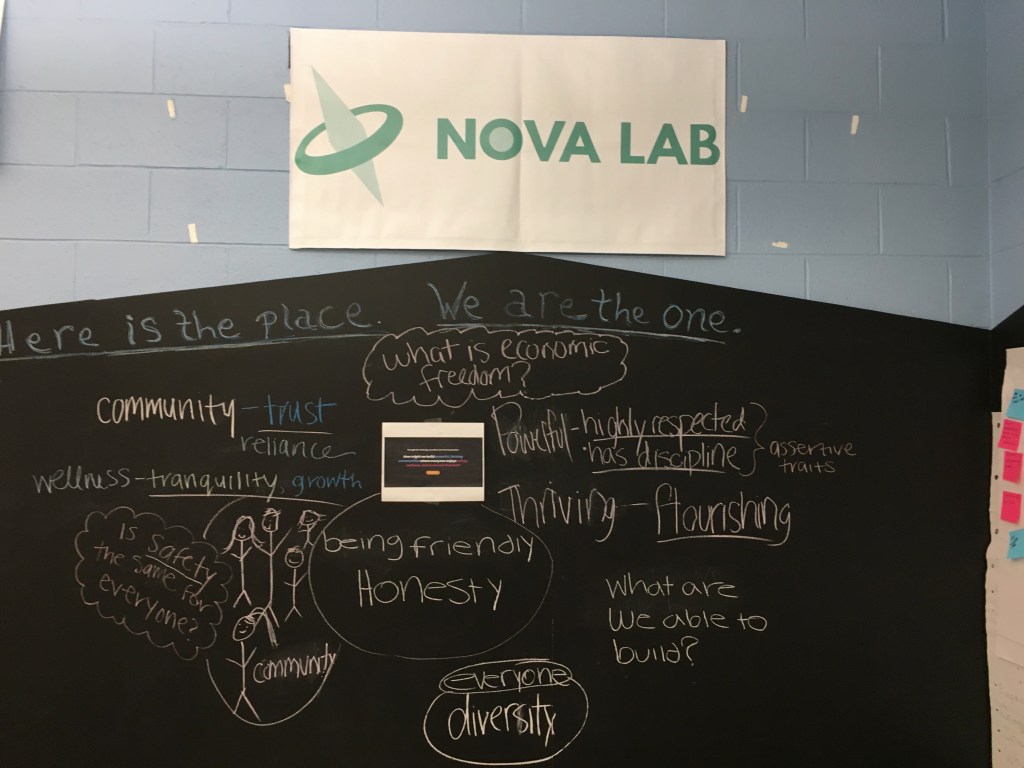
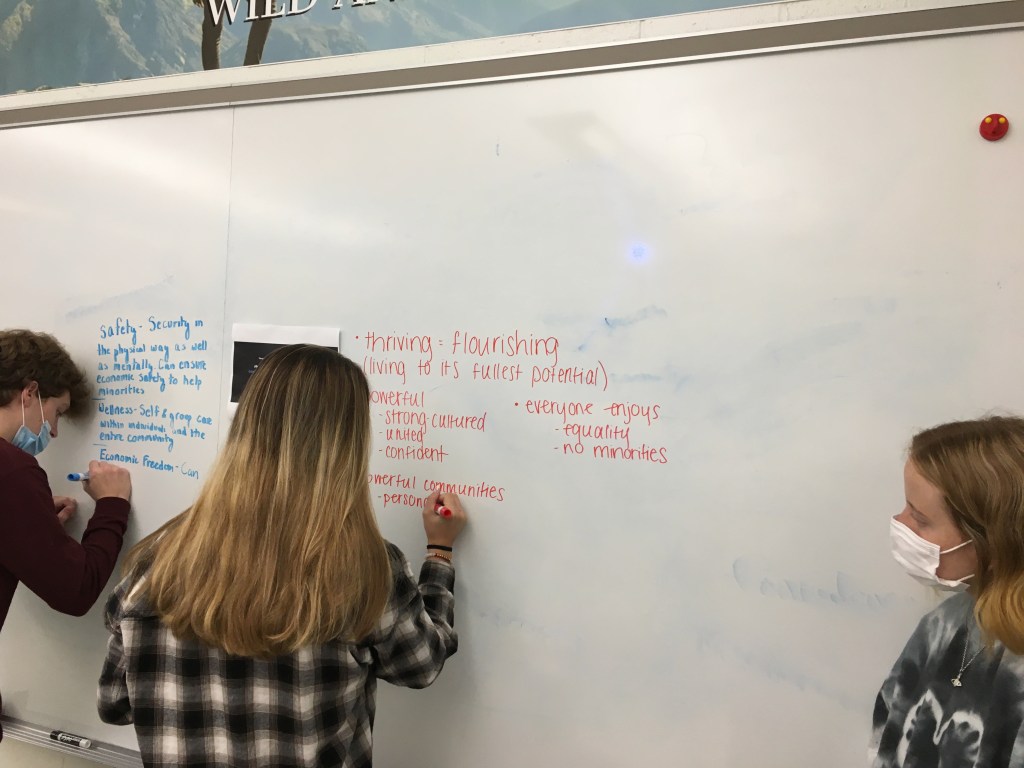
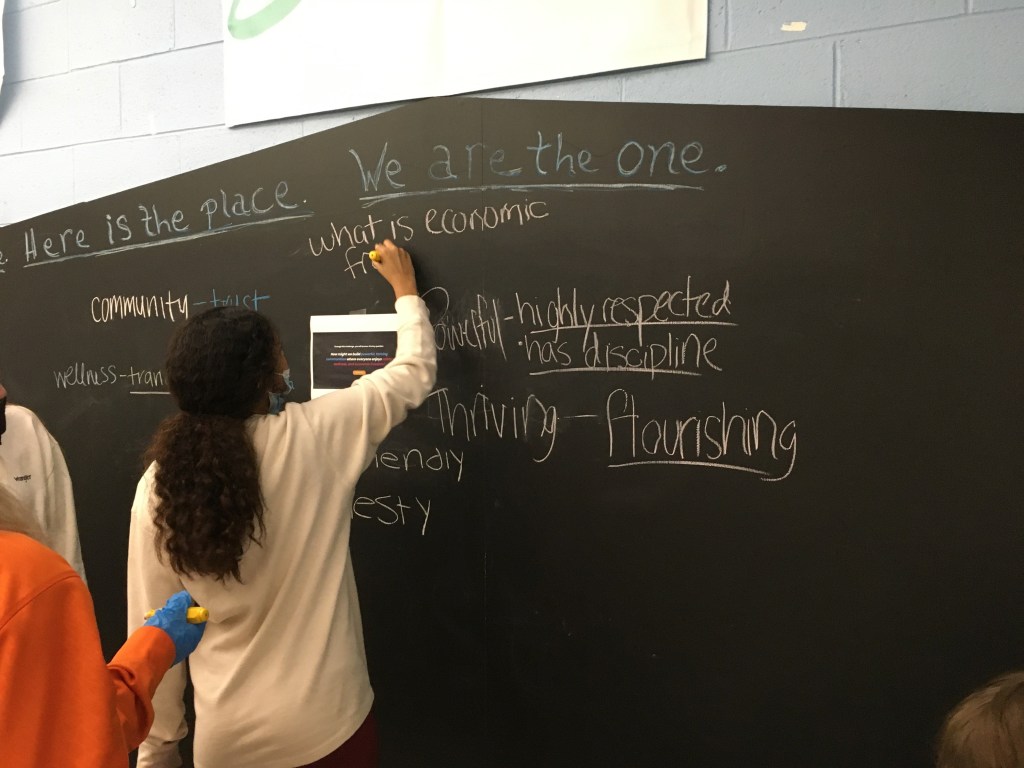
On the second day of class, we began analyzing and parsing the challenge itself. Although this doesn’t seem complicated, it was. The challenge has multiple parts to it, and each part can be interpreted in a different way. We didn’t even want to start thinking about actually answering the question, we just wanted to understand what it meant in the first place. The images below show a lot of the work that teams in our class came up with. In all honesty, after we were done with our almost twenty-minute brainstorming session, I still don’t know if we fully understood the depth of what the question was encompassing, but we got closer to figuring it out.
Overall, I am feeling ambitious about this challenge. I am excited to, hopefully, sometime next week, get working on an actual design for what I think could be a product that impacts the world. But I am not at that point yet. I am just at the beginning. And even though all I have done so far is analyze a question, I can see the parallels in this design challenge to others that I have done in this class. Take, for example, the challenge where we had to create products for our made-up characters. That was basically a different version of what build.org is asking people to do, except what build.org is asking has real-world implications and real-world responses to what I do. I will say, that is what I am most excited about in doing this challenge–the real-world changes that I might actually be a part of.
But I am also excited about how this challenge will help me in starting the biggest part of inNOVAtion Lab, which would be a real project that each person comes up with themselves. That will be the true design challenge–an all-year thing about something that I truly take interest in and have passion about. This is where everything in the class is leading us, and once again, I can’t wait to be able to take what I love and have a positive impact on the community around me with it.
Back in October of 2020, Natalie Nixon, Creativity Consultant Extraordinaire and author of The Creativity Leap, Zoomed in to talk to NOVA Lab students about Wonder, Rigor, and living a life driven by creativity. It’s an enriching and amazing presentation that I will be sharing with classes for years to come.
Look. It doesn’t matter to me if you’re 5, 15, or 50. If you’re living, you’re learning. And if you’re learning, you’re growing. So before I go on and discuss the great learning experience some of the students from PVHS’s inNOVAtion Lab had on February 5th, in the midst of this pandemic, I just want to make sure we check our “grades” at the door. Because the learning I want to recall is the most genuine, the most lasting, and the most important.
First, a bit of a back story. I received, in early January, a flier from one of my counselors describing a conference being held by a local organization, Trellis for Tomorrow. The backstory of Trellis itself is worthy of several blog posts. So I’ll just summarize their work here this way: If you want to see people doing good work in the name of social impact, you would be hard pressed to look past Trellis for Tomorrow
On February 5th, the great good work of Trellis is a one day virtual conference for teens and young adults interested in social entrepreneurship. Dubbed “TEMPUS,” the conference ran from 10AM to 3:30PM during which students had the chance to listen to entrepreneurs who had overcome incredible obstacles both external and internal, from rehabilitated citizens with police records to beautifully creative young women plagued by self doubt and imposter syndrome. And to a one, they spoke of a drive, a hunger to make something that stretched beyond themselves, that filled a hole in a community either directly or indirectly.
Such is the nature of good work–it helps, it heals, and many of us hearken to its call, building, and strengthening our connections and communities.
Take, for example, Vinny the Vegan, aka “The Gangster Vegan.” Vinny’s story of rags to riches to rags to veganism and feeding others good food is far more compelling than anything Horatio Alger could have contrived. Or Gigi Bisong, who finally found herself on the stage, speaking to others, and then lost herself in doubt, only to rise again by elevating others.
Tempus wasn’t all about stories. Students could choose from 6 workshop sessions, to develop their entrepreneurial spirit by stretching their creativity, working on their communication skills, and several other practical workshops that featured experts in their field.
In a season where light is hard to come by, in a year we have spent chasing hope, the stories of those who gave their time to Tempus, and the work of the people at Trellis for Tomorrow have breathed new life into the step of the students who attended this conference. As they opened their minds to the possibilities of the entrepreneurial spirit, their aspirations climbed a bit higher, their opportunities grew a bit wider, and our future will find, hopefully, better stewards than it had before.
When you just find out what one of your inNOVAtion Lab students wrote last year and you’re like, “Whoa! We were only three months into the self-determined learning projects.” More testimony for the truth of the NOVA Lab story.
In today’s economy, the workforce’s needs are shifting and we find ourselves in the midst of turmoil and uncertainty. Yet, we know who will lead our country into the new era of economic prosperity. Thundering into the workforce, innovators and creators will have the world in their hands, and are allowed to shape it however they want. New abilities being stressed, like critical-thinking and innovation, must be taught in places of learning if we want to see economic prosperity at our fingertips. If students don’t possess the skills necessary to succeed in this modern, creativity-focused economy, it hurts not just the students, but the entire country. An entrepreneurship class that focuses on letting learners find their passion, grow skills such as collaboration and empathy, and work on real world-impacting projects fulfills a curriculum needed throughout every American school.
When studying entrepreneurship, students will feel an intense drive to find their…
This is a solid bit of insight into why everyone ought to take part in at least one of the STARTedUP sessions this year…everyone! I mean in the entire world! Think of the great good that could come of this. Shooting big, for sure. But getting there one step at a time.
Last night, I attended STARTedUP’s first national meeting. Our guest speaker was Ian Adair, a TEDx speaker, and has successfully started up three nonprofit organizations. He is currently the CEO of the non-profit Gracepoint Foundation which focuses on mental health awareness and providing support to those who struggle with mental illness. We started the night with a really good conversation about the importance of mental health discussion. In this time of social distancing, we have all lost the aspect of face-to-face interaction in our lives, and let’s be real, zoom just isn’t the same thing. I know personally, I found comfort in my school communities particularly my after-school activities, and now that they are all canceled and it’s been really difficult. One thing that Ian said that resonated with me what that while not everyone has a mental illness, everyone has mental health. I find that this is the case…